
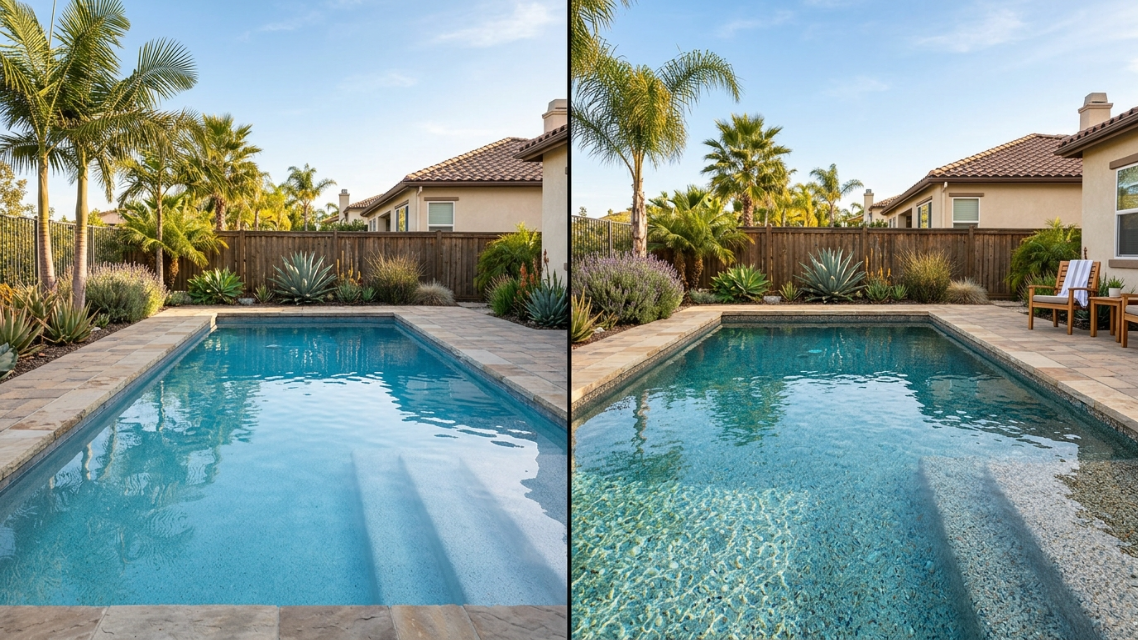
 If you’re comparing quartz finish vs pebble finish for an upcoming resurfacing project, here’s the short answer: choose a quartz finish if you want a smoother, more budget-friendly surface with a shorter re-do cycle, and choose a pebble finish if you want maximum durability and a textured, natural look that can last 15-20+ years. Both are excellent upgrades over standard plaster — the right pick depends on how long you want the surface to last, how it should feel underfoot, and your budget.
San Diego’s dry climate, heavy pool-season usage, and mineral-rich tap water all put real stress on a pool surface, so this decision matters more here than in milder climates. Below, we break down exactly how each finish performs so you can make a confident, informed choice.
Understanding Quartz Finish
A quartz finish is a plaster-based pool surface that blends white cement with crushed quartz aggregate. The quartz crystals are mixed directly into the plaster rather than exposed afterward, which gives the surface a smoother, more uniform texture than pebble while still adding sparkle and color depth that standard plaster lacks.
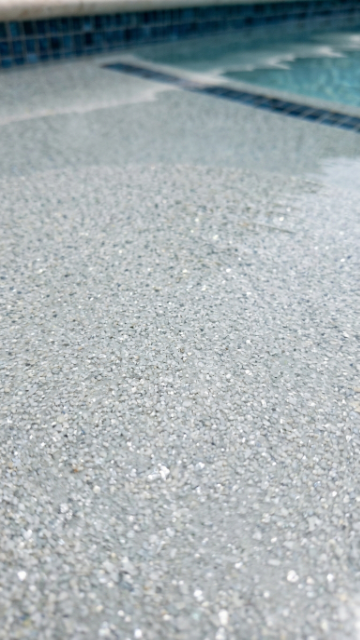 How it works: Installers apply the quartz-plaster blend in a single troweled layer over the pool shell, then finish and cure it much like traditional plaster. Because the quartz is embedded rather than exposed through an acid wash, the surface stays comparatively smooth to the touch — a detail many San Diego families appreciate when kids and bare feet are involved.
Typical costs: Based on current national cost guides, quartz finishes generally run about $7 to $10 per square foot installed, translating to roughly $7,000 to $10,000 for a standard residential pool. Your actual quote will depend on pool size, prep work needed, and site access, so treat these as planning ranges rather than fixed numbers.
Core benefits: Quartz offers better stain and chemical resistance than plain white plaster, a wide range of color options (from soft blues to warm earth tones), and a smoother feel than pebble finishes. It also tends to install faster than heavily-textured aggregate finishes.
Ideal use cases: Quartz finish works well for homeowners who want a noticeable upgrade from plaster without jumping to the higher cost of pebble, or for pools where a smoother, less abrasive surface is a priority — think pools used frequently by young children or anyone sensitive to rougher textures underfoot.
Understanding Pebble Finish
A pebble finish is an exposed-aggregate pool surface made from natural, rounded pebbles set into a plaster or polymer-modified base. After the surface cures slightly, installers wash away the top layer of cement paste to expose the pebbles beneath, creating the signature textured, natural-stone look.
How it works: The pebble-and-binder mixture is applied to the pool shell, allowed to set partially, then acid- or water-washed to reveal the pebbles. This exposed-aggregate process is what gives pebble finishes their durability — the pebbles themselves, not just the cement matrix, take the brunt of water chemistry and UV exposure over time.
Typical costs: Pebble finishes typically run $7 to $15 per square foot installed, or roughly $7,000 to $15,000 for a standard pool, with premium branded pebble systems sometimes reaching $8,000 to $20,000 for larger pools. The wider range reflects the variety of pebble sizes, colors, and branded systems available.
Core benefits: Pebble is the more durable of the two finishes, often lasting 15 to 20+ years compared to roughly 10 to 15 years for quartz. It’s also more slip-resistant thanks to its texture, resists staining exceptionally well, and offers a natural, upscale aesthetic that pairs nicely with the stone-and-stucco architecture common throughout San Diego.
Ideal use cases: Pebble finish is the better fit for homeowners planning to stay in their home long-term who want to minimize how often they resurface, for pools with heavy year-round use (a realistic expectation given San Diego’s mild winters and near-constant swim season), and for anyone prioritizing slip resistance around pool steps and shallow ends.
Quartz Finish vs Pebble Finish: Side-by-Side Comparison
| Attribute | Quartz Finish | Pebble Finish |
|---|---|---|
| Upfront Cost | ~$7–$10 per sq ft, or $7,000–$10,000 typical | ~$7–$15 per sq ft, or $7,000–$15,000+ typical |
| Lifespan | 10–15 years | 15–20+ years |
| Texture / Feel | Smoother, closer to standard plaster | Textured, more slip-resistant |
| Maintenance | Moderate; good stain resistance | Low; excellent stain and wear resistance |
| Aesthetics | Sparkling, uniform color, and wide palette | Natural stone look with more visual depth |
| Stain/Chemical Resistance | Good | Excellent |
| Best For | Budget-conscious upgrades and smoother feel | Long-term durability and heavy use |
Pros and Cons Breakdown
Pros of Quartz Finish
- Lower upfront cost compared to most pebble systems
- Smoother surface that’s gentler on bare feet
- Wide range of color options for design flexibility
- Faster, more straightforward installation process
Cons of Quartz Finish
- Shorter lifespan than pebble, meaning an earlier re-do
- Less slip resistance on steps and shallow areas
- More prone to visible wear patterns over time than pebble
Pros of Pebble Finish
- Longest lifespan of any common resurfacing option
- Superior slip resistance, especially valuable around steps
- Outstanding stain and chemical resistance
- Natural, high-end look that complements San Diego’s indoor-outdoor living style
Cons of Pebble Finish
- Higher upfront investment than quartz in most cases
- Rougher underfoot texture, which some swimmers find less comfortable
- Slightly longer install and cure timeline for premium branded systems
Which Option Is Better? The Ultimate Showdown
There isn’t a universal winner in the quartz finish vs pebble finish debate — it comes down to how you weigh cost against longevity. On a pure cost-per-year basis, pebble often wins: spending an extra few thousand dollars upfront to get 5-10 additional years of service life usually works out to a lower annualized cost, especially for pools that see heavy use most of the year, which describes the majority of pools in San Diego’s climate.
That said, quartz finish still makes excellent sense in several scenarios. If you’re working with a tighter renovation budget, if the pool is used primarily by young children who benefit from a smoother surface, or if you’re planning to sell your home within the next decade and don’t need to maximize the surface’s lifespan, quartz delivers strong value without the higher pebble price tag.
Choose pebble finish if: you want the longest possible lifespan, your pool sees frequent year-round use, slip resistance around steps matters to your household, or you’re prioritizing long-term cost-per-year over upfront savings.
Choose quartz finish if: budget is a primary factor, you prefer a smoother surface underfoot, or you want a faster turnaround on your resurfacing project.
Whichever direction you lean, the quality of the installation matters just as much as the finish you choose. A poorly prepped shell or rushed application can undercut even the best material, which is why proper surface prep — covered in our pool surface repair guide for San Diego pools — is a non-negotiable step before any new finish goes down.
Cost Considerations Beyond the Finish Itself
Before locking in a decision, it’s worth looking at your total project scope rather than the finish alone. If your pool shell has existing cracks, a concrete pool crack repair assessment in San Diego should happen before any resurfacing begins, since applying a new finish over unresolved structural issues shortens the lifespan of either option. Similarly, if you’ve noticed unexplained water loss, a pool leak detection and repair service can save you from resurfacing over a problem that will just resurface later — literally.
For homeowners still deciding between resurfacing and a bigger overhaul, our pool remodeling and renovation guide walks through when a full remodel makes more sense than a straight resurface. And if you want a broader look at what quartz and pebble cost across San Diego specifically, our 2026 pool resurfacing cost guide breaks down local pricing factors in more depth, or you can run your own numbers with our pool replastering cost calculator.
If you’re also weighing pebble against traditional plaster rather than quartz, our dedicated PebbleTec vs pool plaster comparison covers that decision in detail. And for pools where the shell itself is aging out rather than just the surface, it’s worth reading pool replastering vs. full pool remodel before committing to either finish.
Getting the Installation Right
Regardless of which finish you choose, the contractor applying it matters enormously. A quartz or pebble finish is only as good as the prep work, mix ratios, and curing process behind it. If you’re not sure what separates a qualified pool plastering contractor from a general handyman, our guide on licensed pool contractors vs. handymen is worth a read, along with our list of questions to ask before hiring a pool contractor.
Once you’ve chosen a direction, our pool replastering checklist helps you track the project from prep through final cure, and our pool surface maintenance guide covers the water-chemistry habits that protect either finish for years to come.
Ready to Choose Your Finish?
If you’re still weighing quartz finish vs pebble finish for your San Diego pool, a short consultation is often the fastest way to get clarity. A trained technician can assess your pool’s condition, walk you through real pricing for your specific pool size, and help you land on the finish that fits your budget and how you actually use your pool. Visit our San Diego pool repair and resurfacing services page to get started, or reach out directly to schedule a no-pressure walkthrough of your options.
Conclusion
Both quartz finish and pebble finish are significant upgrades over standard plaster, and either one will serve a San Diego pool well when installed correctly. Quartz finish is the smoother, more budget-friendly choice with a shorter but still respectable lifespan, while pebble finish costs more upfront but rewards that investment with superior durability, slip resistance, and a longer runway before your next resurfacing project. Weigh your budget, how your family uses the pool, and how long you plan to stay in your home, and you’ll land on the right answer for your situation.
Frequently Asked Questions
Is pebble finish worth the extra cost compared to quartz?
Is pebble finish worth the extra cost compared to quartz?
For most homeowners planning to stay in their home long-term, yes. The extra upfront cost of pebble typically pays for itself through 5-10 additional years of service life, which lowers the annualized cost even though the initial price is higher.
How long does a quartz pool finish actually last?
How long does a quartz pool finish actually last?
Most quartz finishes last 10 to 15 years with proper water chemistry maintenance and regular brushing, though harsh water conditions or neglected maintenance can shorten that window.
Which finish is more slip-resistant, quartz or pebble?
Which finish is more slip-resistant, quartz or pebble?
Pebble finish is noticeably more slip-resistant due to its exposed-aggregate texture, which is why it’s often preferred around pool steps and shallow-end areas.
Can I switch from plaster directly to a pebble finish?
Can I switch from plaster directly to a pebble finish?
In most cases, yes — a pebble finish can be applied over a properly prepped concrete or gunite shell regardless of what the previous finish was, as long as the surface is sound and any cracks are addressed first.
Does San Diego’s water quality affect quartz or pebble finishes differently?
Does San Diego’s water quality affect quartz or pebble finishes differently?
Both finishes are affected by water hardness and pH balance, but pebble’s denser, more exposed-aggregate structure generally resists staining and etching from mineral-heavy water slightly better than quartz over time.
How much does it typically cost to resurface a pool with quartz vs pebble in San Diego?
How much does it typically cost to resurface a pool with quartz vs pebble in San Diego?
Current cost guides put quartz finishes at roughly $7 to $10 per square foot and pebble finishes at roughly $7 to $15 per square foot, though your exact price depends on pool size, prep needs, and the specific product line chosen.
Is a quartz or pebble finish better for a pool used year-round?
Is a quartz or pebble finish better for a pool used year-round?
Pebble finish tends to hold up better under heavy, near-constant use thanks to its superior wear and stain resistance, which matters in a climate like San Diego’s where pools are often used well beyond the traditional summer season.
Do quartz and pebble finishes require different maintenance routines?
Do quartz and pebble finishes require different maintenance routines?
The core routine — regular brushing, balanced water chemistry, and consistent filtration — is similar for both, though pebble’s textured surface can require slightly more attention when brushing to prevent debris from settling into the crevices.
Can I get a custom color blend with either finish?
Can I get a custom color blend with either finish?
Yes, both quartz and pebble finishes are available in a range of colors and blends, though pebble typically offers more variation in size and color combinations since the aggregate itself is more visually prominent.
Which finish adds more resale value to a San Diego home?
Which finish adds more resale value to a San Diego home?
Both are considered upgrades over standard plaster, but pebble finish is often viewed as the more premium option due to its longevity and natural aesthetic, which can be a modest selling point in San Diego’s pool-friendly real estate market.