
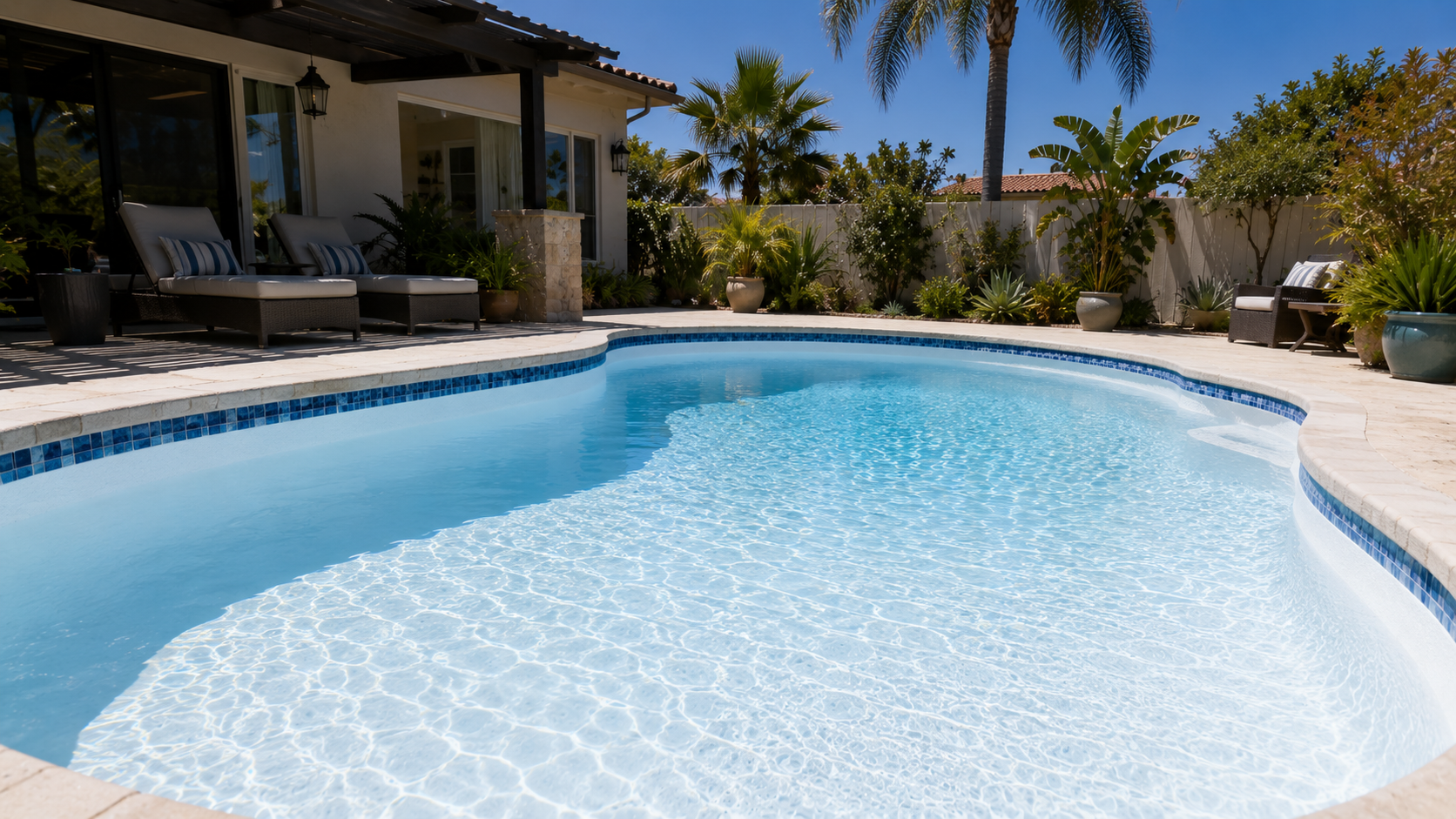
 If your pool’s plaster is looking rough, chalky, or discolored, a Pool Replastering Checklist is the smartest place to start. Replastering is one of the biggest investments a San Diego pool owner will make in the life of their pool, and going in prepared — with the right questions asked and the right steps followed — is what separates a smooth renovation from a stressful one.
At Baja Pool Plaster, we’ve walked hundreds of San Diego homeowners through this exact process. This guide lays out everything you need to know: the warning signs that it’s time to replaster, what our process looks like from first call to final fill, and the local factors — climate, water chemistry, pool age — that affect how your project will go.
Why a Pool Replastering Checklist Matters
Plaster isn’t just cosmetic. It’s the waterproof barrier between your pool water and the underlying concrete shell (gunite or shotcrete). Once that barrier starts to fail, the damage doesn’t stay on the surface for long.
Here’s what’s at stake if replastering gets pushed off too long:
- Water loss and hidden leaks. Cracked or porous plaster lets water seep into the shell, which can lead to structural issues over time.
- Rising maintenance costs. Rough, etched plaster holds algae and calcium deposits more easily, which means more chemicals and more scrubbing every month.
- Safety concerns. Chipped or spalling plaster creates sharp edges that can cut feet and hands.
- Lower property value. A visibly aging pool can be a red flag for buyers and appraisers alike.
Acting early — before problems compound — is almost always the more affordable path. That’s the entire point of working from a checklist: it keeps small issues from becoming expensive ones.
Common Problems a Pool Replastering Checklist Helps You Catch
Homeowners usually start researching replastering because of one or more of these symptoms. If any of these sound familiar, it’s worth a professional evaluation.
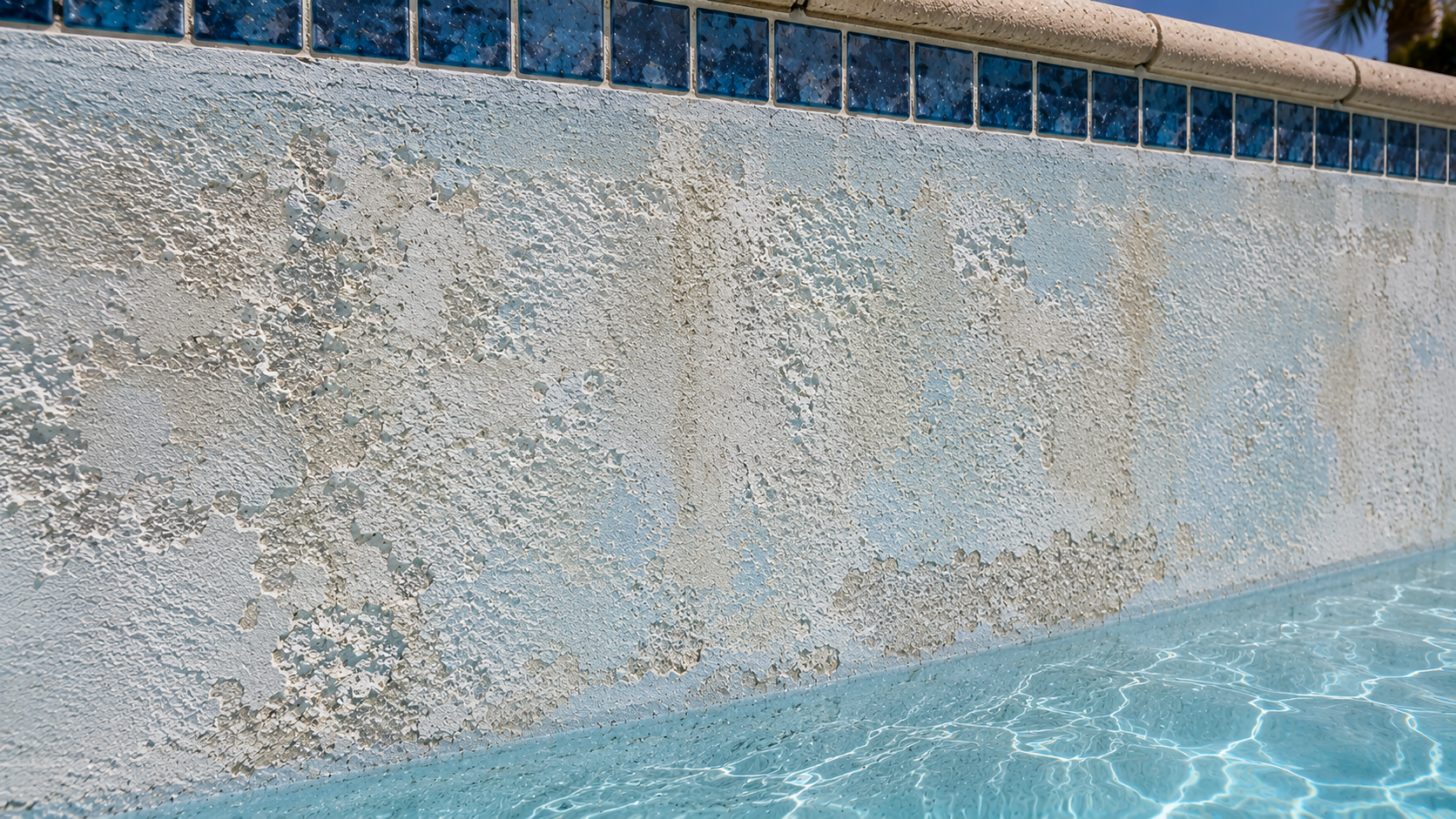 Surface staining and discoloration. Brown, gray, or blotchy staining is often caused by metals in the water or aging plaster that’s absorbed minerals over the years. Cosmetic staining alone doesn’t always mean full replastering is needed — sometimes a surface repair is enough — but persistent staining across large areas is a strong signal the finish has reached the end of its service life.
Rough or gritty texture. Plaster naturally wears down over time as calcium leaches out, leaving a sandpaper-like texture underfoot. This is one of the most common reasons San Diego homeowners search for a checklist in the first place — it’s uncomfortable, and it usually gets worse.
Visible cracks. Hairline cracks are common and often cosmetic, but wider or spreading cracks can indicate structural movement in the shell. If you’re seeing cracking, it’s worth having it evaluated alongside concrete pool crack repair options before assuming a full replaster is required.
Unexplained water loss. If you’re topping off the pool more than usual, it may not be evaporation. A proper pool leak detection and repair assessment should always happen before or alongside a replastering project, since replastering over an active leak doesn’t fix the underlying problem.
Plaster delamination or spalling. This is when chunks of plaster start separating from the shell — a clear sign the bond coat has failed and full removal and reapplication is needed.
Our Pool Replastering Process
We built our process around the questions homeowners ask us most, so every step is transparent from the first call to the final walkthrough.
1. Initial consultation and inspection. We assess your pool’s current plaster condition, shell integrity, and any related issues like cracking or suspected leaks. This is also when we talk through finish options, since our pool resurfacing and replastering services can use traditional white plaster, quartz, or pebble finishes depending on your goals and budget.
2. Draining and surface preparation. The pool is drained, and the old plaster surface is chipped away or acid-washed and profiled so the new material bonds properly. This step matters more than most homeowners realize — a rushed prep job is one of the leading causes of premature plaster failure.
3. Repairing the shell. Any cracks, chips, or structural concerns identified during inspection are addressed before new plaster goes on. Skipping this step just seals problems underneath a new surface instead of solving them.
4. Plaster (or quartz/pebble) application. New material is applied by hand in a continuous pour to avoid cold joints and ensure a consistent finish. This is the stage where craftsmanship makes the biggest visible difference in the final result.
5. Curing and startup water chemistry. Fresh plaster needs a carefully managed fill and initial chemical balance to cure properly and avoid staining, scaling, or plaster dust. We guide homeowners through the first few weeks of care, since this window is critical to how the finish looks and performs for years to come.
6. Final walkthrough. We review the finished surface with you and go over ongoing care so your new plaster lasts as long as possible.
Why Choose Baja Pool Plaster
San Diego homeowners choose us because we treat replastering as a craft, not a commodity job. A few reasons pool owners across the county trust us with their projects:
- Local, San Diego-focused expertise. We understand how the region’s climate, water sources, and common pool construction methods affect plaster performance.
- Transparent process. We walk every homeowner through the checklist above before work begins, so there are no surprises mid-project.
- Full-service capability. Beyond replastering, we handle pool remodeling and renovation, crack repair, and leak detection — so if your project needs more than a new surface, we can scope that out up front instead of discovering it halfway through.
- Finish options for every style and budget. From classic white plaster to quartz and pebble finishes, we help you compare options like PebbleTec vs. traditional pool plaster so you choose the right long-term fit.
Pool Replastering Across San Diego and Nearby Areas
San Diego’s coastal climate is generally kind to pools — mild winters mean pools here get used nearly year-round — but that heavy use also means plaster wears faster than in regions where pools sit closed for months at a time. Sun exposure, frequent swimming, and San Diego’s naturally mineral-rich municipal water all play a role in how quickly a plaster finish ages.
We regularly work on pool replastering and resurfacing projects throughout San Diego and the surrounding communities, including La Jolla, La Mesa, Rancho Bernardo, El Cajon, Lakeside, and Bonita. Each of these areas has its own mix of older and newer pool construction, and homeowners in longer-established neighborhoods like La Mesa and El Cajon often come to us with pools that are due for their first or second replaster after decades of use. You can see examples of past work in areas like La Jolla, La Mesa, and Rancho Bernardo.
Hillside properties common in areas like Rancho Bernardo and parts of La Jolla can also introduce access considerations for equipment and material delivery, which our team accounts for during the initial consultation and scheduling.
Cost, Timeline, and What to Expect
Every pool is different, so exact pricing and timelines depend on several factors rather than a single flat rate:
- Pool size and surface area — larger pools require more material and labor time.
- Current plaster condition — pools needing structural repair before replastering will take longer than those needing a straightforward resurface.
- Finish type selected — traditional plaster, quartz, and pebble finishes each have different material costs and application timelines. Comparing a quartz finish vs. pebble finish is a common early step for homeowners narrowing down their options.
- Access and site conditions — pools with limited equipment access can extend project timelines.
- Curing and refill time — after application, pools typically need time to cure and carefully managed startup chemistry before they’re back in regular use.
If you want a general sense of what to budget before requesting a formal quote, our pool resurfacing cost guide and pool replastering cost calculator are good starting points. For homeowners still deciding between resurfacing and a larger renovation, it’s also worth reviewing pool replastering vs. a full pool remodel to make sure you’re solving the right problem.
We always recommend a full on-site evaluation before finalizing scope or cost — every pool has its own history, and an accurate checklist starts with seeing the actual condition of your plaster and shell in person.
Planning Your Own Checklist
Before you call a contractor, it helps to walk your own pool through a few basic questions:
- Is the plaster rough, stained, or visibly cracked?
- Have you noticed unusual water loss recently?
- How old is the current finish? Most plaster surfaces last roughly 10–20 years depending on maintenance and water chemistry, though this varies by pool.
- Do you want to stay with traditional plaster, or explore a quartz or pebble upgrade?
- Is your pool due for any other repairs — cracks, tile, coping — that should be addressed at the same time?
If you’re not sure how to choose between contractors once you’ve answered these, our guides on how to choose a pool plastering contractor and licensed pool contractors vs. handymen can help you vet who you’re working with.
Ready to Start Your Pool Replastering Checklist?
A rough, stained, or cracking pool surface won’t fix itself — and the longer it’s left, the more it can cost to repair down the line. Baja Pool Plaster has helped homeowners across San Diego and nearby communities work through their Pool Replastering Checklist with clear guidance and craftsmanship they can see and feel in the finished pool.
Call us today at (619) 458-3443 or email info@bajapoolplaster.com to schedule your on-site evaluation and get a straightforward plan for your pool’s replastering project.
Frequently Asked Questions
How do I know if my pool needs replastering?
How do I know if my pool needs replastering?
Common signs include rough or gritty texture, visible staining that won’t clean off, hairline or spreading cracks, and chalky residue on your hands after touching the surface. If your plaster is original and more than 10–15 years old, it’s worth having it evaluated even if it looks fine on the surface.
How long does pool replastering take in San Diego?
How long does pool replastering take in San Diego?
Most replastering projects take about one to two weeks from draining to refill, though this depends on pool size, the condition of the shell, and whether repairs are needed before the new plaster goes on. Curing time after the pool is filled adds to the total timeline before the pool is ready for full regular use.
What’s the difference between replastering and resurfacing?
What’s the difference between replastering and resurfacing?
“Resurfacing” is a broader term that can include plaster, quartz, or pebble finishes, while “replastering” specifically refers to applying a new plaster coat. Our pool resurfacing and pool replastering pages break down how these terms relate and which option might fit your pool.
Can I replaster my pool myself?
Can I replaster my pool myself?
Pool plastering requires specific skill, timing, and material handling to bond and cure correctly. DIY attempts often lead to uneven finishes, premature cracking, or bonding failures that end up costing more to fix than a professional job would have cost from the start.
Does replastering fix a leaking pool?
Does replastering fix a leaking pool?
Not on its own. If your pool has an active leak, it should be diagnosed through leak detection and repair before or during the replastering process. Plastering over an undiagnosed leak just hides the symptom rather than solving the underlying cause.
What plaster finish lasts the longest?
What plaster finish lasts the longest?
Pebble and quartz finishes generally hold up longer than traditional white plaster because of their aggregate composition, though all finishes depend heavily on water chemistry and maintenance. Comparing PebbleTec vs. pool plaster is a good next step if longevity is your top priority.
Is now a good time to replaster my pool in San Diego?
Is now a good time to replaster my pool in San Diego?
San Diego’s mild climate means replastering can typically happen year-round, though scheduling ahead of peak swim season (spring) is common so the pool is ready when you want to use it most.
Do you serve areas outside San Diego proper?
Do you serve areas outside San Diego proper?
Yes. In addition to San Diego, we regularly serve nearby communities including La Jolla, La Mesa, Rancho Bernardo, El Cajon, Lakeside, and Bonita.