
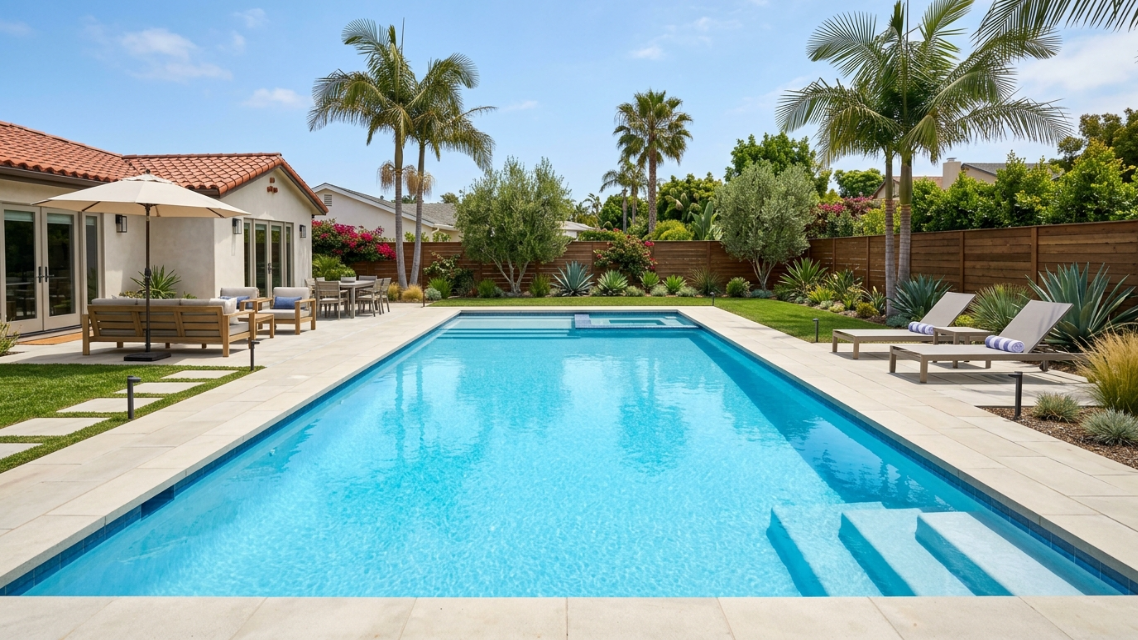
 Pool replastering typically costs less upfront and is the right call when your pool’s structure and surface are still basically sound, while pool resurfacing (a broader term that can include replastering, PebbleTec, or quartz finishes) is worth the extra investment when you want a longer-lasting, more durable, or aesthetically upgraded surface. For most San Diego homeowners comparing the two, the decision comes down to how much damage your current surface has and how long you plan to stay in the home. A Pool Replastering Cost Calculator is the fastest way to see where your specific pool lands on that spectrum before you commit.
This guide breaks down both options in detail — cost, lifespan, process, and ideal use cases — so you can make a confident, informed decision.
Understanding Pool Replastering Cost
Pool replastering refers specifically to stripping the old plaster (or existing cementitious surface) off your pool’s shell and applying a new layer of plaster finish — typically standard white plaster, though some homeowners upgrade to a colored or textured plaster during the same job. It’s the most traditional and most common of the pool surface renewal.
How it works: The pool is drained, the old plaster is chipped away or acid-washed down to the shell, any structural cracks are addressed, and a fresh plaster coat is troweled on and cured. In San Diego, contractors also account for local water chemistry and mineral content, since hard water can accelerate plaster wear if the surface isn’t properly cured.
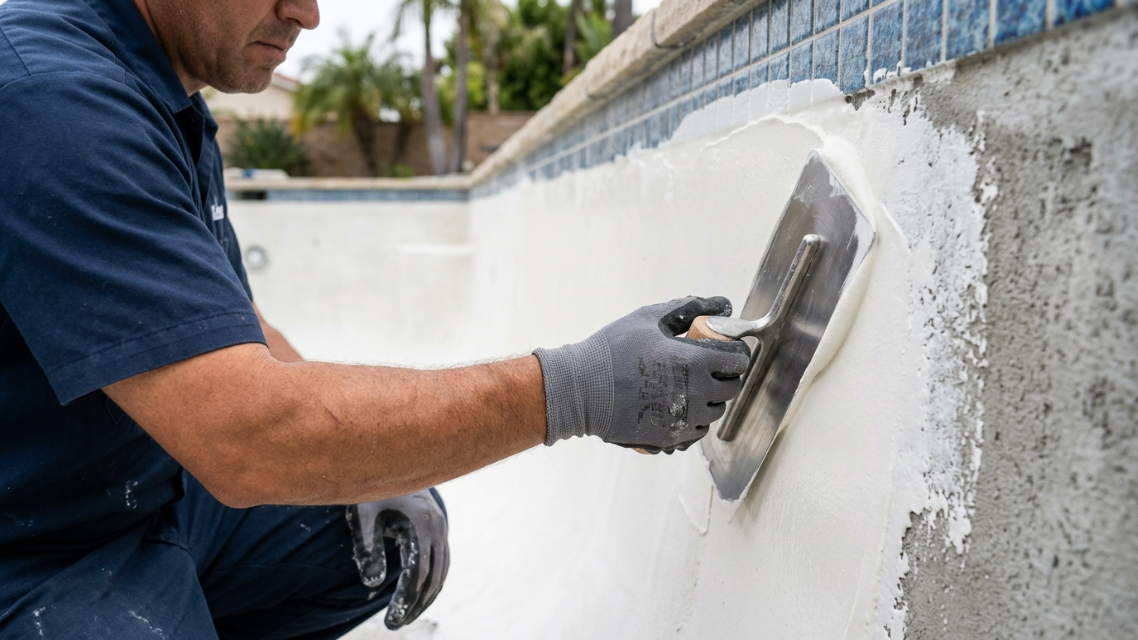 Typical cost range: Standard white plaster replastering generally runs on the lower end of surface-renewal pricing, while upgraded or pigmented plaster sits a bit higher. Pool size, accessibility, and the condition of the underlying shell all affect the final number — which is exactly why a Pool Replastering Cost Calculator is useful before you request quotes, since it helps you enter your pool’s dimensions and current condition to get a realistic ballpark.
Core benefits:
- Lower upfront cost compared to premium resurfacing finishes
- Faster turnaround time
- A well-understood, widely available service — most San Diego pool contractors are experienced with standard plaster jobs
- A smooth, classic finish that suits traditional pool designs common in older San Diego neighborhoods
Ideal use cases: Replastering makes the most sense when your existing surface is showing normal wear — light staining, minor roughness, or the pool is simply due for a refresh — but the shell itself is structurally sound. If you’re weighing this option against a full renovation, it’s worth reading up on how replastering compares to a full pool remodel before deciding.
Understanding Pool Resurfacing Cost
Pool resurfacing is the broader category. It includes traditional plaster, but also covers upgraded surface systems like PebbleTec (an aggregate pebble finish), quartz finishes, and other specialty coatings designed to outlast standard plaster. When people search for pool resurfacing cost, they’re often comparing multiple finish types, not just one.
How it works: The process starts the same way as replastering — draining the pool and removing the old surface — but the finish material differs. Aggregate and quartz finishes are typically applied in a similar troweled process, though they require more specialized skill and equipment, and they cure differently than plain plaster. Given San Diego’s intense summer sun exposure and near year-round pool usage, many homeowners here specifically choose resurfacing upgrades for the added UV and chemical resistance.
Typical cost range: Resurfacing with premium materials like PebbleTec or quartz aggregate costs more per square foot than standard plaster, but the higher price reflects a significantly longer lifespan and better resistance to chipping, staining, and rough water chemistry. For a full breakdown of current San Diego pricing across finish types, this Pool Resurfacing Cost San Diego 2026 Guide is a helpful companion resource.
Core benefits:
- Longer surface lifespan than standard plaster
- Better resistance to San Diego’s sun exposure, chlorine, and mineral-heavy water
- More design flexibility — colors, textures, and aggregate blends
- Often adds resale value given the upgraded finish
Ideal use cases: Resurfacing with a premium finish is the better fit if your pool sees heavy year-round use, you’re planning to stay in your San Diego home long-term, or you want to reduce how often you’ll need surface work down the road. If you’re specifically weighing pebble versus quartz, it’s worth comparing PebbleTec vs Pool Plaster and Quartz Finish vs Pebble Finish side by side.
Side-by-Side Comparison
| Attribute | Pool Replastering | Pool Resurfacing Premium Finishes |
|---|---|---|
| Upfront Cost | Lower | Higher |
| Typical Lifespan | Shorter, because standard plaster wears faster | Longer, because aggregate and quartz finishes are more durable |
| Maintenance | Requires more frequent monitoring for staining and roughness | Generally lower maintenance over time |
| Aesthetics | Classic, smooth, and limited color options | Wide range of textures, colors, and aggregate blends |
| Chemical/UV Resistance | Moderate — can degrade faster under San Diego’s strong sun and hard water | Higher — built to withstand heavy sun and pool chemical exposure |
| Best For | Pools needing a routine refresh with sound underlying structure | Pools needing long-term durability or a design upgrade |
Pros and Cons Breakdown
Pros of Pool Replastering
- Most budget-friendly surface renewal option
- Quick project timeline, minimizing pool downtime
- Widely available — easy to find experienced San Diego contractors
- Straightforward process with fewer material variables
Cons of Pool Replastering
- Shorter lifespan than premium resurfacing materials
- More prone to staining and roughness over time in hard water conditions
- Fewer aesthetic and texture options
- May need to be redone sooner, adding to long-term cost
Pros of Pool Resurfacing (Premium Finishes)
- Significantly longer lifespan reduces how often you’ll redo the surface
- Better stands up to San Diego’s sun, heat, and water chemistry
- More design flexibility for a custom look
- Can improve resale appeal for San Diego homes with pools
Cons of Pool Resurfacing (Premium Finishes)
- Higher upfront investment
- Longer project timeline in some cases due to specialized application
- Requires a more experienced contractor for proper application
- Not always necessary if your pool’s surface issues are minor
Which Option Is Better? The Ultimate Showdown
There isn’t a universal winner here — the right call depends on your pool’s current condition, your budget, and your timeline for staying in the home.
Choose pool replastering if: your pool’s shell is structurally sound, the surface issues are cosmetic or due for routine renewal, and your priority is keeping upfront costs down. This is also the more practical choice if you’re planning to sell your San Diego home in the next few years and don’t want to over-invest in a premium finish you won’t enjoy long-term.
Choose pool resurfacing (premium finish) if: you’re planning to stay in your home for many more years, your pool sees heavy year-round use (common across San Diego given the mild climate), or you’ve already had to replaster more than once and are tired of repeating the process. The higher upfront cost typically pays for itself in fewer future surface jobs.
Running your numbers through a Pool Replastering Cost Calculator before deciding is the smart first step — it lets you see, side by side, roughly what standard replastering would run versus a resurfacing upgrade for your specific pool size and condition, so the decision is based on real numbers rather than guesswork. If your pool is also showing signs of structural cracking rather than just surface wear, it’s worth first reading about concrete pool crack repair in San Diego, since cracks change the calculus regardless of which surface option you choose. Similarly, if you’ve noticed unexplained water loss, get a pool leak detection and repair inspection before resurfacing, since applying a new finish over an active leak wastes money.
Get a Clear Answer for Your San Diego Pool
If you’re still weighing pool replastering cost against pool resurfacing cost, the fastest way to move forward is to get eyes on your actual pool. Every San Diego pool ages differently depending on sun exposure, usage, and water chemistry, so a general Pool Replastering Cost Calculator estimate is a great starting point, but a proper consultation will confirm what your pool specifically needs. You can start with our Pool Replastering Cost Calculator to get a ballpark figure, then reach out for a full pool replastering or pool resurfacing consultation. If you’re unsure which contractor to trust with the job, our guide on how to choose a pool plastering contractor and our list of questions to ask before hiring a pool contractor are worth reading first — and it’s also worth understanding why licensed pool contractors differ from handymen before you sign anything.
Conclusion & Recommendation
Both pool replastering and pool resurfacing solve the same underlying problem — a worn, aging pool surface — but they solve it at different price points and with different long-term payoffs. Replastering is the practical, budget-conscious choice for pools that just need a routine refresh, while resurfacing with a premium finish is the better long-term investment for San Diego homeowners who want durability and design upgrades that hold up to daily sun and swim use. Whichever direction fits your situation, running your pool’s details through a Pool Replastering Cost Calculator first will give you a clearer, numbers-based starting point before you request contractor quotes. For a broader look at surface longevity across all finish types, our Pool Surface Lifespan Comparison and Pool Surface Maintenance Guide are useful next reads, and our Pool Replastering Checklist can help you prepare once you’re ready to book the work.
Frequently Asked Questions
1. How much does pool replastering typically cost in San Diego?
1. How much does pool replastering typically cost in San Diego?
Pool replastering cost varies based on pool size, current surface condition, and the plaster type you choose (standard white versus pigmented or textured). A Pool Replastering Cost Calculator can give you a personalized estimate based on your pool’s dimensions.
2. Is pool resurfacing more expensive than replastering?
2. Is pool resurfacing more expensive than replastering?
Generally yes, especially when resurfacing involves a premium finish like PebbleTec or quartz aggregate. The higher cost reflects a longer expected lifespan and better resistance to San Diego’s sun and water conditions.
3. How long does pool replastering last compared to resurfacing?
3. How long does pool replastering last compared to resurfacing?
Standard plaster typically has a shorter lifespan than premium aggregate or quartz resurfacing finishes, which are engineered to hold up longer under regular sun and chemical exposure.
4. Can I use a Pool Replastering Cost Calculator if I’m actually considering resurfacing instead?
4. Can I use a Pool Replastering Cost Calculator if I’m actually considering resurfacing instead?
Yes — a Pool Replastering Cost Calculator is a useful starting benchmark even if you’re leaning toward a premium resurfacing finish, since it shows you the baseline cost you’d be comparing any upgrade against.
5. Does San Diego’s climate affect which option I should choose?
5. Does San Diego’s climate affect which option I should choose?
Yes. San Diego’s near-constant sun exposure and heavy pool usage season can accelerate wear on standard plaster, which is one reason some homeowners opt for more UV- and chemical-resistant resurfacing finishes instead.
6. How do I know if my pool needs replastering or a full remodel?
6. How do I know if my pool needs replastering or a full remodel?
If the issues are limited to surface wear, replastering or resurfacing is usually sufficient. If there’s structural damage, plumbing issues, or you want to change the pool’s shape or features, a full remodel may make more sense — this comparison is covered in more depth in our guide on pool replastering versus a full pool remodel.
7. Will replastering or resurfacing fix a leaking pool?
7. Will replastering or resurfacing fix a leaking pool?
No — neither replastering nor resurfacing is designed to fix an active leak. If you suspect a leak, it’s important to get a dedicated pool leak detection and repair assessment first.
8. How often should I expect to replaster or resurface my pool?
8. How often should I expect to replaster or resurface my pool?
This depends heavily on the finish type, water chemistry, and usage. Standard plaster generally needs to be redone sooner than premium resurfacing finishes — our Pool Surface Lifespan Comparison breaks down expected timelines by finish type.
9. Is it worth paying more for a premium resurfacing finish over standard plaster?
9. Is it worth paying more for a premium resurfacing finish over standard plaster?
If you plan to stay in your San Diego home long-term or use your pool heavily, the added durability of a premium finish often offsets the higher upfront pool resurfacing cost over time.
10. What should I do before getting a pool replastering or resurfacing quote?
10. What should I do before getting a pool replastering or resurfacing quote?
Start by using a Pool Replastering Cost Calculator to understand your baseline costs, then request a professional consultation so a contractor can assess your pool’s actual condition and confirm final pricing.