
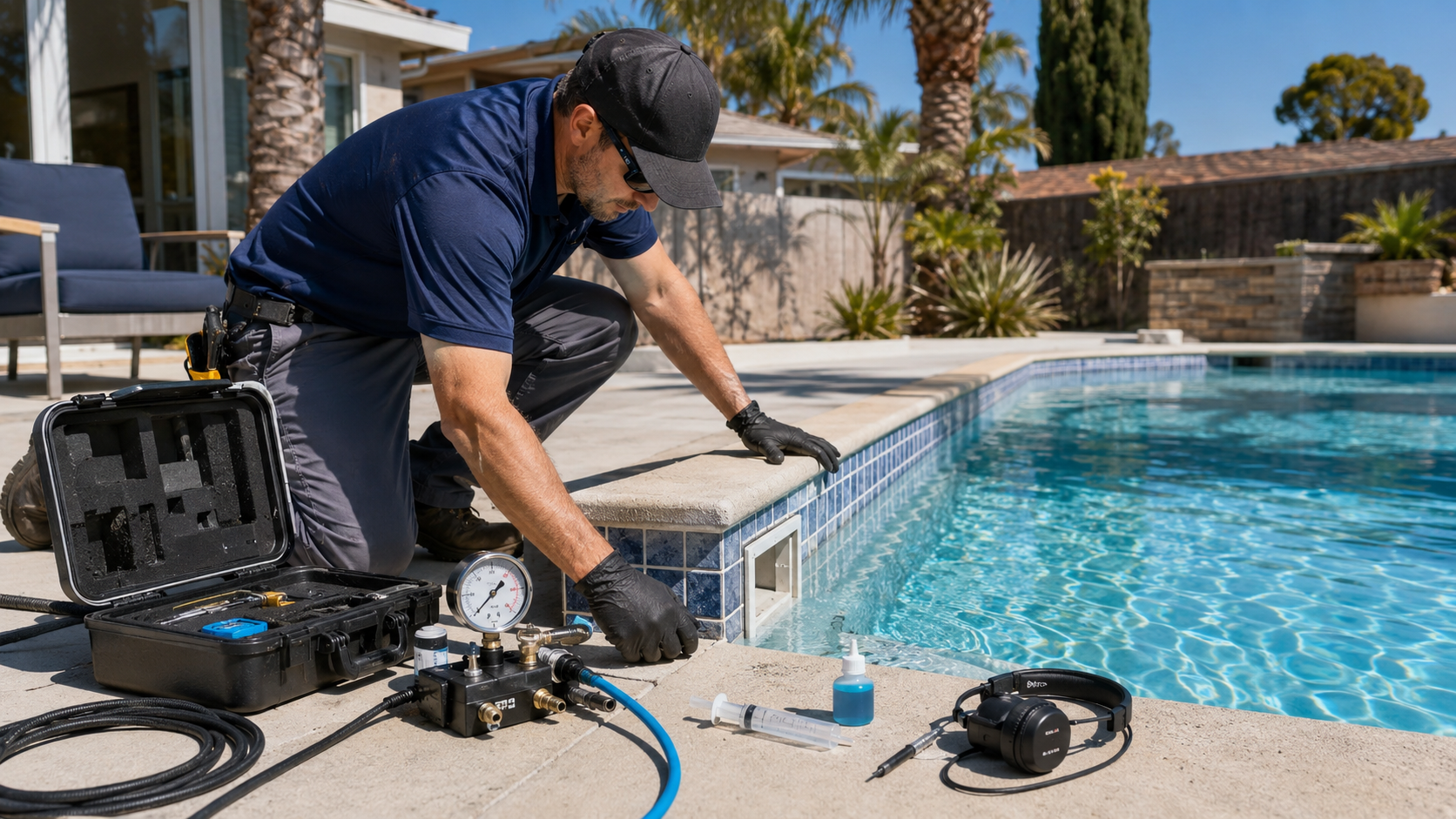
 If your San Diego pool is losing water faster than evaporation can explain, you likely have a leak — and the longer it goes undetected, the more expensive it becomes. Baja Pool Plaster provides professional pool leak detection & repair in San Diego, helping homeowners pinpoint the exact source of water loss and fix it correctly the first time, whether the issue is in the shell, the plumbing, or the equipment pad.
A leaking pool isn’t just an inconvenience. It drives up water bills, destabilizes the surrounding deck and soil, and can quietly damage plaster, tile, and structural steel long before any visible sign appears. Catching a leak early — and having it diagnosed by someone who understands San Diego’s pool construction styles — is the difference between a simple repair and a full-scale renovation.
Why Pool Leak Detection & Repair Matters
Every pool loses a small amount of water to evaporation, especially in San Diego’s dry, sunny climate. The problem is that most homeowners can’t tell the difference between normal evaporation and an actual leak until the water bill spikes or the pool level drops noticeably overnight.
Left unaddressed, even a small leak can lead to:
- Rising water bills from continuous refilling
- Cracked or lifting decking caused by water saturating the soil beneath the pool
- Structural erosion around the shell, especially in older gunite and shotcrete pools
- Equipment damage if the leak originates near the pump, filter, or plumbing lines and causes air to enter the system
- Mold, algae, or staining where water is escaping into surrounding landscaping or hardscape
Acting quickly protects both the pool and the property around it. A leak that would cost a few hundred dollars to repair today can turn into a multi-thousand-dollar structural or resurfacing issue if it’s ignored for months. This is one of the main reasons pool surface repair and leak detection are often discussed together — surface damage is frequently the first visible clue that a leak has been active underneath.
Common Problems Pool Leak Detection & Repair Solves
 Homeowners typically reach out for leak detection after noticing one or more of these warning signs:
Unexplained water loss. The pool needs topping off every few days, well beyond what evaporation alone would cause.
Wet spots in the yard. Soggy patches of grass or soil near the pool equipment pad or shell are a strong sign that water is escaping underground.
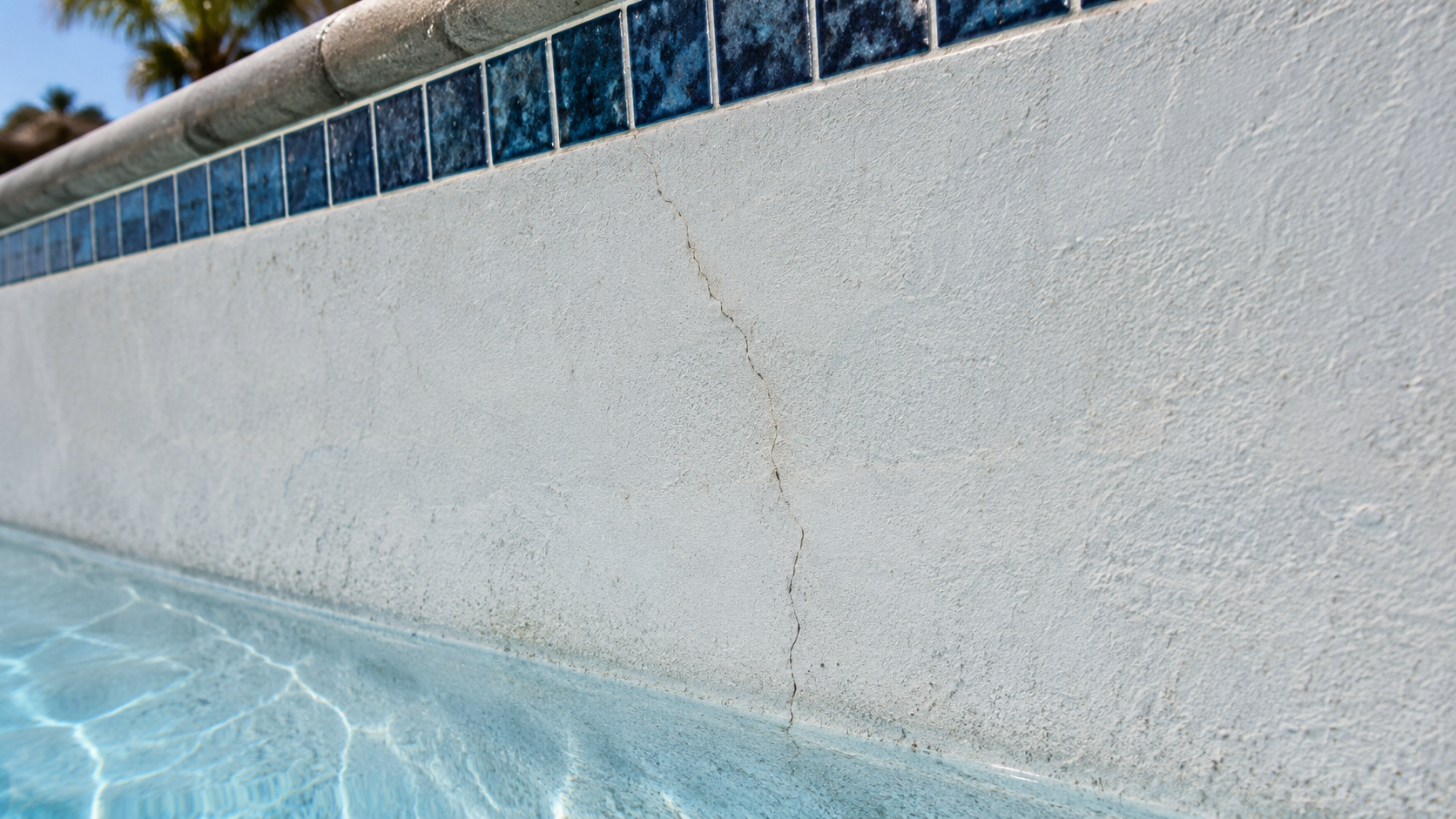
Cracks in plaster or tile. Visible cracking, especially near the pool’s steps, corners, or return jets, often points to shell movement caused by water intrusion beneath the structure. This overlaps closely with the work covered in our concrete pool crack repair service.
Air in the pump system. Bubbles coming from the return jets, or a pump that struggles to prime, can indicate a suction-side leak in the plumbing rather than the shell itself.
Rising utility bills. A sudden, unexplained increase in the water bill is one of the most common triggers for a service call.
Falling water levels that stop at a fixed point. If the pool loses water down to a specific level and then stops, this often points to a leak at a skimmer, light niche, or fitting located at that exact depth.
Each of these symptoms requires a slightly different diagnostic approach, which is why professional detection — rather than guesswork — matters. Bucket tests can confirm that a leak exists, but they can’t tell you where it is or what’s causing it.
Our Pool Leak Detection & Repair Process
Baja Pool Plaster approaches every leak call methodically, so the diagnosis is accurate and the repair addresses the actual source of the problem — not just the symptoms.
- Initial assessment and water-level tracking. We start by confirming whether the water loss is consistent with a true leak versus normal evaporation, splash-out, or backwash.
- Visual and physical inspection. The pool shell, tile line, skimmers, returns, lights, and visible plumbing are checked for cracks, gaps, or deterioration.
- Pressure and equipment testing. The plumbing lines and equipment pad are tested to determine whether the leak originates in the pipes, the pump, the filter, or a fitting rather than the pool structure itself.
- Leak localization. Once the general area is identified, we narrow down the exact location so the repair can be targeted instead of exploratory.
- Repair plan and recommendation. Depending on what’s found, the fix may be a targeted structural repair, a plumbing repair, or — in cases where the shell or surface has already been compromised — a referral to our pool resurfacing or pool replastering services if the surface needs to be addressed as part of the fix.
- Repair execution. Once the source is confirmed and the homeowner approves the scope, our team completes the repair using methods appropriate to the pool’s construction type and the nature of the leak.
- Post-repair verification. After the repair, water levels are monitored to confirm the leak has been fully resolved before we consider the job complete.
This structured process is designed to prevent one of the most common frustrations in the pool industry: paying for a “repair” that doesn’t actually stop the leak because the true source was never confirmed.
Why Choose Baja Pool Plaster
San Diego pools come in a wide range of ages, construction styles, and surface types, from older gunite shells with original plaster to newer pebble and quartz finishes. Diagnosing a leak correctly requires understanding how these different systems behave and where they’re most prone to developing problems.
Baja Pool Plaster works on leak detection alongside our core plastering, resurfacing, and structural repair services, which means the same team that identifies the leak is also equipped to fix the surface or structural issue behind it — rather than handing the homeowner off to a separate contractor. We focus on:
- Clear communication about what’s actually causing the water loss, not just that a leak exists
- Repairs matched to the pool’s construction type and condition
- Honest recommendations, including when a full pool remodeling or renovation makes more sense than a patch repair
- Local familiarity with the pool styles and conditions common throughout San Diego County
If you’re comparing contractors for this kind of work, our guide on how to choose a pool plastering contractor and our list of questions to ask before hiring a pool contractor can help you vet any company you’re considering, including us.
Pool Leak Detection & Repair in San Diego and Nearby Areas
San Diego’s pool stock spans decades of construction styles, from mid-century backyard pools in older neighborhoods to newer builds with modern pebble and quartz finishes. The region’s dry climate, seasonal ground shifting, and mix of clay and sandy soils around properties in and near San Diego can all contribute to shell movement over time, which is one of the leading causes of structural leaks in the area.
Homes with pools built on a slope or near retaining walls are especially prone to soil settling that stresses the shell at specific points, often around steps, corners, or the deep end. Older equipment pads, especially those with galvanized or older PVC plumbing, are also more likely to develop leaks at pipe joints and fittings as materials age.
We’ve worked on pools throughout San Diego and surrounding communities, including projects and service visits in areas such as La Jolla, Rancho Bernardo, La Mesa, Lakeside, Bonita, and El Cajon. If you’d like to see examples of completed work, our San Diego pool plastering reviews and our El Cajon pool plastering project write-up show how we’ve approached similar issues for other local homeowners.
Cost, Timeline & What to Expect
The cost and timeline for pool leak detection and repair depend on several factors, so we avoid quoting a flat price without first understanding your specific situation. What typically affects the scope and cost includes:
- Where the leak is located — a plumbing leak at the equipment pad is often more straightforward to access and repair than a leak within the shell itself
- The pool’s age and construction type — older gunite or shotcrete pools may require more involved structural work than newer builds
- How long the leak has been active — leaks that have gone unnoticed for an extended period can cause secondary damage that needs to be addressed as part of the repair
- Whether the surface has already been compromised — if plaster or tile has cracked or delaminated, the repair scope may extend into surface work, similar to what’s outlined in our pool surface repair and pool crack repair cost guide
- Access to the affected area — leaks near tight equipment pads, retaining walls, or dense landscaping can take longer to diagnose and repair than open, accessible areas
Detection typically happens in a single visit, though complex or intermittent leaks can occasionally take longer to fully isolate. Repair timelines vary from same-visit fixes for simple plumbing issues to multi-day projects if structural or surface work is required. We’ll walk you through the findings and the recommended fix before any repair work begins, so there are no surprises.
Stop the Water Loss — Get a Professional Pool Leak Inspection Today
Every day a pool leak goes undiagnosed, it costs you more water, more money, and potentially more damage to your pool’s structure and surrounding property. Baja Pool Plaster provides thorough, professional pool leak detection & repair in San Diego, so you get a clear answer about what’s causing the water loss and a repair plan built around your pool’s actual condition.
Call (619) 458-3443 or email info@bajapoolplaster.com to schedule your pool leak inspection. Our team serves San Diego and surrounding communities, and we’re ready to help you protect your pool before a small leak turns into a bigger, costlier problem.
Frequently Asked Questions
How do I know if my pool has a leak or is just losing water to evaporation?
How do I know if my pool has a leak or is just losing water to evaporation?
A simple way to check is the bucket test: fill a bucket with pool water, mark the water line inside the bucket and on the pool wall, then compare the drop after 24 hours. If the pool loses noticeably more water than the bucket, you likely have a leak rather than normal evaporation, and professional detection can confirm the exact cause.
What are the signs of a pool leak?
What are the signs of a pool leak?
Common signs include water levels dropping faster than usual, wet or soggy areas near the pool or equipment pad, cracks in plaster or tile, air bubbles from return jets, a pump that won’t prime properly, and unexplained increases in your water bill.
How much water loss is considered normal for a pool?
How much water loss is considered normal for a pool?
Evaporation rates vary with climate, wind, and pool surface area, but water loss that continues well beyond what a bucket test shows for evaporation typically indicates a leak. If you’re consistently adding water more than once or twice a week, it’s worth having the pool checked.
Can a pool leak be fixed without draining the pool?
Can a pool leak be fixed without draining the pool?
Many leaks, especially those in plumbing lines or at fittings above the waterline, can be repaired without a full drain. Leaks below the waterline or within the shell may require partial or full draining, depending on location and repair method.
How long does pool leak detection take?
How long does pool leak detection take?
Most leak detection visits are completed in a single appointment, though the exact time depends on how quickly the leak’s source can be isolated. Straightforward leaks near the equipment pad are often diagnosed faster than intermittent or structural leaks.
Is a pool leak an emergency?
Is a pool leak an emergency?
A pool leak is rarely a life-safety emergency, but it should be treated with urgency. Ongoing water loss can undermine decking, damage landscaping, and lead to more expensive structural repairs the longer it continues, so prompt diagnosis is strongly recommended.
Do I need to repair a leak before resurfacing or replastering my pool?
Do I need to repair a leak before resurfacing or replastering my pool?
Yes. Resurfacing or replastering over an active leak can trap moisture beneath the new surface and lead to premature failure. Leaks should be identified and repaired first; if you’re also considering new plaster, our pool replastering team can coordinate the timing with your repair.
What causes pools in San Diego specifically to develop leaks?
What causes pools in San Diego specifically to develop leaks?
Soil settling, aging plumbing fittings, and shell movement over time are common contributors, particularly in older pools or those built on sloped lots. San Diego’s dry climate can also accelerate ground shifting around a pool’s foundation, which puts added stress on the shell and plumbing connections.