
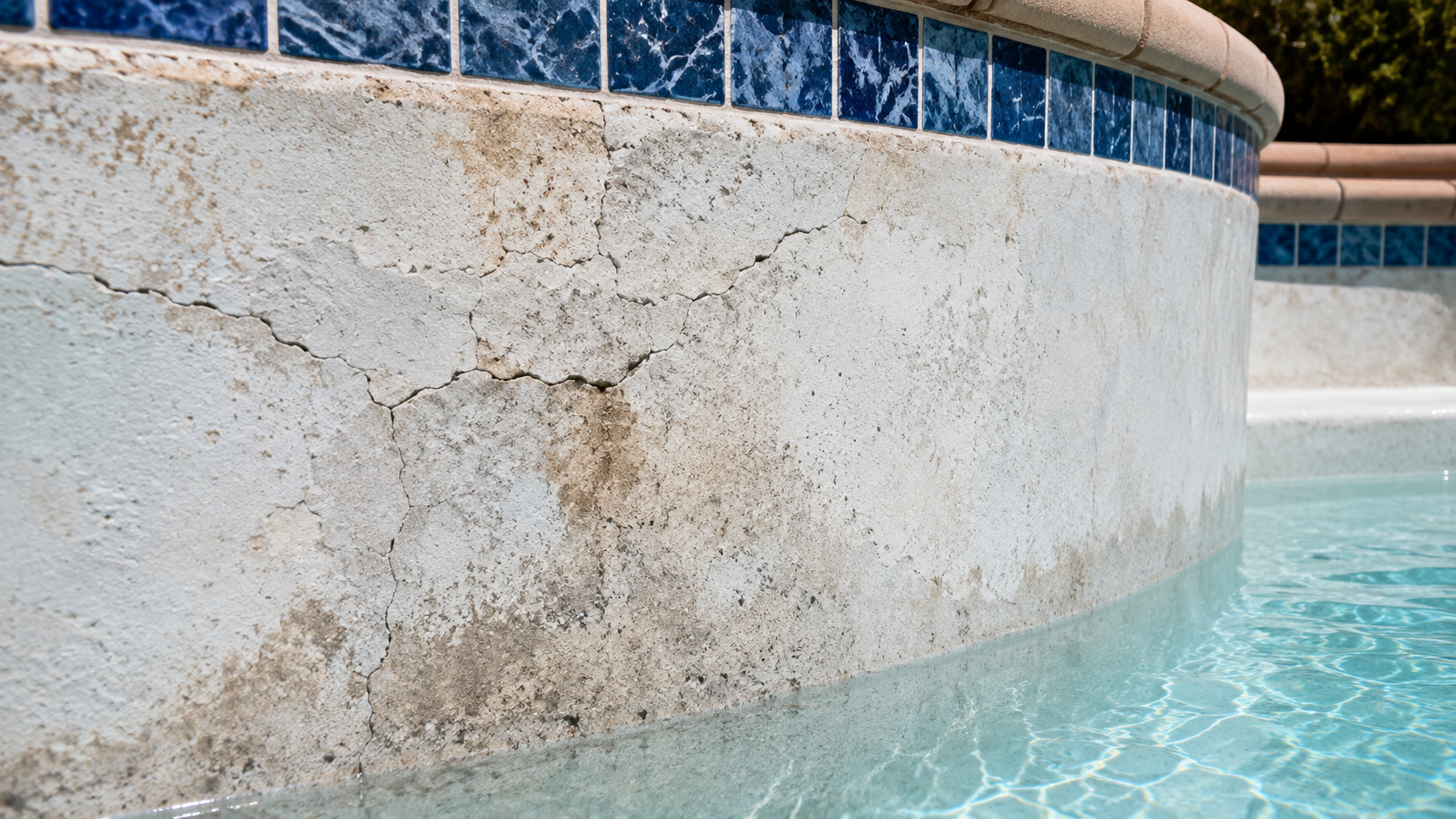
 If your pool’s surface has started to feel rough underfoot, show staining you can’t scrub away, or develop small cracks along the waterline, it’s time to look into professional pool surface repair in San Diego. At Baja Pool Plaster, we specialize in diagnosing exactly what’s happening beneath the surface and restoring it correctly the first time — not just patching over a problem that will resurface (literally) within a season.
A pool’s surface isn’t just cosmetic. It’s the layer that protects the underlying shell or gunite structure from water intrusion, chemical exposure, and the constant expansion and contraction that comes with San Diego’s coastal climate. When that layer breaks down, small issues can turn into expensive ones surprisingly fast.
Why Pool Surface Repair Matters
Pool surfaces take a beating year-round. Sun exposure, chemical treatment, water chemistry swings, and constant use all wear down plaster, pebble, and quartz finishes over time. Left unaddressed, minor surface damage tends to escalate:
- Hairline cracks widen and allow water to seep behind the surface layer, which can lead to bond failure between the plaster and the shell.
- Rough or pitted texture isn’t just uncomfortable — it’s often a sign of etching from imbalanced water chemistry, and it gives algae more surface area to grip onto.
- Staining and discoloration can indicate mineral deposits, metal contamination, or early-stage plaster degradation, all of which affect both appearance and swimmer comfort.
- Delaminating or flaking plaster exposes the underlying gunite or shell to direct water contact, which accelerates structural wear.
Acting early on surface issues almost always costs less — in time, money, and hassle — than waiting until a full pool resurfacing or replastering job becomes the only option.
Common Problems Pool Surface Repair Solves
Homeowners usually reach out because they’re noticing one or more of these issues:
 Cracking. Fine “spider” cracks across the surface, or more defined structural cracks near steps, benches, or the waterline. If cracks are more than surface-deep, they may call for our concrete pool crack repair services rather than a standard surface patch.
Rough, sharp, or chalky texture. Plaster naturally becomes more porous with age, but rough or sharp texture is often accelerated by low pH water or aggressive brushing over time. This is one of the most common complaints we hear from San Diego pool owners.
Staining that won’t lift. Brown, black, or rust-colored staining is frequently mineral or metal-based (iron, copper, manganese) rather than algae, and it needs a different treatment approach than a simple chlorine shock.
Discoloration or mottling. Blotchy or uneven coloring across the surface, especially in pools that are a few years old, often points to inconsistent curing or early plaster wear.
Etching. Low alkalinity and pH swings — common when pools sit uncovered through San Diego’s dry, sunny stretches — eat into plaster and leave a rough, uneven surface.
Small localized damage. Chips, pop-outs, or worn spots around steps, ladders, and return jets from years of foot traffic and equipment contact.
If your surface issues are more widespread than a single problem area, it’s worth comparing your options — our guide on pool replastering vs. a full pool remodel walks through how to tell which route makes sense.
Our Pool Surface Repair Process
We keep the process straightforward so you know exactly what’s happening at each stage:
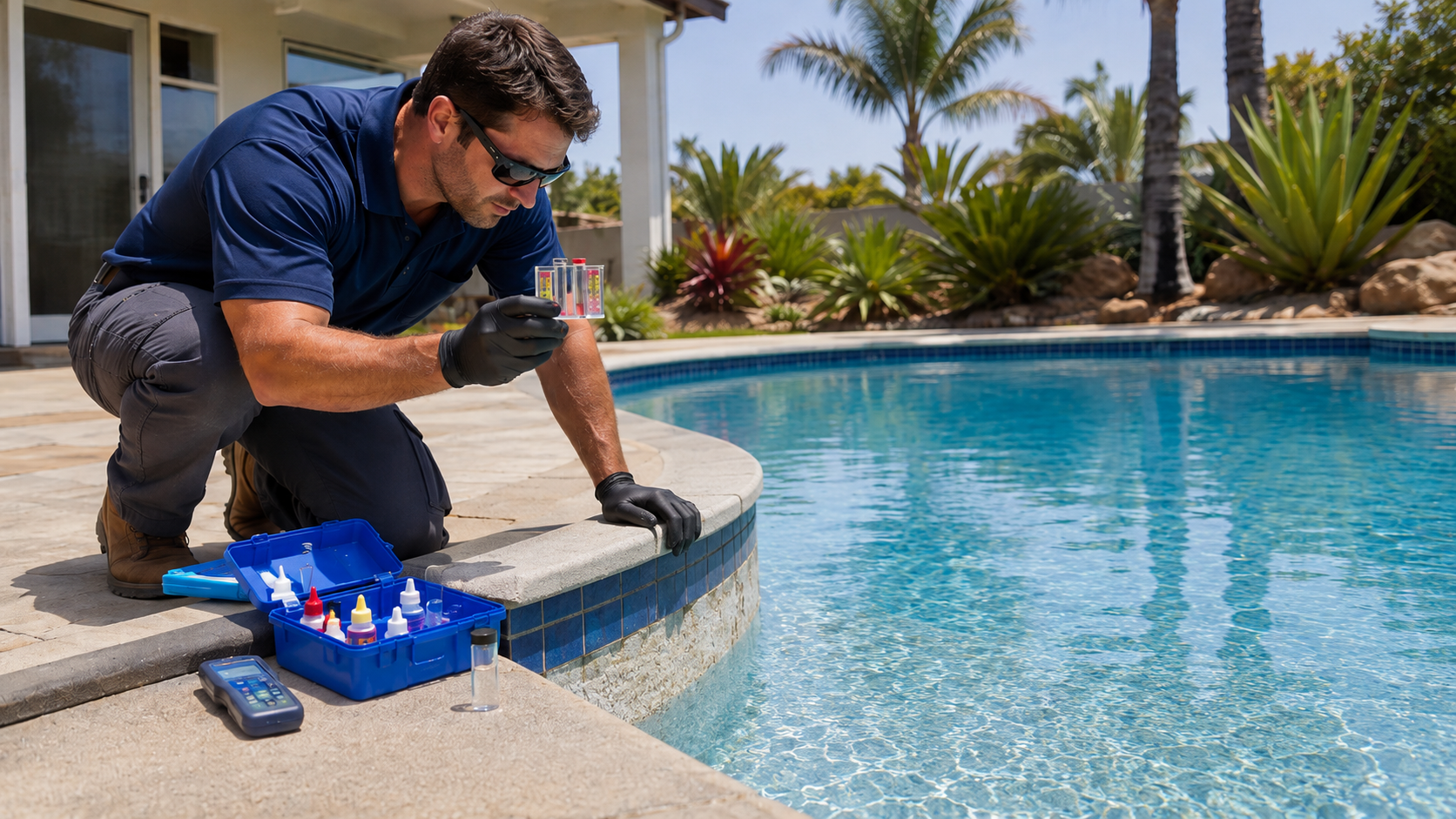
- On-site inspection. We assess the surface condition, identify the root cause (chemistry, age, structural, or application-related), and check for related issues like leaks. If we suspect water loss beyond normal evaporation, we’ll flag whether you need pool leak detection and repair before surface work begins — repairing a surface over an active leak doesn’t solve the underlying problem.
- Water drainage and surface prep. The pool is drained and the damaged area is cleaned, acid-washed, or mechanically prepped so the new material bonds properly.
- Crack and structural repair. Any cracks, pop-outs, or delaminated sections are repaired first, using methods matched to the type and depth of damage.
- Surface application. Depending on the extent of the damage and your goals, this may mean a targeted patch repair, a full pool replastering, or a complete pool resurfacing with plaster, quartz, or pebble finish.
- Curing. The new surface needs proper curing time and careful initial water chemistry management to avoid the same etching or staining issues down the line.
- Refill and water balancing. We refill the pool and bring water chemistry into balance so the new surface starts its life protected, not stressed.
Why Choose Baja Pool Plaster
San Diego pool owners choose us because we treat surface repair as a diagnostic process, not a quick patch job. A few things set our approach apart:
- Local, San Diego-based experience. We work with the specific mix of climate, water conditions, and pool construction styles common across San Diego neighborhoods, not a generic national playbook.
- Root-cause diagnosis. We don’t just resurface over a chemistry problem or a hidden leak — we identify what caused the damage so it doesn’t come back.
- Material expertise. Plaster, quartz, and pebble finishes all behave differently and call for different application techniques. If you’re deciding between finish types, our comparison guides on PebbleTec vs. pool plaster and quartz finish vs. pebble finish are a useful starting point.
- Clear communication. You’ll know what’s wrong, what we recommend, and why — before any work begins.
- Full-service capability. If a surface issue turns out to be part of a bigger picture, we also handle pool remodeling and renovation, so you’re not coordinating multiple contractors.
Pool Surface Repair Across San Diego
Baja Pool Plaster serves pool owners throughout San Diego and the surrounding areas, working on everything from classic backyard plaster pools to newer pebble and quartz finishes. San Diego’s coastal climate creates a specific set of conditions for pool surfaces: near-constant sun exposure accelerates UV wear and chemical breakdown, salt air in areas closer to the coast can affect certain metal fixtures and contribute to staining, and the region’s naturally hard water means mineral scaling is a recurring issue for many pools, especially those that go a season or two without professional attention.
Pool construction styles also vary block by block — older gunite pools with original plaster in established neighborhoods often need different repair approaches than newer shotcrete pools with pebble or quartz finishes. Whether your property is closer to the coast or further inland where temperature swings are more extreme, the surface takes on stress differently, and repair work should account for that.
We regularly work on pools throughout San Diego and nearby areas, and we bring the same inspection-first approach to every property regardless of pool age, size, or finish type.
Cost, Timeline, and What to Expect
Every surface repair is different, so pricing and timelines depend on a handful of factors:
- Extent of damage. A small patch repair takes far less time and material than a full resurfacing or replastering job.
- Finish type. Plaster, quartz, and pebble finishes have different material costs and application times.
- Pool size and shape. Larger pools or those with complex geometry (multiple steps, tanning ledges, water features) take longer to prep and finish.
- Underlying issues. If we find structural cracking, leaks, or extensive delamination during inspection, that work needs to be addressed before or alongside surface application, which affects both cost and timeline.
- Curing and refill time. Most surface work requires a curing period before the pool can be refilled and used again, so factor that into your planning if you have an event or peak-season timeline in mind.
Because these variables shift the estimate significantly from pool to pool, we don’t quote flat pricing without seeing the pool first. For a general sense of what resurfacing-level work runs in the current market, our Pool Resurfacing Cost San Diego 2026 Guide and Pool Replastering Cost Calculator are good starting points before you request a formal estimate.
If you’re comparing contractors, it’s worth knowing what separates a qualified crew from a handyman with a bucket of patch material — our guides on how to choose a pool plastering contractor and licensed pool contractors vs. handymen cover the key questions to ask before you sign anything.
Get Your Pool Surface Repaired the Right Way
A damaged pool surface only gets more expensive to fix the longer it’s left alone. Whether you’re dealing with a few stubborn cracks, rough and pitted plaster, or staining that won’t budge, Baja Pool Plaster can inspect your pool, tell you exactly what’s going on, and walk you through the right fix — not just the fastest one.
If you’re ready for pool surface repair in San Diego, call Baja Pool Plaster at (619) 458-3443 or reach out at info@bajapoolplaster.com for a straightforward assessment and estimate. Prefer to browse our full range of services first? Visit our San Diego pool repair services page to see everything we handle, from crack repair to full renovations.
Frequently Asked Questions
How do I know if my pool needs surface repair or a full resurfacing?
How do I know if my pool needs surface repair or a full resurfacing?
If damage is limited to a small cracked or stained area, targeted repair is often enough. Widespread roughness, staining, or multiple cracks usually point to a full resurfacing or replastering job instead. An in-person inspection is the most reliable way to tell, since surface-level symptoms don’t always reflect how deep the damage goes.
What causes pool plaster to crack or stain in San Diego?
What causes pool plaster to crack or stain in San Diego?
Common causes include water chemistry imbalance (especially low pH or alkalinity), age-related wear, mineral content in fill water, and metal contamination from fixtures or equipment. San Diego’s sun exposure and hard water also contribute to faster surface breakdown compared to shadier or softer-water climates.
How long does pool surface repair take?
How long does pool surface repair take?
Timelines vary based on the extent of the damage and the finish type, but most surface repairs — from drainage through curing and refill — take anywhere from a few days to a couple of weeks. Full resurfacing or replastering jobs typically run longer than a targeted patch repair.
Can I repair just one section of my pool surface, or does the whole pool need to be redone?
Can I repair just one section of my pool surface, or does the whole pool need to be redone?
Localized repairs are possible for isolated cracks, chips, or small stained areas. However, if the surface is uniformly worn or aging across the whole pool, a full resurfacing tends to give a more consistent, longer-lasting result than patching one area at a time.
Is rough pool plaster dangerous?
Is rough pool plaster dangerous?
Rough or pitted plaster isn’t typically dangerous, but it can be uncomfortable for bare feet and hands, and it gives algae more surface area to attach to, which can increase maintenance needs. Severe roughness combined with sharp edges from etching or chipping is worth addressing sooner rather than later.
Does Baja Pool Plaster serve areas near San Diego, or just the city itself?
Does Baja Pool Plaster serve areas near San Diego, or just the city itself?
We serve San Diego and the surrounding areas, working on both coastal and inland properties. Pool construction and surface wear patterns vary across the region, so we assess each property individually rather than applying a one-size-fits-all approach.
What’s the difference between pool resurfacing and pool surface repair?
What’s the difference between pool resurfacing and pool surface repair?
Surface repair typically addresses specific, localized issues — a crack, a stained patch, a rough section. Resurfacing involves removing and replacing the entire surface layer. If problems are widespread or the surface is simply old, resurfacing is usually the more cost-effective long-term choice.
How much does pool surface repair cost in San Diego?
How much does pool surface repair cost in San Diego?
Cost depends on the extent of damage, the finish type, pool size, and whether any structural or leak issues are found during inspection. Because of that variability, we provide estimates after an on-site assessment rather than flat pricing. Our cost guide and calculator can give you a general sense of the range beforehand.