
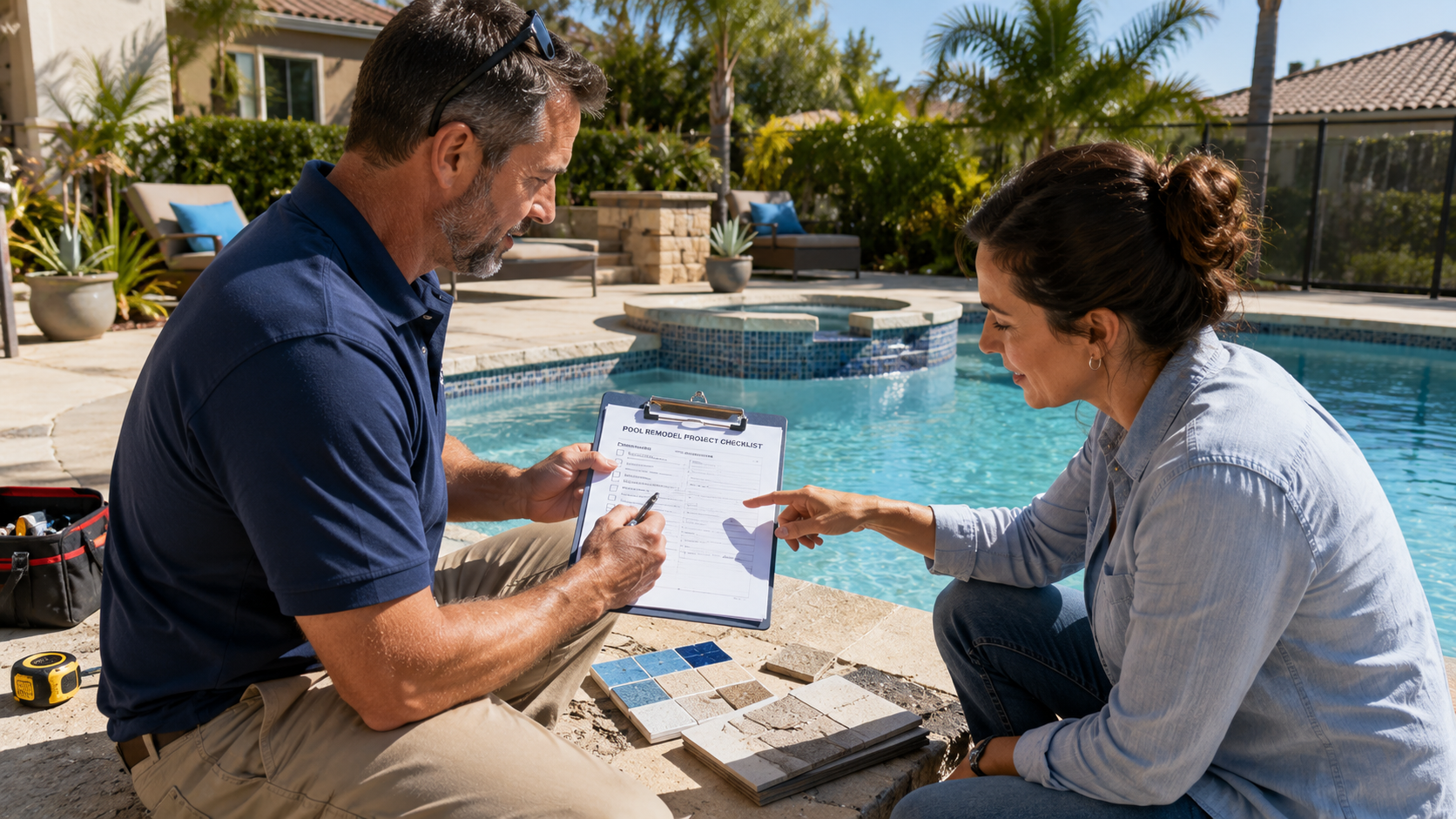
 If you’re planning a pool resurfacing, replastering, repair, or remodel project, the contractor you choose will make or break the outcome. Knowing the right questions to ask before hiring a pool contractor is one of the smartest things a San Diego homeowner can do before signing any agreement. At Baja Pool Plaster, we get calls every week from homeowners who wish they’d asked more questions the first time around — after a rushed job left them with an uneven surface, a leak that was never really fixed, or a “great deal” that turned into a costly redo.
This guide walks through exactly what to ask, what to look for, and what red flags to avoid, so you can hire with confidence whether you’re resurfacing an aging pool, repairing a crack, or planning a full renovation.
Why This Matters Before You Hire
A swimming pool is one of the more expensive features of a San Diego home, and pool work isn’t something you want to redo. Plaster, pebble, and quartz finishes are meant to last many years when applied correctly — but a poorly prepped shell, the wrong mix ratio, or rushed curing can shorten that lifespan dramatically. The wrong contractor can also miss underlying issues like structural cracks or plumbing leaks, patch over symptoms instead of causes, and leave you paying twice.
The risk isn’t just cosmetic. A botched resurfacing job can lead to:
- Premature staining, discoloration, or mottling
- Rough or “sandpaper” texture that’s uncomfortable underfoot
- Delamination or bond failure between the old shell and new surface
- Cracks reappearing within months instead of years
- Water loss from leaks that were never properly diagnosed
Asking the right questions upfront protects your investment and your timeline. It also tends to reveal, very quickly, the difference between a contractor who does this work full-time and one who’s subcontracting it out or learning on your pool.
Common Problems the Right Questions Help You Avoid
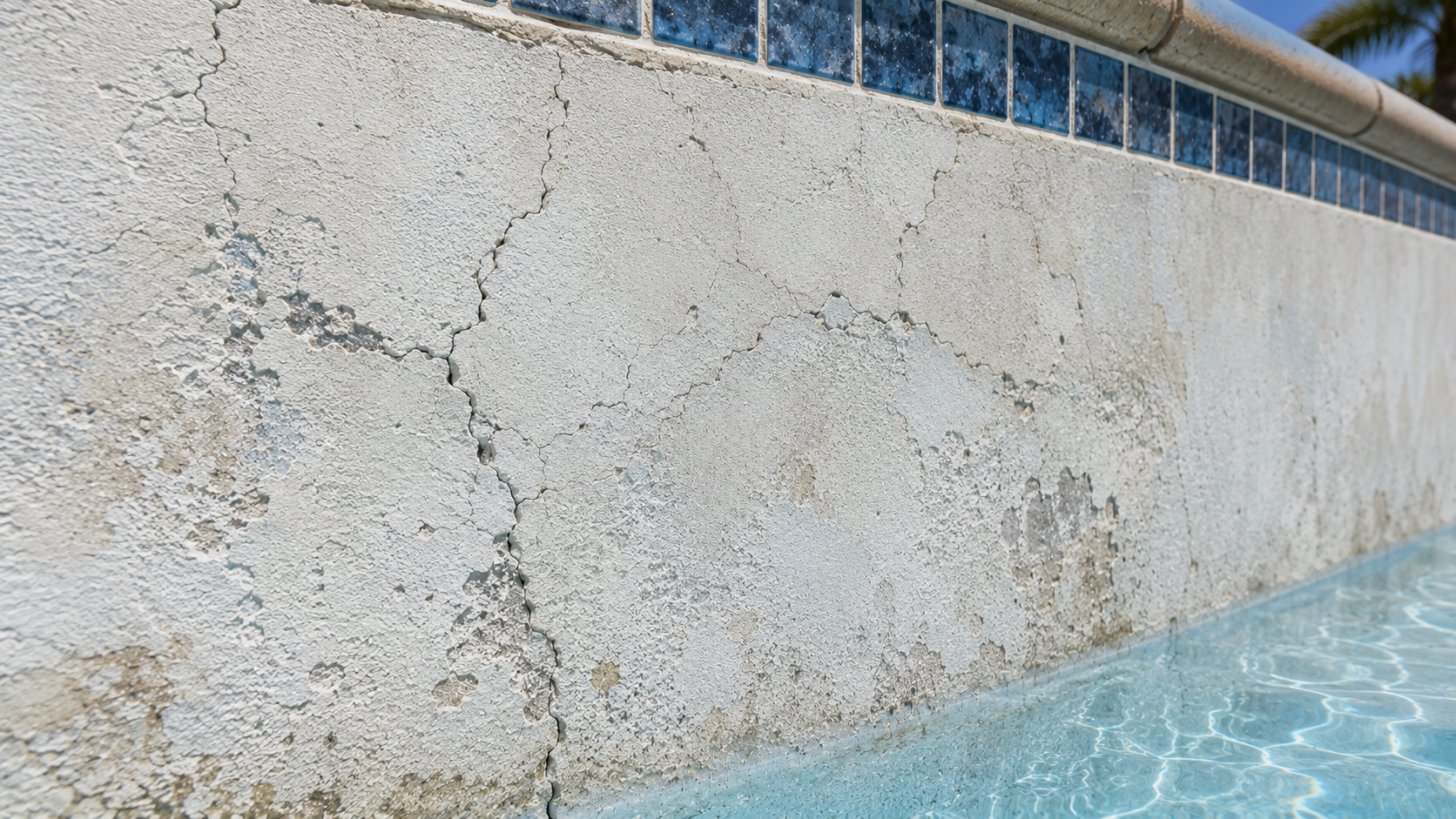 Homeowners researching pool contractors are usually dealing with one of a few situations. Here’s what those questions typically help uncover:
“My pool surface looks rough, stained, or is flaking.” This is often a sign that resurfacing or pool replastering is overdue, or that a previous plaster job wasn’t mixed or cured correctly. Asking a contractor how they handle surface prep and curing tells you whether they understand why this happens in the first place.
“There are visible cracks in the plaster or concrete shell.” Hairline cosmetic cracks are different from structural cracks that need proper concrete pool crack repair. A qualified contractor should be able to explain the difference and how they’d diagnose which type you have.
“My pool is losing water and I can’t find the source.” Before any cosmetic work happens, a reputable contractor will want to rule out a leak. Ask whether they offer pool leak detection and repair or work with someone who does — resurfacing over an active leak just hides the problem temporarily.
“I’m not sure if I need a patch job or a full remodel.” This is one of the most common points of confusion. A trustworthy contractor will walk you through pool replastering vs. a full pool remodel honestly, based on your pool’s condition, not just push the bigger-ticket option.
“I got quotes that are wildly different in price.” This usually comes down to scope, materials, and prep work, not just labor. Understanding what’s included (acid washing, bond coat, curing schedule, warranty) helps you compare quotes apples-to-apples instead of just looking at the bottom line.
The Key Questions to Ask Before Hiring a Pool Contractor
When you’re vetting a pool contractor in San Diego, these are the questions worth asking every company on your list:
- Are you licensed and insured for pool plastering and resurfacing work in California? A legitimate contractor should answer this without hesitation and be willing to provide documentation.
- What specific service do I need — resurfacing, replastering, crack repair, or a full remodel? A contractor who takes time to explain the difference is more likely to recommend the right fix instead of the most expensive one.
- What’s included in your quote? Ask specifically about surface prep, acid washing, bond coat, plaster or pebble material, curing process, and cleanup.
- How do you handle leak detection before resurfacing? Resurfacing over an undiagnosed leak is a common and costly mistake.
- What’s your process, start to finish? A contractor should be able to walk you through each phase in plain language.
- How long will the project take, and what could extend that timeline? Weather, pool size, and the scope of repairs all play a role.
- What type of finish do you recommend, and why? If you’re deciding between finishes, ask them to explain the tradeoffs, similar to what you’d find comparing PebbleTec vs. pool plaster or quartz finish vs. pebble finish.
- What’s your warranty, and what does it actually cover? Get this in writing, not just verbally promised.
- Can I see examples of past work in San Diego? Local project history matters more than a generic photo gallery.
- What’s the payment schedule? Be cautious of anyone asking for full payment upfront before any work has started.
Working through this list — even informally over a phone call — tends to separate contractors who specialize in pool surfaces from general handymen or subcontracted crews. For a deeper breakdown of vetting criteria, our guide on how to choose a pool plastering contractor covers additional red flags to watch for, and our comparison of licensed pool contractors vs. handymen explains why licensing isn’t just a formality.
Our Service Process
When homeowners reach out to Baja Pool Plaster with these questions, here’s what the process typically looks like:
1. Initial consultation. We ask about your pool’s age, current surface condition, and any specific issues (staining, cracking, water loss) so we understand the full picture before recommending anything.
2. On-site inspection. We physically assess the pool shell, existing surface, and surrounding structure to identify whether you’re dealing with a cosmetic issue, a structural one, or both.
3. Honest recommendation. Based on what we find, we’ll tell you whether resurfacing, replastering, crack repair, or a different approach makes the most sense — and explain why, using our pool surface repair or pool resurfacing services as appropriate.
4. Clear, written quote. You’ll get a quote that spells out materials, labor, prep work, and timeline, so there are no surprises later.
5. Surface preparation. This includes draining, acid washing or bead blasting, and repairing any cracks or structural issues before new material goes on.
6. Application. Plaster, pebble, or quartz finish is applied by our crew, not subcontracted out to a rotating group of laborers.
7. Curing and fill. We follow proper curing protocols and guide you through the refill and start-up chemistry so the new surface sets correctly.
8. Final walkthrough. We review the finished work with you before considering the job complete.
If you’re not sure where your project fits in this process, our pool renovation planning guide and pool replastering checklist are useful starting points before you even pick up the phone.
Why Choose Baja Pool Plaster
San Diego homeowners choose Baja Pool Plaster because we treat every project the way we’d want a contractor to treat our own pool:
- We specialize in pool surfaces. Resurfacing, replastering, crack repair, and finish upgrades are our core focus, not a side offering.
- We diagnose before we recommend. We won’t push a full remodel when a targeted repair will do, and we won’t recommend a patch job if the underlying issue needs a real fix.
- We explain our process clearly. You’ll understand what’s happening at each stage, not just receive an invoice at the end.
- We serve San Diego pools directly. Our crews are familiar with the region’s soil conditions, climate, and the common wear patterns local pools experience.
- We stand behind our work. We’ll walk you through exactly what our warranty covers before you commit to anything.
Hiring a Pool Contractor in San Diego
San Diego’s climate means pools get used nearly year-round, which puts extra wear on plaster and pebble surfaces compared to regions where pools sit closed for months at a time. Combined with the area’s sun exposure, water chemistry habits, and mix of older and newer homes, local pools tend to show surface wear, staining, and cracking sooner than homeowners expect.
We work on pools throughout San Diego and the surrounding areas, and the questions above apply just as much whether you’re in the coastal neighborhoods near La Jolla, further inland toward El Cajon and Lakeside, or in communities like La Mesa, Rancho Bernardo, and Bonita. Property types vary widely across these areas — from older shotcrete pools built decades ago to newer gunite pools in more recently developed neighborhoods — and each can require a slightly different approach to prep and resurfacing.
If you’d like to see the kind of work these questions should lead you to, we’ve documented real projects and homeowner experiences across the region, including pool plastering work in El Cajon, reviews from La Mesa, Rancho Bernardo, La Jolla, Lakeside, and Bonita. You can also browse our general San Diego pool repair services to see the full scope of what we handle.
What Affects Cost, Timeline, and Results
Every pool is different, so pricing and timelines depend on several factors rather than a single flat rate. What typically affects the outcome includes:
- Pool size and shape. Larger or more complex shapes require more material and labor time.
- Current surface condition. A pool with extensive cracking or delamination needs more prep work than one that simply needs a routine resurfacing.
- Type of finish chosen. Standard plaster, pebble finishes, and quartz finishes vary in material cost and application time. Our pool resurfacing cost guide and pool replastering cost calculator break this down in more detail, and our pool crack repair cost guide is a helpful reference if crack repair is part of the scope.
- Access to the pool. Tight side yards, gates, or equipment access can affect labor time.
- Weather and curing time. Plaster needs proper curing conditions, which can shift scheduling depending on the season.
- Whether leak repair or structural work is needed first. Any underlying issues should be resolved before resurfacing, which can add time to the project.
Because these factors vary so much from pool to pool, the most accurate way to get a timeline and cost estimate is a direct, on-site assessment rather than a phone-only quote. If you’re comparing how long different finishes tend to last, our pool surface lifespan comparison is a useful reference while you’re asking contractors these questions.
Ready to Hire With Confidence?
Knowing the right questions to ask before hiring a pool contractor puts you in control of the process, instead of hoping for the best. If you’re planning a resurfacing, replastering, repair, or remodel project in San Diego, Baja Pool Plaster is happy to answer every one of these questions directly and give you a clear, honest assessment of your pool.
Call (619) 458-3443 or email info@bajapoolplaster.com to schedule your consultation. We’ll walk your property, answer your questions, and give you a straightforward recommendation, no pressure, no guesswork.
Frequently Asked Questions
What are the most important questions to ask before hiring a pool contractor?
What are the most important questions to ask before hiring a pool contractor?
Ask about licensing and insurance, what’s included in the quote, how leak detection is handled, the step-by-step process, expected timeline, warranty coverage, and whether they specialize in pool surfaces. These questions quickly reveal whether a contractor is experienced with plaster and resurfacing work specifically.
How do I know if a pool contractor is licensed in California?
How do I know if a pool contractor is licensed in California?
A legitimate contractor should be able to provide their license information directly and shouldn’t hesitate when asked. You can also verify licensing status through the California Contractors State License Board before signing any agreement.
Should I get multiple quotes before hiring a pool contractor?
Should I get multiple quotes before hiring a pool contractor?
Yes. Comparing quotes helps you understand what’s included, such as surface prep, materials, and warranty terms, rather than comparing price alone. A significantly lower quote often means less prep work or lower-grade materials.
What’s the difference between pool resurfacing and pool replastering?
What’s the difference between pool resurfacing and pool replastering?
Resurfacing is a broader term that can include plaster, pebble, or quartz finishes, while replastering specifically refers to applying a new plaster coat. The right choice depends on your pool’s current surface, age, and condition, which a contractor should assess before recommending either.
How do I know if my pool needs repair or a full remodel?
How do I know if my pool needs repair or a full remodel?
This depends on whether the issues are surface-level (staining, roughness, minor cracks) or structural (major cracking, persistent leaks, shifting). A contractor should inspect the pool and explain which category your situation falls into before recommending a remodel.
What should be included in a pool contractor’s written quote?
What should be included in a pool contractor’s written quote?
A thorough quote should outline surface preparation, materials used, labor, curing timeline, cleanup, and warranty terms. If a quote is vague about these details, that’s a sign to ask more questions before signing.
Do pool contractors in San Diego need to account for local climate?
Do pool contractors in San Diego need to account for local climate?
Yes. San Diego’s year-round pool use and sun exposure can accelerate surface wear compared to regions with shorter pool seasons, which is worth factoring into maintenance schedules and finish choices.
How long does pool resurfacing or replastering typically take?
How long does pool resurfacing or replastering typically take?
Timelines vary based on pool size, surface condition, and weather, since plaster requires proper curing time. A contractor should give you a realistic timeline range after an on-site assessment rather than a one-size-fits-all answer.