
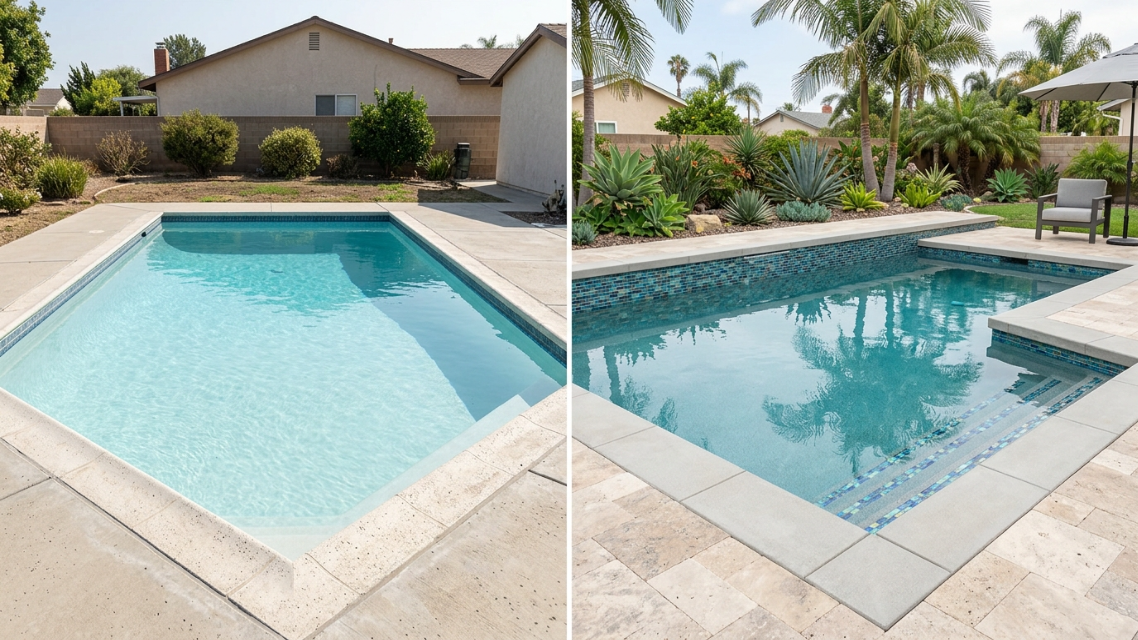
 If your pool’s surface is worn, stained, or rough but the shape, plumbing, and structure are sound, replastering is almost always the smarter, faster, and more affordable choice — a full remodel only makes sense when you’re changing the pool’s design, fixing structural damage, or upgrading equipment beyond what a resurfacing can address. For San Diego homeowners deciding between Pool Replastering vs Full Pool Remodel, the right answer comes down to your pool’s condition, your goals, and your budget. Below, we break down exactly what each option involves so you can make a confident, informed decision.
Understanding Pool Replastering
 Pool replastering is a resurfacing process where the interior finish of your pool — plaster, pebble, or quartz — is stripped down and reapplied. It’s the pool equivalent of refinishing a bathtub rather than gutting the bathroom. A qualified San Diego pool repair crew drains the pool, chips away the old, deteriorated surface, repairs any minor cracks, and applies a fresh coat of plaster, PebbleTec, or quartz finish.
Typical cost: Most San Diego replastering projects fall in the moderate range compared to a full remodel, generally priced per square foot of surface area, with variation depending on the finish type chosen. For an up-to-date breakdown by finish and pool size, homeowners can reference this Pool Resurfacing Cost San Diego 2026 Guide or run their own numbers with the Pool Replastering Cost Calculator.
Core benefits:
- Restores a smooth, algae-resistant, comfortable surface
- Much faster turnaround than a remodel — typically days, not weeks
- Addresses staining, roughness, and minor surface cracking
- Extends the functional life of an otherwise healthy pool shell
Ideal use cases: Replastering is the right call when the pool’s bones — plumbing, plumbing lines, decking, and shape — are all still functioning well, and the only real issue is a tired, aging surface. Homeowners choosing between PebbleTec vs Pool Plaster or comparing a Quartz Finish vs Pebble Finish are typically already leaning toward replastering rather than a full teardown.
Understanding a Full Pool Remodel
A full pool remodel goes well beyond the surface. It can involve reshaping the pool, replacing tile and coping, upgrading plumbing and equipment, adding features like baja shelves or spas, re-decking the surrounding hardscape, and — often — a full resurfacing as part of the larger project. Essentially, replastering is usually a component of a remodel, but a remodel is never just replastering.
Typical cost: Full remodels are a significantly larger investment than replastering alone, since they typically bundle demolition, new plumbing or equipment, tile, decking, and finish work together. Costs scale heavily with scope — a remodel that adds a spa, changes the pool’s shape, or upgrades to a modern energy-efficient pump and filtration system will land well above a resurfacing-only project.
Core benefits:
- Solves structural issues (major cracking, settling, plumbing failures)
- Allows for a full design refresh — new shape, tile, decking, lighting
- Opportunity to modernize equipment for better energy efficiency
- Can add features (spas, sun shelves, water features) that increase home value
Ideal use cases: A remodel makes sense when the pool has structural problems, outdated 1980s/90s geometry that no longer fits how the family uses the space, aging equipment that’s costing money in energy bills, or when the homeowner simply wants a completely different look. If cracking is suspected to be more than cosmetic, it’s worth starting with a proper concrete pool crack repair assessment before committing to either path, since some “remodel-level” damage can sometimes be addressed with targeted repair.
Side-by-Side Comparison
| Attribute | Pool Replastering | Full Pool Remodel |
|---|---|---|
| Upfront Cost | Lower — moderate investment per square foot | Higher — can be several times the cost of resurfacing alone |
| Project Timeline | Typically days | Typically several weeks to a few months |
| Lifespan of Work | 7–15+ years depending on finish type | Resets the clock on the entire pool system |
| Maintenance | Standard ongoing chemical and surface care | Same, plus newer equipment often means lower upkeep |
| Aesthetics | Refreshes surface color and texture only | Full design transformation — shape, tile, decking, and lighting |
| Efficiency Energy/Water | No change unless equipment is also replaced | Opportunity to upgrade pumps, heaters, and filtration for efficiency |
| Best For | Cosmetic wear, staining, and minor surface roughness | Structural issues, outdated design, and major feature additions |
Pros and Cons Breakdown
Pros of Pool Replastering
- Fast — most pools are back in use within about a week
- Budget-friendly compared to a remodel
- Immediately improves feel, hygiene, and appearance of the surface
- Low disruption to landscaping and surrounding decking
Cons of Pool Replastering
- Doesn’t fix structural, plumbing, or equipment problems
- Won’t change the pool’s shape, size, or footprint
- If underlying issues exist, they’ll resurface (sometimes literally) later
Pros of a Full Pool Remodel
- Solves structural and equipment issues at the root
- Complete creative freedom over shape, finish, tile, and features
- Long-term efficiency gains from modern equipment
- Can significantly boost home resale value
Cons of a Full Pool Remodel
- Substantially higher upfront investment
- Longer project timeline means weeks without pool access
- More permitting and planning involved, especially for structural changes
Which Option is Better? The Ultimate Showdown
When weighing Pool Replastering vs Full Pool Remodel, the honest answer is that most San Diego pools don’t need a remodel — they need a resurfacing. If your pool holds water properly, the plumbing and equipment are functioning, and the only complaint is a rough, stained, or dated-looking surface, replastering delivers nearly all of the visual and tactile benefit at a fraction of the cost and downtime.
Choose replastering if: your pool structure is sound, your equipment still works well, and your main goal is restoring a clean, smooth, attractive surface without a major renovation project. This is the far more common scenario, and it’s why so many San Diego homeowners start their search by comparing pool surface lifespan options rather than jumping straight to a full teardown.
Choose a full remodel if: you’re seeing signs of structural failure, your pool’s shape or layout no longer fits your family’s needs, your equipment is old enough that operating costs are climbing, or you want to add features like a spa, tanning ledge, or updated tile and decking. In these cases, resurfacing alone is a temporary patch rather than a real solution — and it’s worth budgeting for a proper remodel from the start.
San Diego’s climate means pools get heavy year-round use, which accelerates surface wear compared to cooler climates — a major reason replastering is such a common and cost-effective mid-life upgrade here. At the same time, San Diego’s older housing stock, especially homes built before the 1990s, often have pools with outdated equipment and geometry, which is where a full remodel tends to make more financial sense long-term.
If you’re unsure which category your pool falls into, a professional evaluation is the safest first step. Signs like hairline cracks, unexplained water loss, or discoloration that reappears shortly after cleaning can indicate the issue runs deeper than the surface — in which case, a pool leak detection and repair inspection or a broader pool surface repair assessment can clarify whether you’re really looking at a resurfacing job or something more involved.
Get a Professional Opinion Before You Decide
Every pool tells a different story, and the fastest way to know whether you need replastering or a full remodel is a hands-on evaluation. Baja Pool Plaster offers consultations for San Diego homeowners weighing these exact options — whether that means a straightforward pool replastering quote or a conversation about full pool remodeling and renovation. If you’re just starting to explore your options, our pool resurfacing overview and Pool Renovation Planning Guide are good starting points before you request a bid.
Conclusion & Recommendation
For the large majority of San Diego homeowners, the Pool Replastering vs Full Pool Remodel decision comes down to one question: is the problem cosmetic, or structural? If it’s cosmetic — surface staining, roughness, dated color — replastering solves it quickly and affordably. If it’s structural, involves outdated equipment, or you want a genuinely new design, a full remodel is the investment that actually pays off. When in doubt, start with an inspection rather than guessing; it’s the only way to know for certain which path fits your pool, your timeline, and your budget.
Frequently Asked Questions
1. How do I know if my pool needs replastering or a full remodel?
1. How do I know if my pool needs replastering or a full remodel?
If the pool holds water, the plumbing and equipment work properly, and the surface is simply worn, stained, or rough, replastering is typically sufficient. If you’re seeing structural cracking, persistent water loss, or want to change the pool’s shape or add features, a full remodel is the better path.
2. How long does pool replastering take compared to a full remodel?
2. How long does pool replastering take compared to a full remodel?
Replastering is typically completed within about a week, while a full remodel can take several weeks to a few months depending on scope, permitting, and the extent of structural or design changes involved.
3. Is pool replastering cheaper than a full remodel?
3. Is pool replastering cheaper than a full remodel?
Yes — replastering is generally a fraction of the cost of a full remodel, since it addresses only the surface finish rather than structure, plumbing, equipment, tile, and decking.
4. Can I add a spa or sun shelf without a full remodel?
4. Can I add a spa or sun shelf without a full remodel?
Typically no. Adding new features like a spa, tanning ledge, or water feature usually requires structural and plumbing changes that fall under a remodel rather than a simple resurfacing.
5. How often does a San Diego pool need replastering?
5. How often does a San Diego pool need replastering?
Most plaster and pebble finishes last roughly 7 to 15+ years depending on the material and how well the water chemistry has been maintained, with San Diego’s year-round pool usage sometimes shortening that window compared to cooler climates.
6. Will replastering fix a leaking pool?
6. Will replastering fix a leaking pool?
Not on its own. If a leak is coming from plumbing or a structural crack, that needs to be addressed separately — often through leak detection and targeted repair — before or alongside any resurfacing work.
7. Do I need a permit for pool replastering or a pool remodel in San Diego?
7. Do I need a permit for pool replastering or a pool remodel in San Diego?
Simple resurfacing projects typically don’t require permitting, but full remodels — especially those involving structural changes, new equipment, or added features — usually do. It’s best to confirm current requirements with your contractor or the local building department before starting.
8. What’s the difference between PebbleTec and traditional plaster for a replastering project?
8. What’s the difference between PebbleTec and traditional plaster for a replastering project?
PebbleTec is a more durable, textured aggregate finish that generally outlasts traditional smooth plaster, though it typically costs more upfront. The right choice depends on budget, desired look, and how long you want the finish to last.
9. Should I upgrade my pool equipment during a replastering project?
9. Should I upgrade my pool equipment during a replastering project?
While replastering itself doesn’t require equipment changes, many homeowners choose to upgrade pumps or filtration at the same time to take advantage of the pool being drained — though this shifts the project closer to a mini-remodel in scope and cost.
10. How do I choose the right contractor for a replastering or remodel project?
10. How do I choose the right contractor for a replastering or remodel project?
Look for a licensed, experienced pool contractor with strong local reviews and a clear, itemized quote. Our guide on how to choose a pool plastering contractor and our list of questions to ask before hiring a pool contractor can help you vet candidates with confidence.