
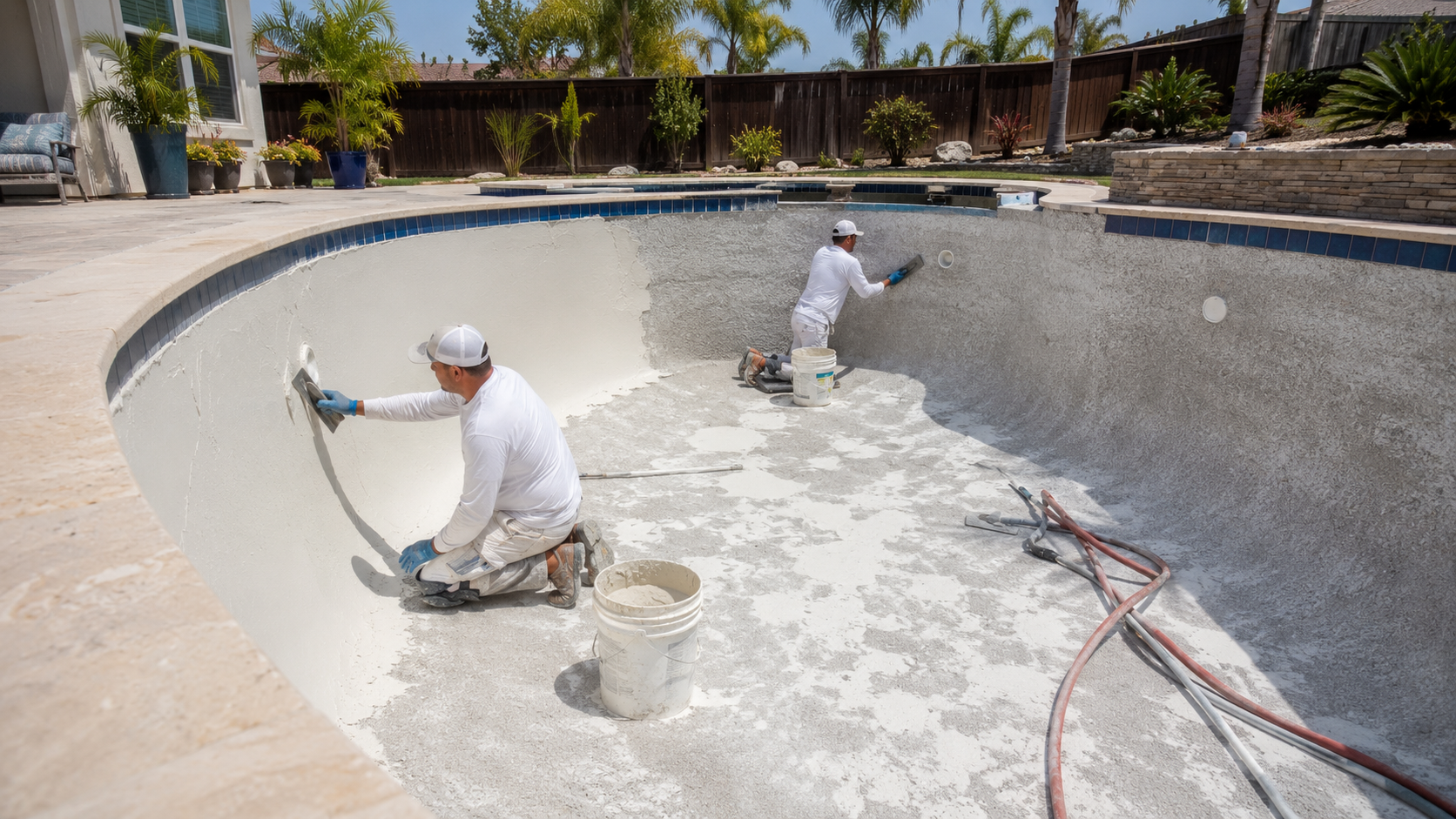
 Planning a pool renovation can feel overwhelming — there are surface options to compare, structural questions to answer, permits to consider, and a budget to protect. This Pool Renovation Planning Guide from Baja Pool Plaster was built specifically for San Diego pool owners who want a clear, honest roadmap before they commit to a resurfacing, replastering, or full remodel project. Whether your pool is showing its age or you’re simply ready for an upgrade, this guide walks you through exactly what to expect, in what order, and why it matters.
Baja Pool Plaster has worked on pools throughout the San Diego area, from older plaster surfaces in need of replacement to full renovations that modernize a backyard from the waterline down. This guide reflects what actually happens on real San Diego jobsites — not generic national advice that ignores our climate, soil, and pool styles.
Why Pool Renovation Planning Matters
A pool renovation is a significant investment, and the biggest costly mistakes almost always trace back to poor planning rather than poor workmanship. Homeowners who skip the planning stage tend to run into the same issues: they choose a surface finish without understanding how it performs in San Diego’s sun and water chemistry, they underestimate how existing cracks or leaks will affect the project scope, or they get partway into a job before realizing a full remodel would have made more sense than a simple resurfacing.
Proper planning solves these problems before they start. It helps you:
- Understand whether your pool needs resurfacing, replastering, structural crack repair, or a full remodel
- Set a realistic budget based on your pool’s actual condition, not guesswork
- Avoid emergency repairs by catching small issues (hairline cracks, early surface wear, slow leaks) before they become expensive
- Choose a surface finish — plaster, quartz, or pebble — that matches your maintenance preferences and how you use the pool
- Time the project around San Diego’s pool season so you’re not without a usable pool during peak summer months
Waiting too long to plan a renovation often means reacting to a problem instead of getting ahead of it. A pool that’s losing water, showing rough or stained plaster, or developing surface cracks is telling you something — and the earlier that’s addressed, the more options (and often the lower the cost) you have.
Common Problems a Pool Renovation Planning Guide Helps You Solve
Every renovation starts with a problem, even if that problem is simply “this pool looks tired.” Here are the situations San Diego homeowners most often bring to us:
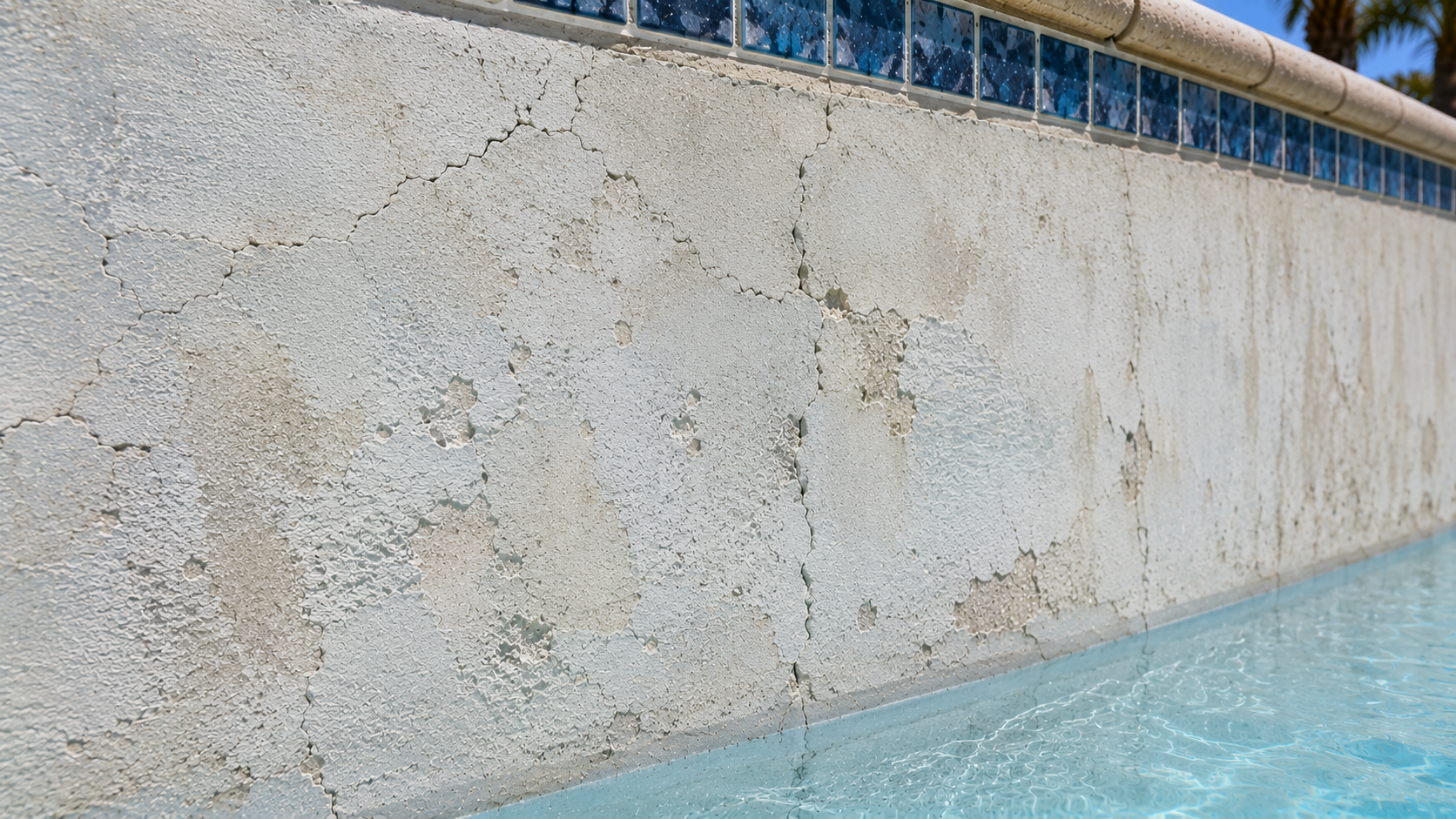 Rough, stained, or pitted plaster. Plaster surfaces naturally wear down over time, especially with San Diego’s high sun exposure and mineral content in local water supplies. Rough or pitted plaster isn’t just a cosmetic issue — it can be uncomfortable underfoot and is often an early sign the surface needs attention. This is one of the most common reasons homeowners search for pool replastering in San Diego.
Visible or suspected structural cracks. Hairline cracks in the shell can be cosmetic, but some indicate deeper structural movement, particularly in older pools or those built on shifting soil. If you’re noticing cracking, it’s worth having it assessed through concrete pool crack repair before planning any surface work on top of it.
Water loss that doesn’t add up. If you’re topping off your pool more than evaporation would explain, a leak may be part of the renovation conversation. Renovating over an undiagnosed leak is one of the most common — and avoidable — mistakes we see, which is why pool leak detection and repair is often step one, not an afterthought.
Outdated finishes that no longer match the home. Sometimes the pool is structurally fine, but the finish is decades old and it’s simply time for an upgrade. This is where comparing options like PebbleTec vs. pool plaster or a quartz finish vs. pebble finish becomes part of the planning process.
Uncertainty about resurfacing vs. a full remodel. Not every pool needs a ground-up remodel, and not every pool can be fixed with simple resurfacing. Understanding the difference between pool replastering and a full pool remodel early on prevents scope changes mid-project.
Our Pool Renovation Planning Process
A well-planned renovation follows a logical sequence. Here’s how Baja Pool Plaster approaches it with San Diego homeowners:
Step 1: On-site assessment. We start by physically inspecting the pool — the surface condition, visible cracks, coping, tile line, and equipment — rather than quoting off photos or guesses. This is also when we discuss whether a leak inspection is warranted before moving forward.
Step 2: Scope definition. Based on the assessment, we help you understand whether your project is best handled as a straightforward pool resurfacing, a full replastering, structural crack repair, or a more comprehensive pool remodeling and renovation project.
Step 3: Surface and finish selection. We walk through finish options — plaster, quartz aggregate, and pebble finishes — covering durability, texture, appearance, and maintenance so you can choose based on how you actually use your pool, not just how it looks on day one.
Step 4: Budget and timeline planning. Pricing and scheduling depend on pool size, current surface condition, the finish selected, and site access. We provide a clear scope before work begins so there are no surprises mid-project. Homeowners comparing ballpark figures often start with our San Diego pool resurfacing cost guide or pool replastering cost calculator.
Step 5: Draining, prep, and surface work. Once scheduled, the pool is drained, the existing surface is prepped (including addressing any cracks or bond issues), and the new finish is applied by our crew.
Step 6: Curing, start-up, and water chemistry. After the new surface is applied, proper curing and startup chemistry are critical to how the finish looks and performs for years to come. We guide you through this stage so the investment is protected from day one.
Why Choose Baja Pool Plaster
Homeowners planning a renovation want a contractor who will tell them what their pool actually needs — not upsell unnecessary work or cut corners to save time. Baja Pool Plaster focuses on:
- Local, hands-on experience. We work on pools throughout the San Diego area and understand how local soil conditions, sun exposure, and water chemistry affect plaster, quartz, and pebble finishes differently than in other markets.
- Honest scoping. We assess before we quote, so the plan we recommend reflects your pool’s actual condition rather than a one-size-fits-all package.
- Process transparency. From the initial inspection through startup chemistry, we walk homeowners through each stage so there are no surprises.
- A full range of services under one roof, including resurfacing, replastering, crack repair, leak detection, and complete remodeling — so your renovation plan doesn’t require coordinating multiple unrelated contractors.
If you’re still comparing contractors, our guides on how to choose a pool plastering contractor and what questions to ask before hiring one are useful starting points, along with our pool replastering checklist for homeowners who want to plan ahead of time.
Pool Renovation Planning for San Diego Homes
San Diego’s pool renovation needs aren’t identical to other parts of the country, and this planning guide reflects that. Many San Diego backyards feature pools built decades ago, with plaster surfaces that have absorbed years of intense coastal and inland sun exposure. That sun exposure, combined with San Diego’s water hardness, tends to accelerate surface wear compared to shadier or more humid climates, which is part of why plaster surfaces here often need attention sooner than homeowners expect.
Property types across the area also affect planning. Coastal properties near the water may deal with different equipment corrosion patterns than inland pools, while hillside and canyon-adjacent lots — common throughout San Diego County — can be more prone to soil movement that shows up as shell cracking over time.
We’ve applied this same planning approach to renovation projects in areas near San Diego, including El Cajon, La Mesa, Rancho Bernardo, La Jolla, Lakeside, and Bonita. If your property doesn’t fall neatly into one category, the planning process still starts the same way: an honest, on-site look at what your pool actually needs.
Cost, Timeline, and What to Expect
Every renovation plan is different, and cost or timeline estimates depend on several factors rather than a flat rate:
- Pool size and shape — larger or more complex shapes require more material and labor time
- Current surface condition — a pool with existing cracks or bond failure needs additional prep work before a new finish can be applied
- Finish selected — plaster, quartz, and pebble finishes involve different material costs and application processes
- Site access — equipment access, gate width, and yard layout can affect labor time
- Additional scope — tile replacement, coping repair, or equipment upgrades bundled into the renovation
Because these variables differ from pool to pool, we recommend an on-site assessment rather than a phone-only estimate. Timelines are similarly dependent on scope: a straightforward resurfacing typically moves faster than a project that also involves crack repair or a broader remodel. We’ll walk you through a realistic timeline once your project’s scope is defined, and we always account for proper curing time so your new surface performs the way it should.
If you’re weighing whether your pool needs surface work now or can wait, our pool surface lifespan comparison is a helpful reference while you plan.
Ready to Plan Your Pool Renovation?
A successful pool renovation starts with an honest, informed plan — not guesswork. Whether your pool needs a simple resurfacing, replastering, crack repair, or a full renovation, Baja Pool Plaster will walk you through every step, from the first inspection to final startup chemistry. Call us today at (619) 458-3443 or email info@bajapoolplaster.com to schedule your on-site assessment and get a renovation plan built around what your pool actually needs.
Frequently Asked Questions
How do I know if my pool needs resurfacing or a full renovation?
How do I know if my pool needs resurfacing or a full renovation?
It depends on the underlying condition of the shell, not just the surface appearance. If the plaster is rough, stained, or pitted but the structure is sound, resurfacing is often enough. If there are structural cracks, persistent leaks, or you’re also changing the pool’s layout or features, a fuller renovation is usually the better path. An on-site assessment is the most reliable way to know for sure.
How long does a pool renovation take in San Diego?
How long does a pool renovation take in San Diego?
Timelines depend on the scope of work, pool size, and whether additional repairs (like crack repair or leak fixes) are needed before the new surface goes on. A straightforward resurfacing generally moves faster than a project involving structural repairs. We provide a project-specific timeline after the initial assessment.
What’s the difference between pool replastering and a full pool remodel?
What’s the difference between pool replastering and a full pool remodel?
Replastering replaces the interior surface of an existing pool shell, while a full remodel can involve reshaping the pool, updating tile and coping, replacing equipment, or adding features. Many homeowners only need replastering; others benefit from a broader remodel. We cover this comparison in more depth in our guide on replastering versus a full remodel.
Do I need to worry about cracks before renovating my pool?
Do I need to worry about cracks before renovating my pool?
Yes — renovating over an unaddressed structural crack can affect how well the new surface performs and holds up. As part of planning, we assess whether any visible or suspected cracking needs repair before new plaster, quartz, or pebble is applied.
How much does a pool renovation cost in San Diego?
How much does a pool renovation cost in San Diego?
Cost depends on pool size, current surface condition, the finish you choose, and whether additional repairs are part of the scope. Because every pool is different, we recommend an on-site assessment for an accurate estimate rather than relying on a flat, generic number.
What pool finish options are available for a renovation?
What pool finish options are available for a renovation?
The most common options are plaster, quartz aggregate, and pebble finishes. Each differs in appearance, texture, durability, and maintenance needs. We walk through the tradeoffs of each option as part of the planning process so you can choose based on how you use your pool.
Is now a good time to plan a pool renovation, or should I wait?
Is now a good time to plan a pool renovation, or should I wait?
If your pool is showing rough or worn plaster, visible cracking, or unexplained water loss, planning sooner rather than later typically protects more of your budget and gives you more flexibility on timing. Waiting until a small issue becomes urgent often limits your options and can increase cost.
Do you serve areas outside of San Diego proper?
Do you serve areas outside of San Diego proper?
Yes. In addition to San Diego, we’ve completed pool renovation and plastering projects in nearby communities including El Cajon, La Mesa, Rancho Bernardo, La Jolla, Lakeside, and Bonita.