
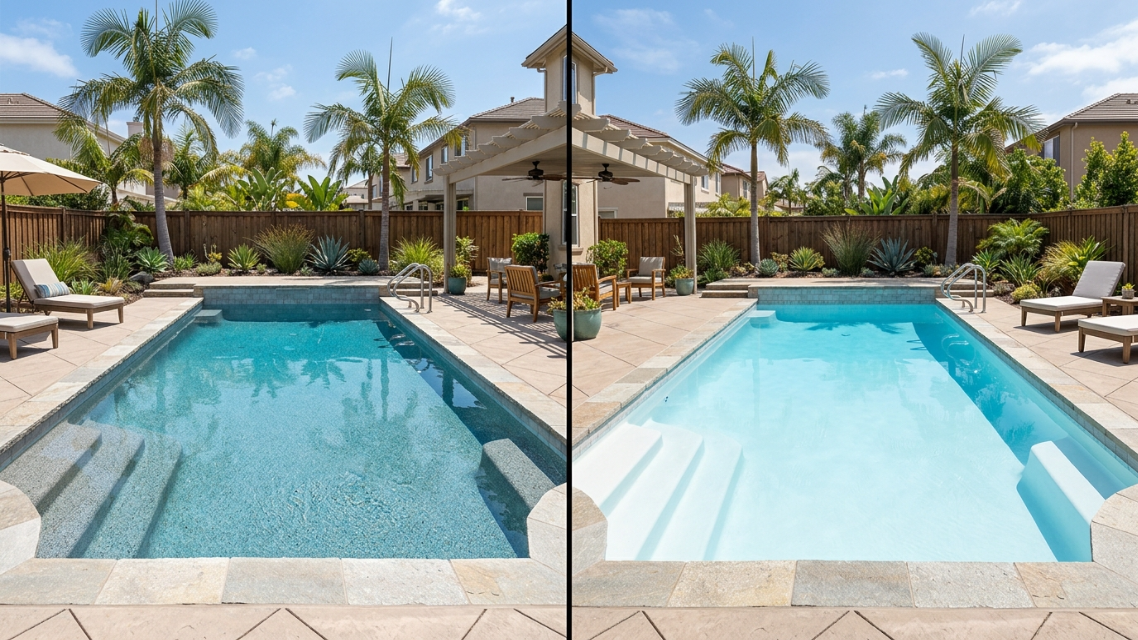
 Choosing between PebbleTec and pool plaster comes down to budget versus longevity: pool plaster wins on upfront cost, while PebbleTec wins on durability, offering roughly double the lifespan for a higher initial investment. For most San Diego homeowners planning to stay in their home long-term, PebbleTec’s aggregate finish pays for itself through fewer replastering cycles. If you need a budget-friendly refresh or are resurfacing before a sale, traditional plaster remains a smart, proven choice. The right answer depends on your timeline, your pool’s usage, and how much you value low-maintenance aesthetics — all of which we break down below.
Understanding PebbleTec
PebbleTec is an aggregate pool finish made from natural pebbles blended with cement-based binder and applied in a thin, textured layer over the pool shell. Unlike smooth plaster, PebbleTec exposes small stones at the surface, creating a durable, slip-resistant texture that also refracts light in a way that gives the water a richer, more natural blue-green tone. Manufacturers and pool professionals commonly cite a working lifespan of 12 to 20+ years for PebbleTec, roughly double what standard plaster delivers, which is a major reason it has become the go-to upgrade for pool owners doing a full pool resurfacing project rather than a quick patch job.
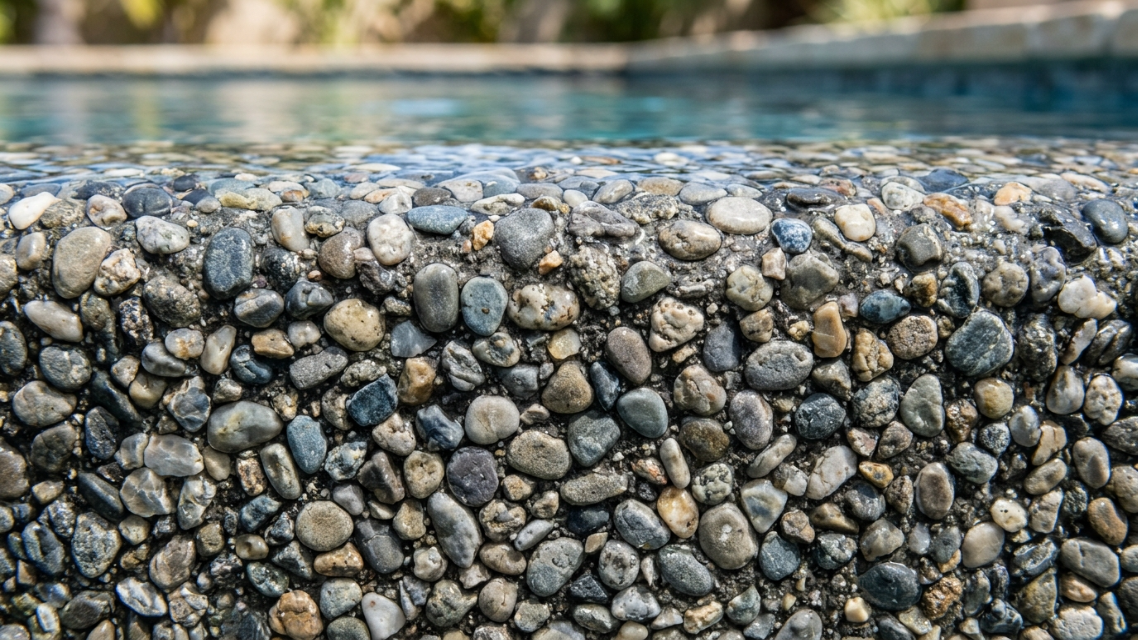 Cost-wise, PebbleTec typically runs higher per square foot than plaster, largely because of material cost and the additional labor involved in exposing and washing the aggregate finish. For San Diego pool owners, that upfront premium is often weighed against our long outdoor swim season; with pools in near-constant use eight to nine months of the year and heavy UV exposure most of that time, a finish that resists fading, etching, and rough-water erosion tends to justify the extra spend. PebbleTec also comes in numerous color and pebble-blend options, from classic white to deep blue-black aggregates, which appeals to homeowners renovating pools attached to more architecturally distinctive San Diego homes — think Spanish revival, mid-century modern, or coastal contemporary builds where the pool finish is part of the overall design statement.
PebbleTec is best suited for homeowners planning to stay in their property for a decade or more, pools that see heavy family or rental use, and anyone prioritizing a low-maintenance, long-lifespan surface over the lowest possible upfront number.
Understanding Pool Plaster
Pool plaster (sometimes called marcite) is the traditional pool finish: a smooth, troweled cement-based coating applied directly over the pool’s gunite or concrete shell. It’s been the standard finish for in-ground pools for decades because it’s relatively inexpensive, quick to install, and gives that classic smooth, uniform white or light-blue surface most people picture when they think of a backyard pool.
Standard white plaster typically has a service life of around 7 to 10 years before it needs replastering, though that window shortens with poor water chemistry, heavy bather load, or San Diego’s mineral-heavy tap water, which can accelerate scaling and etching if the pool isn’t balanced consistently. On the upside, plaster is the most budget-friendly resurfacing option on the market, and for homeowners who need a functional, attractive pool without a large capital outlay, it remains a completely reasonable choice. If your existing surface is already showing cracks, staining, or rough patches, a straightforward pool replastering project can restore the pool’s look and watertight integrity for a fraction of what an aggregate upgrade would cost.
Plaster is best suited for homeowners on a tighter renovation budget, pools being resurfaced ahead of a home sale, rental or investment properties where minimizing upfront cost matters more than 20-year durability, and situations where a fast turnaround is a priority.
PebbleTec vs Pool Plaster: Side-by-Side Comparison
| Attribute | PebbleTec | Pool Plaster |
|---|---|---|
| Upfront Cost | Higher per square foot | Lower, most budget-friendly option |
| Average Lifespan | 12–20+ years | 7–10 years |
| Surface Texture | Textured, slightly rougher underfoot | Smooth, soft to the touch |
| Maintenance | Lower long-term maintenance; resists etching and staining | Requires more frequent water balancing and periodic acid washing |
| Aesthetics | Rich, varied color depth; natural stone look | Classic, uniform smooth finish |
| Resistance to Chemicals/UV | High resistance to fading and etching | More prone to fading, staining, and etching over time |
| Long-Term Value | Higher ROI over 15–20 year horizon | Better short-term value, lower ROI over long horizon |
Pros and Cons Breakdown
Pros of PebbleTec
- Long lifespan — often doubles the service life of standard plaster, meaning fewer resurfacing projects over the life of the pool
- Superior durability — better resistance to cracking, etching, and rough-water wear
- Enhanced aesthetics — natural stone texture and richer water color that many San Diego homeowners find elevates curb appeal
- Slip resistance — the textured surface offers better traction around pool decks and steps than smooth plaster
Cons of PebbleTec
- Higher upfront cost — a larger initial investment than traditional plaster
- Rougher texture — some swimmers find the pebble surface less comfortable underfoot, especially bare feet or knees
- Longer install window — the exposure and washing process can extend project timelines slightly compared to a plaster job
Pros of Pool Plaster
- Lower upfront cost — the most economical resurfacing option available
- Smooth, comfortable finish — soft underfoot, which many swimmers prefer
- Fast installation — typically quicker to apply and cure than aggregate finishes
- Proven track record — decades of use as the industry-standard pool surface
Cons of Pool Plaster
- Shorter lifespan — generally needs replastering sooner than PebbleTec
- More prone to staining and etching — especially sensitive to water chemistry swings
- Higher long-term maintenance — more frequent brushing, balancing, and acid washing to keep it looking its best
Which Option Is Better? The Ultimate Showdown
There’s no universal winner in the PebbleTec vs pool plaster debate — the better choice depends entirely on your time horizon and budget. If you’re planning to own your San Diego home for the next 15 to 20 years and want a pool finish that holds up to daily swimming, sun exposure, and the area’s hard water, PebbleTec’s higher upfront cost is generally offset by avoiding two separate replastering projects over that same period. Homeowners investing in a broader backyard upgrade — say, alongside a pool remodeling and renovation project — often choose PebbleTec specifically because it’s the finish least likely to need attention again for over a decade.
On the other hand, if your budget is tighter, you’re resurfacing an older pool before listing your home for sale, or you simply want your pool looking fresh again without a major capital outlay, standard plaster remains the sensible, cost-effective choice. It’s also a strong option if you’re addressing a specific issue — a hairline crack, a rough patch, or surface staining — rather than doing a full aesthetic overhaul; in those cases, a targeted pool surface repair may make more sense than a full resurface either way.
For homeowners who are torn between the two, it’s worth running the numbers over a 15-year window rather than comparing sticker prices alone. A good starting point is our Pool Resurfacing Cost San Diego 2026 Guide, and our Pool Replastering Cost Calculator can help you model out the long-term math for your specific pool size and usage before you commit either way.
Get Expert Guidance for Your San Diego Pool
Every pool, budget, and backyard is different, and the right finish for your neighbor’s pool isn’t necessarily the right one for yours. If you’re weighing PebbleTec against pool plaster, our team offers pool-specific consultations to walk through your surface’s current condition, your water chemistry history, and your renovation timeline. Whether you’re ready for a full pool resurfacing project, need a smaller concrete pool crack repair, or want to rule out a leak before committing to a new finish with our pool leak detection and repair service, our San Diego crew can help you land on the finish that actually fits your pool and your budget. Reach out through our San Diego pool repair services page to schedule a walkthrough.
Conclusion & Recommendation
PebbleTec vs pool plaster ultimately comes down to a simple trade-off: pay more now for a finish that lasts nearly twice as long, or save upfront with a proven, budget-friendly surface that will need attention again sooner. For long-term San Diego homeowners who use their pool heavily and want to minimize future resurfacing projects, PebbleTec is generally the stronger long-term investment. For homeowners prioritizing affordability, a faster project timeline, or a near-term resale, traditional plaster remains a dependable, cost-effective choice. Either way, working with an experienced local contractor who understands San Diego’s water conditions and climate will make a bigger difference in your finish’s lifespan than the material choice alone.
Frequently Asked Questions
Is PebbleTec worth the extra cost compared to plaster?
Is PebbleTec worth the extra cost compared to plaster?
For most homeowners planning to stay in their home long-term, yes — PebbleTec’s longer lifespan (often 12–20+ years versus 7–10 for plaster) tends to offset the higher upfront cost over time, especially in climates like San Diego with long swim seasons and heavy sun exposure.
How long does PebbleTec last compared to pool plaster?
How long does PebbleTec last compared to pool plaster?
PebbleTec typically lasts 12 to 20+ years, while standard pool plaster generally lasts 7 to 10 years before it needs to be redone, depending on water chemistry, usage, and maintenance.
Does PebbleTec feel rough on bare feet?
Does PebbleTec feel rough on bare feet?
Yes, PebbleTec has a textured, slightly rougher surface than smooth plaster because the aggregate pebbles are exposed. Some homeowners appreciate the added slip resistance, while others find it less comfortable underfoot than plaster.
Can I switch from plaster to PebbleTec during a resurfacing project?
Can I switch from plaster to PebbleTec during a resurfacing project?
In most cases, yes. When an existing plaster surface is due for replacement, it’s common to upgrade to PebbleTec at that time rather than reapplying standard plaster, though your contractor should evaluate your pool shell’s condition first.
Which option is better for San Diego’s hard water?
Which option is better for San Diego’s hard water?
PebbleTec generally holds up better against mineral-heavy water and scaling than plaster, which is more prone to etching and staining if water chemistry isn’t consistently balanced.
Is pool plaster still a good option in 2026?
Is pool plaster still a good option in 2026?
Yes. Plaster remains a reliable, cost-effective finish, particularly for homeowners on a tighter budget, those resurfacing ahead of a home sale, or anyone who prefers a smooth surface over a textured one.
How much does it cost to resurface a pool with PebbleTec vs plaster in San Diego?
How much does it cost to resurface a pool with PebbleTec vs plaster in San Diego?
Costs vary based on pool size, shape, and current condition, with PebbleTec generally priced higher per square foot than standard plaster. For current, project-specific numbers, it’s best to request a quote directly rather than rely on general estimates.
Does the type of pool finish affect water chemistry maintenance?
Does the type of pool finish affect water chemistry maintenance?
Somewhat. Plaster surfaces tend to be more sensitive to pH and chemical imbalances, showing staining or etching faster than PebbleTec, which is more chemically resistant.
How do I know if I need a full resurface or just a repair?
How do I know if I need a full resurface or just a repair?
If the damage is isolated — a crack, a rough patch, or minor surface wear — a targeted repair may be sufficient. Widespread staining, roughness, or an aging surface nearing the end of its lifespan usually points to a full resurface. A contractor can assess your specific pool to recommend the right path.