
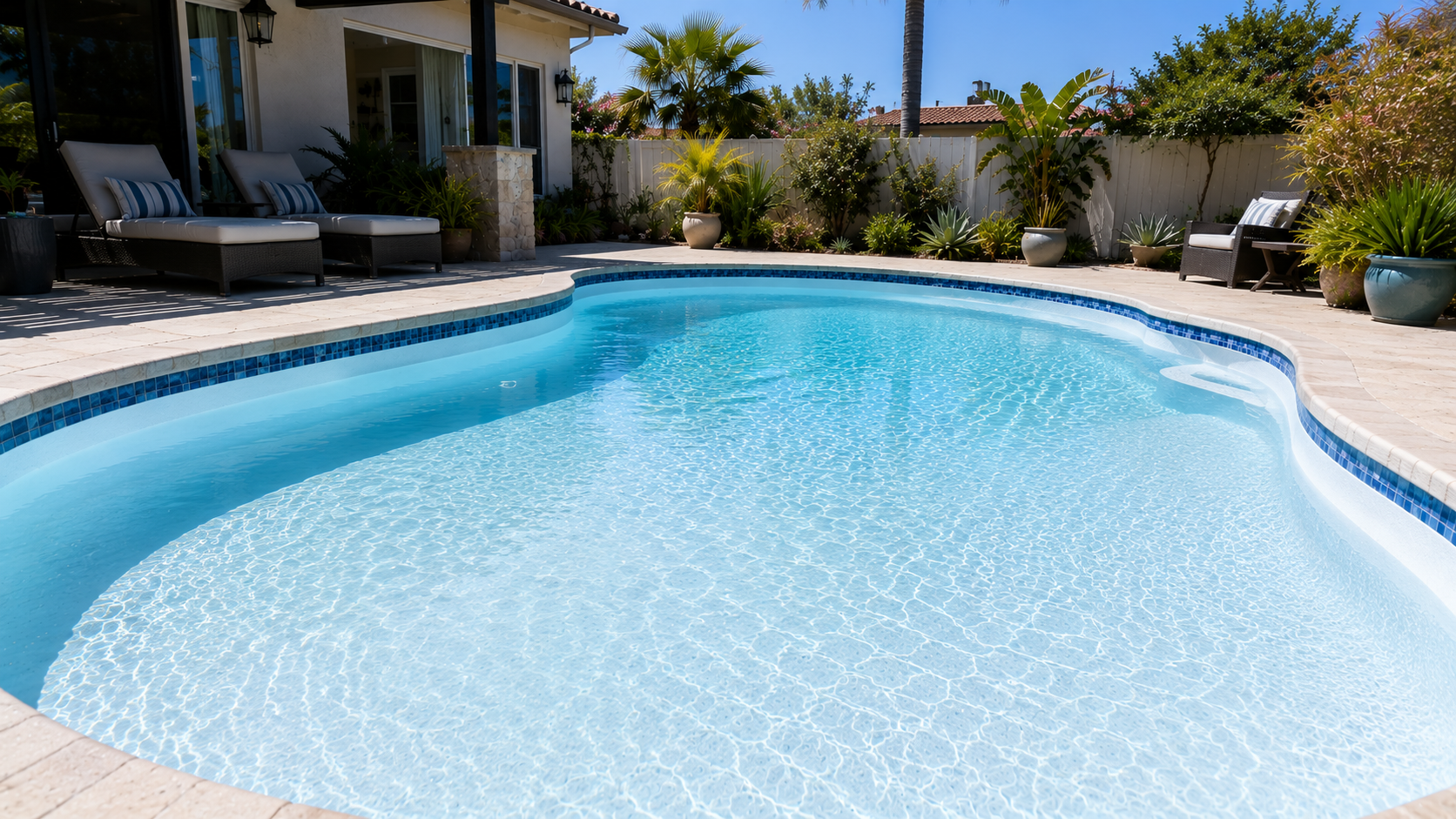
 A pool’s surface takes on more wear than most owners realize. Sun exposure, water chemistry swings, and everyday use all chip away at plaster over time, and without the right care routine, small issues turn into expensive repairs. This Pool Surface Maintenance Guide was built specifically for San Diego CA pool owners who want to protect their investment, avoid premature resurfacing, and keep their pool looking and performing the way it should.
At Baja Pool Plaster, we work with pool surfaces across San Diego every week, and the pattern is consistent: pools that get simple, consistent maintenance last significantly longer between major repairs than pools that don’t. This guide walks through what actually damages plaster, what to watch for, and how a proactive maintenance routine can delay or even prevent the need for pool resurfacing or pool replastering.
Why Pool Surface Maintenance Matters
Plaster, pebble, and quartz finishes are durable, but they’re not indestructible. Water chemistry that drifts outside the correct range — whether too acidic or too high in alkalinity — slowly etches or scales the surface. Left unaddressed, this leads to roughness, staining, and eventually structural cracking.
The stakes are higher than most homeowners assume. A surface issue that starts small, like light etching or a hairline crack, rarely stays small. Water finds its way into any weak point, which can accelerate degradation and, in worse cases, contribute to leaks. That’s a direct line from a maintenance gap to a much larger repair bill, and often to a full pool surface repair rather than a simple touch-up.
There’s also a comfort and safety angle. Rough, pitted plaster isn’t just unattractive — it can be abrasive on skin and feet, and it’s a sign that the surface is chemically or physically compromised. Addressing problems early keeps the pool both safer and more enjoyable to use.
Common Problems This Guide Helps You Solve
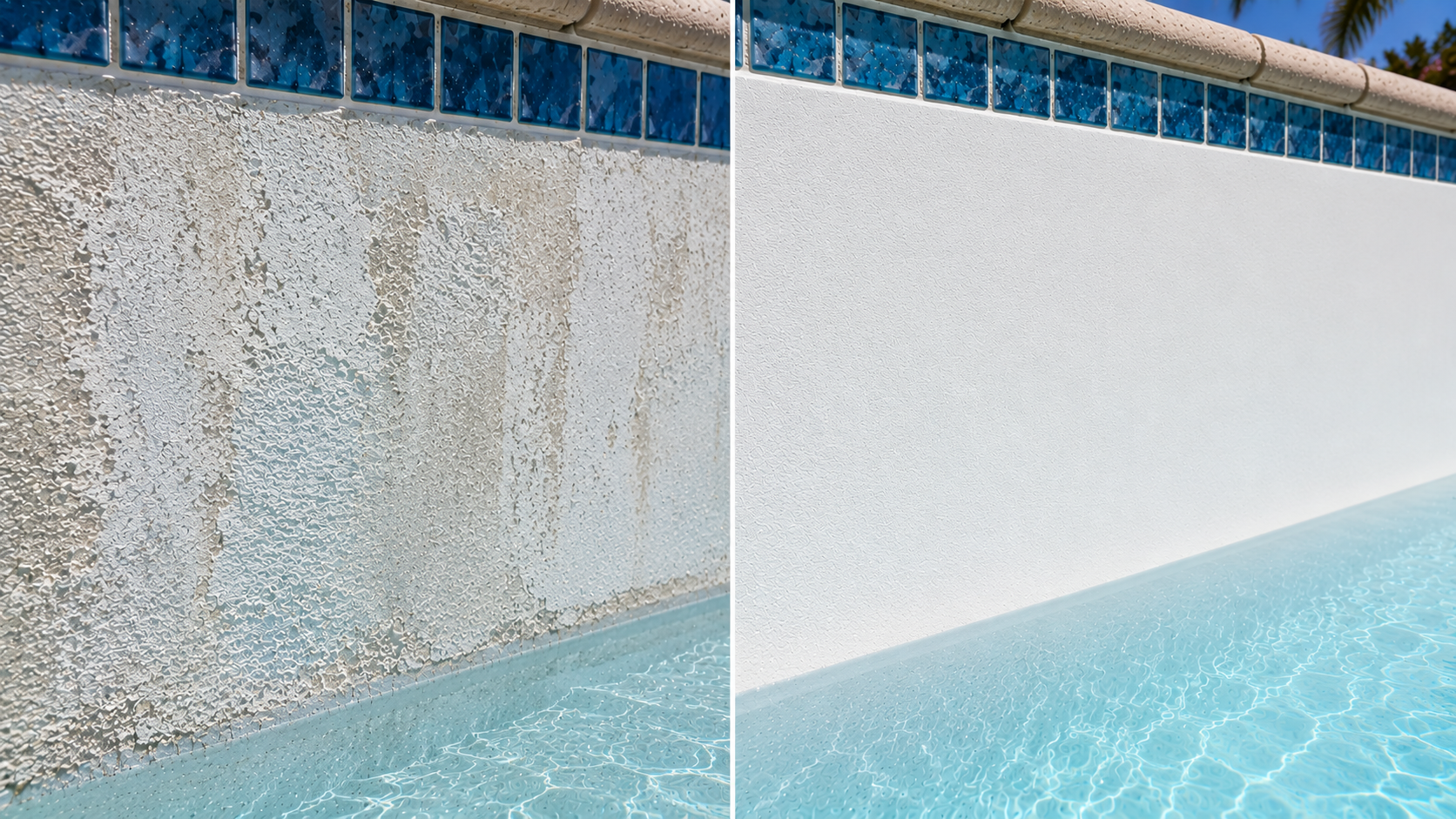 San Diego pool owners typically run into a handful of recurring surface issues. Recognizing them early is the difference between a maintenance fix and a full renovation.
Etching and rough texture. This happens when water chemistry stays too acidic for too long, dissolving the surface of the plaster. It often shows up as a sandpaper-like texture underfoot.
Scaling and calcium buildup. The opposite problem — water that’s too alkaline or has high calcium hardness — leaves white, chalky deposits on the surface. Over time this buildup can make the pool look dull and gray even after cleaning.
Staining. Metals in fill water (iron, copper, manganese) or organic debris can leave discoloration that regular brushing won’t remove. Staining is often mistaken for algae, which leads to the wrong treatment approach.
Hairline cracks. Small surface cracks are common as plaster ages and can be caused by chemical imbalance, ground movement, or normal curing stress. If you’re seeing more significant fracturing, our concrete pool crack repair San Diego page covers what to look for and when it’s more than cosmetic.
Discoloration or blotchy patches. Uneven plaster color can result from application issues, chemical exposure, or the natural aging process, and it’s one of the most common reasons owners start researching resurfacing options.
Unexplained water loss. If your maintenance routine looks fine but you’re still topping off the pool more than usual, that can point to a surface-related leak rather than a chemistry issue. Our pool leak detection & repair San Diego service is built for exactly this scenario.
How to Maintain Your Pool Surface: The Process
A good maintenance routine doesn’t need to be complicated, but it does need to be consistent. Here’s the approach we recommend to San Diego homeowners, and the same standard we apply when we’re called in to inspect or restore a surface.
1. Test and balance water chemistry regularly. pH, alkalinity, and calcium hardness are the three factors that most directly affect plaster longevity. Testing weekly (and after any heavy rain or heavy pool use) helps catch drift before it becomes damage.
2. Brush the pool surface weekly. Brushing prevents buildup from settling into the plaster’s texture and helps you physically notice changes in the surface — roughness, soft spots, or discoloration — before they become bigger problems.
3. Watch for early warning signs. Staining, rough patches, chalky residue, or small cracks are all signals worth acting on immediately rather than waiting for the next scheduled service.
4. Schedule a professional inspection periodically. Even a well-maintained pool benefits from a trained eye. We look at surface condition, tile lines, and structural indicators that aren’t always obvious from routine cleaning.
5. Address issues at the right stage. Some problems are handled with a maintenance-level fix; more advanced wear may call for replastering or full resurfacing. Understanding the difference matters for your budget — our comparison guide on pool replastering vs. full pool remodel breaks down how to know which stage you’re in.
6. Choose the right surface material if you’re resurfacing. If your pool is due for a new surface, material choice affects future maintenance needs. Our guides on PebbleTec vs. pool plaster and quartz finish vs. pebble finish are useful starting points.
Why Choose Baja Pool Plaster
San Diego pool owners choose Baja Pool Plaster because we treat surface maintenance as a long-term relationship, not a one-time transaction. We inspect pools with an eye toward what will actually extend the life of the surface, not just what looks fine today.
Our team works across San Diego’s varied pool types — from classic gunite plaster pools to pebble and quartz finishes — and we bring the same attention to detail whether we’re doing a full pool resurfacing or advising on a maintenance routine that helps you avoid one. We’re upfront about what a surface actually needs, including when a simple fix is the right call instead of a bigger, costlier service.
If you’re comparing contractors, our guides on how to choose a pool plastering contractor and licensed pool contractors vs. handymen walk through what to look for — licensing, process transparency, and material knowledge among them.
Pool Surface Maintenance in San Diego
San Diego’s climate plays a direct role in how pool surfaces age. Long stretches of intense sun exposure, low humidity, and minimal rainfall mean pools here are used — and evaporate — more than in many other parts of the country, which puts extra emphasis on consistent water balancing. Homeowners refilling frequently to offset evaporation need to be especially mindful of how new fill water affects chemistry, since San Diego’s water supply carries mineral content that can contribute to scaling if left unchecked.
Property types across the region also vary. Coastal properties near the water can see faster wear on metal fixtures and fittings due to salt air, while inland properties often deal with harder water and mineral buildup. Whether you’re in a hillside home with a view pool or a flat-lot backyard pool, the fundamentals of surface care stay the same, but the specifics of your water source and exposure matter.
This guide and our maintenance recommendations apply throughout San Diego and the surrounding areas we regularly serve. If you’d like to see examples of our work in specific neighborhoods, our project pages for La Mesa, Rancho Bernardo, La Jolla, Lakeside, and Bonita show the range of properties and pool types we’ve worked on.
What Affects Cost, Timeline, and Results
Every pool is different, so surface maintenance and repair costs depend on several factors: the size of the pool, the current condition and age of the existing surface, the material (plaster, pebble, or quartz), and whether the issue is purely cosmetic or involves an underlying structural or leak concern.
Timeline depends on the scope of work. A maintenance-level service or inspection is typically quick, while more involved work like replastering or resurfacing requires draining the pool, surface preparation, application, and a proper curing period before refilling. If you’re trying to plan ahead, our pool resurfacing cost San Diego 2026 guide and pool replastering cost calculator are good tools for getting a realistic sense of your options before you commit to a specific service.
Results depend heavily on how early a problem is caught. Surfaces addressed at the first signs of wear typically require less invasive, less costly intervention than those left until the damage is extensive. That’s the core reason a consistent maintenance routine — paired with periodic professional inspection — pays off over the life of your pool.
For homeowners planning a bigger project down the line, our pool renovation planning guide and pool replastering checklist are useful references for understanding what’s involved before work begins.
Protect Your Pool Surface Before Small Issues Become Big Repairs
Pool surface problems rarely fix themselves, and waiting usually means a bigger repair bill down the road. If you’ve noticed roughness, staining, cracking, or you simply want a professional opinion on your pool’s current condition, Baja Pool Plaster is ready to help San Diego homeowners protect their investment.
Call (619) 458-3443 or email info@bajapoolplaster.com to schedule an inspection or ask about your pool’s specific surface maintenance needs. Our team is local, experienced with San Diego’s water and climate conditions, and committed to giving you an honest assessment — not just an upsell.
Frequently Asked Questions
How often should I check my pool’s surface condition?
How often should I check my pool’s surface condition?
A quick visual check during your weekly brushing routine is enough to catch most early warning signs, like rough spots, discoloration, or small cracks. We recommend a more thorough professional inspection periodically, especially if your pool is several years past its last resurfacing.
What causes plaster to feel rough or gritty?
What causes plaster to feel rough or gritty?
Rough or gritty texture is usually a sign that the water chemistry has been too acidic for a period of time, causing the plaster surface to etch. It can also happen with age as the surface naturally wears. Bringing pH and alkalinity back into range and evaluating the surface can help determine next steps.
Can I maintain my pool surface myself, or do I need a professional?
Can I maintain my pool surface myself, or do I need a professional?
Routine maintenance like brushing and water testing is something most homeowners can handle. However, diagnosing surface damage, staining causes, or early cracking is best left to a professional, since the wrong fix can make the underlying problem worse.
How do I know if my pool needs replastering versus just better maintenance?
How do I know if my pool needs replastering versus just better maintenance?
If issues are limited to minor staining or slight roughness, better maintenance and chemistry management often solve the problem. If you’re seeing widespread roughness, significant cracking, or repeated staining that won’t lift, that typically points to replastering. Our team can assess which category your pool falls into.
Does San Diego’s water affect pool surface maintenance?
Does San Diego’s water affect pool surface maintenance?
Yes. San Diego’s water supply carries mineral content that can contribute to scaling if calcium hardness isn’t monitored, and the region’s sun exposure and low humidity increase evaporation, meaning more frequent refilling and chemistry adjustments.
What’s the difference between plaster, pebble, and quartz surfaces for maintenance purposes?
What’s the difference between plaster, pebble, and quartz surfaces for maintenance purposes?
Each material has different durability and maintenance characteristics. Plaster is the most traditional and budget-friendly but may need resurfacing sooner. Pebble and quartz finishes tend to be more durable and resistant to certain types of wear, though all surfaces still need regular chemistry management. Our PebbleTec vs. pool plaster comparison covers this in more detail.
How long does a well-maintained pool surface typically last before needing resurfacing?
How long does a well-maintained pool surface typically last before needing resurfacing?
Lifespan varies by material, water chemistry consistency, usage, and climate exposure, so there’s no single number that applies to every pool. Our pool surface lifespan comparison guide breaks down general expectations by surface type to help you plan.
Who should I call for pool surface maintenance in San Diego?
Who should I call for pool surface maintenance in San Diego?
Baja Pool Plaster serves San Diego and the surrounding area with pool surface inspections, maintenance guidance, and full resurfacing and replastering services when needed. You can view our full range of offerings on our San Diego pool repair services page.