
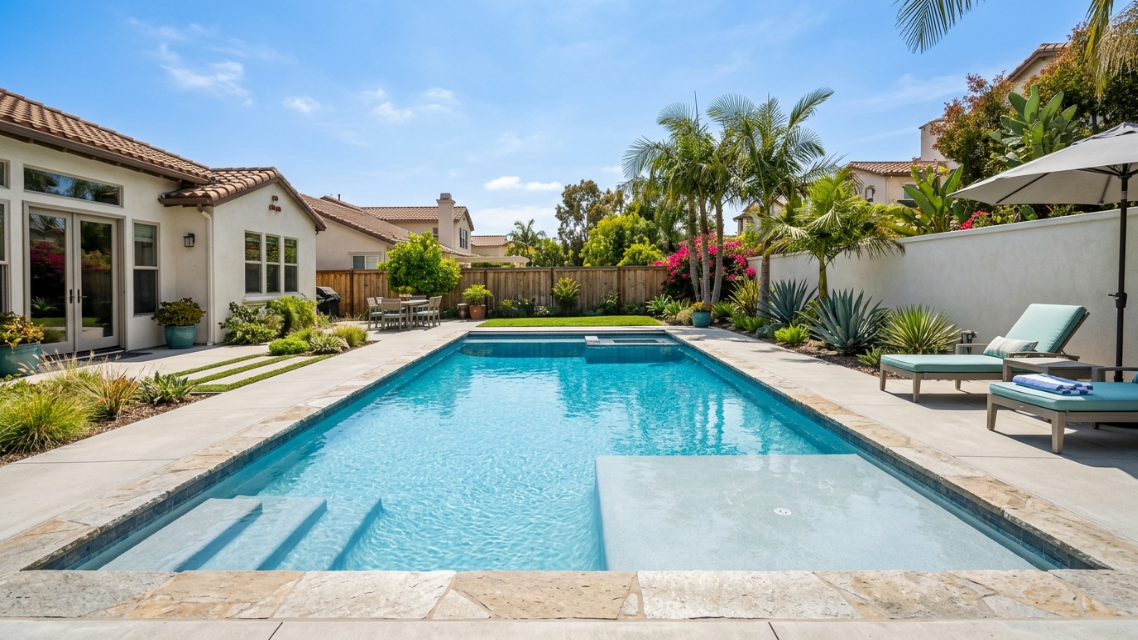
 For most San Diego homeowners, pool resurfacing is the smarter financial move — it typically costs 60-80% less than a full pool replacement and can be completed in under two weeks. Replacement only makes sense when the pool’s shell is structurally compromised or you’re planning a total redesign. Understanding the real pool resurfacing cost San Diego homeowners pay in 2026 versus what a ground-up rebuild demands is the first step toward protecting your budget. This guide breaks down both paths so you can make a confident, informed decision for your backyard.
Understanding Pool Resurfacing
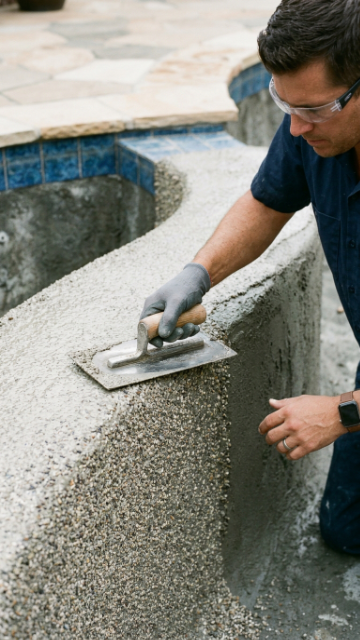 Pool resurfacing means removing or renewing the interior finish of your existing pool shell without demolishing or rebuilding the structure underneath. Depending on the condition of your pool, this can involve a full replaster, a PebbleTec or quartz overlay, or targeted surface repair around cracks and chips.
The process generally runs 3-7 business days: the pool is drained, the old surface is chipped or acid-washed, plumbing and tile lines are inspected, and a new finish is applied and cured. Because the shell, plumbing, and decking usually stay intact, labor and material costs stay contained.
In San Diego, the average pool resurfacing cost San Diego homeowners see in 2026 ranges from roughly $4,500 to $12,000, depending on pool size, the finish selected, and whether any structural prep work (like crack repair) is needed along the way. Homes closer to the coast sometimes see higher costs due to increased humidity accelerating wear on interior finishes, which is worth factoring into your resurfacing cost San Diego estimate.
Resurfacing is ideal for pools that are structurally sound but showing their age — rough or pitted plaster, staining, minor cracking, or a dated aesthetic. If you’re unsure whether your pool qualifies, a professional pool surface repair assessment can confirm whether resurfacing alone will solve the problem.
Understanding Pool Replacement
Pool replacement is a far more involved undertaking. It typically means demolishing the existing shell (or a significant portion of it), re-engineering the structure, and rebuilding from the ground up — sometimes with a new shape, depth, or footprint entirely. This route is common when a pool has significant structural cracking, persistent leaks that resist repair, outdated plumbing that no longer meets code, or when a homeowner wants a fundamentally different pool design.
The timeline for a full replacement in San Diego generally runs 6-12 weeks, factoring in demolition, permitting, engineering inspection, rebuilding, and curing. Because San Diego’s coastal soil conditions and seismic building codes require additional engineering review for new pool shells, replacement projects often involve more permitting steps than resurfacing does.
Cost-wise, a full pool replacement in San Diego typically runs $45,000 to $90,000+, depending on size, materials, and design complexity — dramatically higher than any pool resurfacing cost San Diego homeowners would pay for a comparable-sized pool. This is the option to consider only when the underlying structure itself is the problem, not just the surface.
If you’re on the fence, it’s worth reviewing the difference between pool replastering and a full pool remodel before committing to either extreme.
Side-by-Side Comparison
| Attribute | Pool Resurfacing | Pool Replacement |
|---|---|---|
| Upfront Cost | $4,500 – $12,000 | $45,000 – $90,000+ |
| Typical Timeline | 3–7 business days | 6–12 weeks |
| Lifespan of Result | 7–15 years, finish-dependent | 20–30+ years, full shell |
| Structural Scope | Surface only; shell untouched | Full shell demolition and rebuild |
| Permitting Complexity | Minimal to none in most cases | Significant, including engineering and seismic review |
| Best For | Cosmetic wear, minor cracks, and staining | Structural failure, leaks, and full redesign |
| Disruption to Yard | Low | High, including equipment access and extended timeline |
Pros and Cons Breakdown
Pros of Pool Resurfacing
- Significantly lower cost than replacement, making it accessible for most budgets
- Fast turnaround — most pools are back in use within one to two weeks
- Wide range of finish options (plaster, PebbleTec, quartz) to refresh the pool’s look
- Minimal disruption to landscaping, decking, or surrounding structures
Cons of Pool Resurfacing
- Doesn’t address underlying structural issues if they exist
- Shorter overall lifespan compared to a full rebuild
- Not a permanent fix if the shell has active cracking or leaks
Pros of Pool Replacement
- Solves structural problems at the source rather than masking them
- Opportunity to redesign the pool’s shape, depth, or features entirely
- Longer-term lifespan once complete
- Can bring older pools up to current plumbing and safety code
Cons of Pool Replacement
- Substantially higher cost — often 5 to 8 times the price of resurfacing
- Long project timeline with significant yard disruption
- More complex permitting process in San Diego due to engineering and seismic requirements
Which Option Is Better? The Ultimate Showdown
For the large majority of San Diego pool owners, resurfacing wins on pure cost-effectiveness. If your pool’s shell is sound and the issues are cosmetic — rough plaster, staining, minor surface cracks, or simply an outdated finish — there’s rarely a reason to spend eight times more on a full rebuild. A pool leak detection and repair inspection can also confirm whether what looks like a resurfacing issue is actually something more serious before you commit either way.
Replacement earns its higher price tag only in specific scenarios: active structural cracking that keeps recurring after repair, plumbing that’s failed multiple times, or a homeowner who wants a genuinely different pool — different shape, added spa, or expanded depth. In those cases, resurfacing would only be a temporary patch on a problem that needs a permanent structural solution.
Choose resurfacing if: your priority is cost efficiency, a fast turnaround, and your pool’s shell has no active structural failure. Choose replacement if: you’re dealing with repeated structural or plumbing failures, or you want to fundamentally change your pool’s design. Reviewing a pool surface lifespan comparison can also help you estimate how many more years you’d realistically get from resurfacing before a replacement becomes unavoidable.
Cost aside, San Diego’s mild year-round climate means pools here see near-constant use, which accelerates surface wear compared to regions with shorter swim seasons — another reason resurfacing tends to be needed sooner than homeowners expect, and why budgeting accurately for pool resurfacing cost San Diego-wide matters more here than in colder markets.
Get Expert Guidance for Your San Diego Pool
Deciding between resurfacing and replacement isn’t always straightforward, especially if you’re not sure whether your pool’s issues are cosmetic or structural. If you’re weighing your options, a pool resurfacing consultation can help you understand exactly what your pool needs before you commit to either path. For pools with visible cracking, a concrete pool crack repair evaluation is a smart first step, and if you’re comparing contractors, our guide on questions to ask before hiring a pool contractor can help you vet the right team for the job.
Conclusion & Recommendation
For the vast majority of San Diego pools, resurfacing delivers the better return: a fraction of the cost, a fraction of the timeline, and a like-new finish that can last well over a decade with proper care. Replacement remains the right call only when the pool’s structure itself has failed. Before making a final decision, get a professional assessment — the true pool resurfacing cost San Diego homeowners face is always easier to plan around once you know exactly what condition your pool is really in.
Frequently Asked Questions
How much does pool resurfacing cost in San Diego in 2026?
How much does pool resurfacing cost in San Diego in 2026?
Most San Diego homeowners pay between $4,500 and $12,000 for pool resurfacing, depending on pool size and the finish selected. Coastal humidity and pool size are the two biggest cost factors.
How long does pool resurfacing take compared to replacement?
How long does pool resurfacing take compared to replacement?
Resurfacing typically takes 3-7 business days, while a full pool replacement can take 6-12 weeks due to demolition, permitting, and rebuild time.
Can I resurface a pool that has cracks?
Can I resurface a pool that has cracks?
Minor surface cracks can often be repaired as part of the resurfacing process. Larger structural cracks may require a deeper evaluation before resurfacing is recommended.
Is PebbleTec more expensive than plaster resurfacing?
Is PebbleTec more expensive than plaster resurfacing?
Yes, generally. PebbleTec and other aggregate finishes cost more upfront than standard plaster but tend to last longer. Our PebbleTec vs. Pool Plaster comparison breaks down the cost and lifespan differences in detail.
How do I know if my pool needs replacement instead of resurfacing?
How do I know if my pool needs replacement instead of resurfacing?
Signs pointing toward replacement include recurring leaks that resurfacing doesn’t fix, visible structural cracking that worsens over time, or plumbing that repeatedly fails inspection.
Does San Diego require permits for pool resurfacing?
Does San Diego require permits for pool resurfacing?
Standard resurfacing typically doesn’t require the same permitting as new construction, though any structural repair work involved may need local approval. It’s worth confirming with your contractor.
How long does a resurfaced pool finish last?
How long does a resurfaced pool finish last?
Most resurfacing finishes last 7-15 years depending on the material chosen and how well the pool is maintained. A pool surface maintenance guide can help extend that lifespan.
Is it cheaper to resurface or replace a pool long-term?
Is it cheaper to resurface or replace a pool long-term?
Resurfacing is cheaper both upfront and in most long-term scenarios, since it can be repeated every decade or so at a fraction of a single replacement’s cost.