
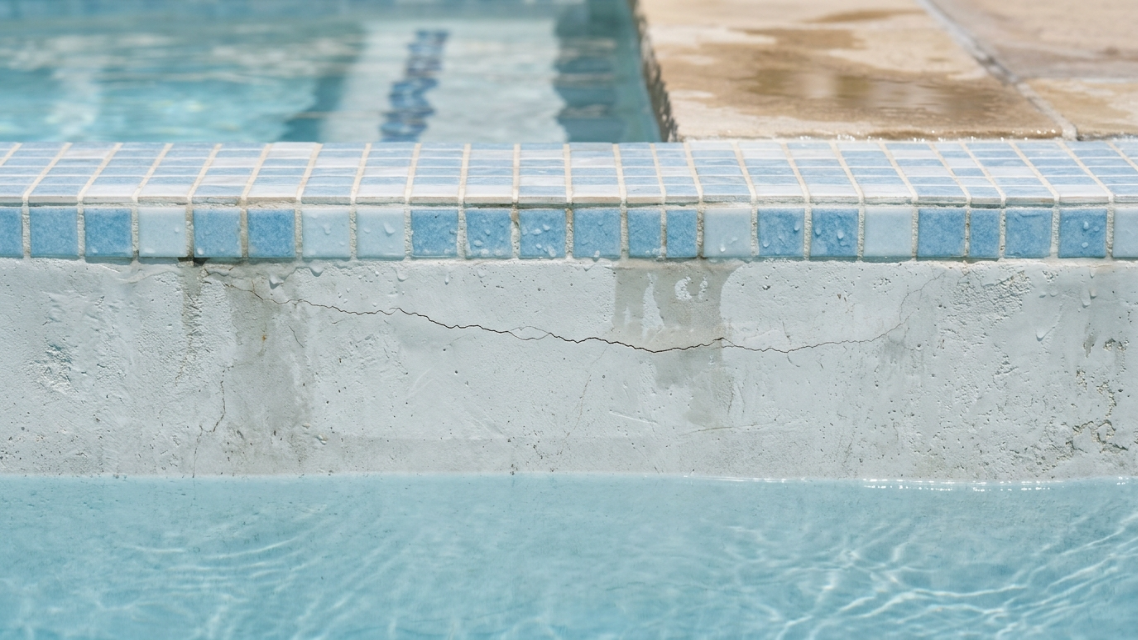
 For hairline surface cracks under 1/16 inch with no active leak, a DIY epoxy patch kit ($20–$75) can be a reasonable stopgap. For structural cracks, cracks near skimmers or steps, or any crack that’s losing water, professional repair ($300–$2,500+) is the safer and ultimately cheaper choice — this pool crack repair cost guide breaks down exactly why.
Pool cracks are common in San Diego, where shifting clay-heavy soils and decades-old gunite and plaster shells put constant stress on pool structures. But not every crack needs the same fix, and guessing wrong can turn a $50 problem into a $5,000 one. This pool crack repair cost guide compares the real costs, risks, and outcomes of handling it yourself versus calling in a licensed pool repair contractor.
Understanding DIY Pool Crack Repair
 DIY pool crack repair typically means using an off-the-shelf underwater epoxy putty, hydraulic cement, or a peel-and-stick patch product designed for pool surfaces. These kits are sold at pool supply stores and online, and most are marketed for exactly the kind of small, cosmetic cracking that shows up on aging plaster or pebble finishes.
How it works: You drain the pool to below the crack line (or use an underwater-cure epoxy that doesn’t require draining), clean and rough up the crack surface, then trowel or press the compound into the gap. Cure times range from a few hours to several days depending on the product.
Typical cost: Most DIY kits run $20 to $75 per tube or kit, and a homeowner might spend $50–$150 total on materials for a small project, plus their own time.
Core benefits:
- Low upfront cost
- Immediate action — no waiting for a contractor
- Works reasonably well for shallow, cosmetic surface cracks that aren’t leaking
Ideal use cases: Hairline cosmetic cracks in plaster, cracks well above the waterline, or a temporary fix while you schedule a professional evaluation.
The catch is that DIY products patch the surface — they generally don’t address what caused the crack in the first place, whether that’s soil movement, rebar corrosion, or a structural shell issue. If you’re unsure what you’re dealing with, our Pool Surface Repair page walks through how to visually identify different crack types before you buy a patch kit.
Understanding Professional Pool Crack Repair
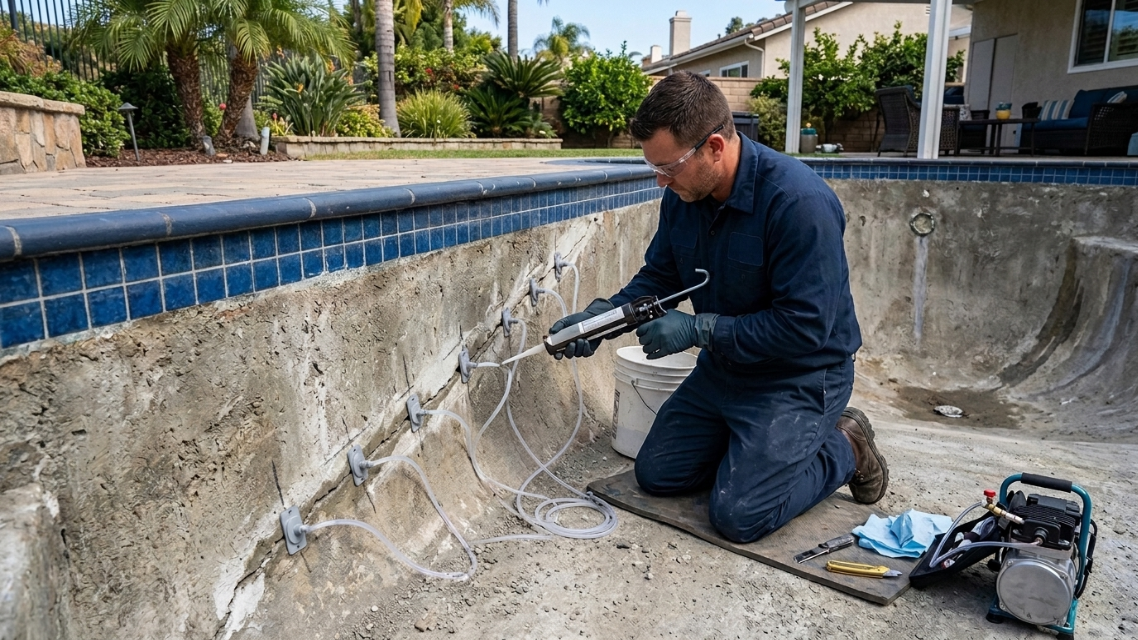
Professional pool crack repair is performed by a licensed pool contractor who first diagnoses the cause of the crack — soil settlement, plumbing movement, structural stress, or expansive clay common throughout San Diego County — before choosing a repair method.
How it works: A contractor will typically inspect the crack, sometimes with pressure testing if a leak is suspected, then use techniques like structural epoxy injection, staple-and-seal methods, or in more serious cases, cutting out and rebuilding a section of the gunite shell with rebar reinforcement before replastering. This is a very different scope than a surface patch, and it’s the same category of work covered on our Concrete Pool Crack Repair page.
Typical cost: Minor professional crack repair generally runs $300 to $800, while structural repairs involving shell cutting, rebar work, and replastering can range from $1,500 to $2,500 or more, depending on crack severity and pool size.
Core benefits:
- Correct diagnosis of the underlying cause, not just the symptom
- Warrantied workmanship in most cases
- Reduces risk of the same crack reopening or spreading
- Often paired with leak detection to catch related plumbing issues — see our Pool Leak Detection & Repair service
Ideal use cases: Structural cracks, cracks that are actively leaking, cracks near steps/skimmers/return lines, or any pool built before modern rebar-reinforced gunite standards.
Side-by-Side Comparison
| Attribute | DIY Pool Crack Repair | Professional Pool Crack Repair |
|---|---|---|
| Upfront Cost | $20–$150 | $300–$2,500+ |
| Lifespan of Fix | Months to 1–2 years, surface only | 5–15+ years when properly diagnosed |
| Diagnostic Accuracy | None — treats symptom only | Identifies root cause, such as soil, plumbing, or structural issues |
| Risk of Recurrence | High if underlying cause is structural | Low, especially with reinforced repair |
| Water Loss Resolution | Rarely addresses active leaks | Can include leak detection and sealing |
| Warranty | None | Often included with licensed contractors |
| Best For | Cosmetic, above-waterline hairline cracks | Structural, leaking, or recurring cracks |
Pros and Cons Breakdown
Pros of DIY Pool Crack Repair
- Inexpensive way to address minor cosmetic cracking
- No scheduling delays — you can act the same day
- Good short-term stopgap while awaiting a contractor visit
Cons of DIY Pool Crack Repair
- Doesn’t diagnose or fix the underlying cause of the crack
- Higher long-term cost if the crack reopens or worsens
- Risk of trapping moisture or worsening plaster delamination if applied incorrectly
- Most kits aren’t rated for structural or below-grade cracks
Pros of Professional Pool Crack Repair
- Correct root-cause diagnosis before any repair begins
- Structural techniques (epoxy injection, rebar reinforcement) built to last
- Typically backed by a workmanship warranty
- Can be bundled with resurfacing if the crack is part of broader wear — see our Pool Resurfacing page
Cons of Professional Pool Crack Repair
- Higher upfront cost than a DIY kit
- Requires scheduling and, for structural work, possible pool downtime
- Cost can climb further if the crack reveals a larger underlying issue
Which Option Is Better? The Ultimate Showdown
This is where a pool crack repair cost guide earns its keep. Cost alone makes DIY repair look like the obvious winner, but that’s only true for a narrow slice of cracks — small, cosmetic, above-waterline, non-leaking. For that specific situation, a $30 epoxy kit genuinely can be the right call, and there’s no reason to spend hundreds of dollars on a contractor visit for a hairline surface line that isn’t losing water.
The math flips fast once a crack is structural or actively leaking. A DIY patch on a structural crack rarely holds for more than a season, especially given how much San Diego’s clay soils shift with our wet winters and dry summers. When that patch fails, you’re not just paying for the professional repair you could have gotten the first time — you’re often paying more, because water intrusion behind a failed patch can accelerate plaster delamination or rebar corrosion. At that point the job can shift from a $500 crack repair into a $2,000+ section rebuild.
Choose DIY pool crack repair if: the crack is hairline, above the waterline, cosmetic only, and you’re comfortable monitoring it closely for changes.
Choose professional pool crack repair if: the crack is below the waterline, you’re seeing water loss, the crack runs near a corner, step, skimmer, or return line, or you simply aren’t sure what type of crack you’re looking at. When in doubt, a professional evaluation is inexpensive relative to the cost of guessing wrong — most reputable pool contractors will assess a crack and give you an honest read on whether DIY is even appropriate.
If you’re weighing crack repair against a bigger question — like whether it’s time to replaster the whole pool instead of patching section by section — our Pool Replastering vs Full Pool Remodel comparison can help you think through that decision, and the Pool Surface Lifespan Comparison guide breaks down how long different finishes typically last before cracking becomes a recurring issue.
Get a Professional Opinion Before You Decide
If you’re not sure whether your pool’s crack is cosmetic or structural, the safest first step is a professional evaluation rather than a guess. Baja Pool Plaster works with pools throughout the region and can help you understand exactly what you’re dealing with before you spend money in either direction. Not every contractor approaches diagnosis the same way, so it’s worth reviewing our guide on how to choose a pool plastering contractor and the questions to ask before hiring a pool contractor — including confirming licensing, since our licensed pool contractors vs. handymen comparison explains why that distinction matters most for structural crack work. When you’re ready, you can browse our full range of pool repair services or reach out for a consultation on your specific crack.
Conclusion & Recommendation
Use this pool crack repair cost guide as your first checkpoint before spending money in either direction. For small, cosmetic, above-waterline cracks, a DIY patch is a fair and low-cost first move. But for anything structural, leaking, or uncertain, professional repair is the better investment — it costs more upfront but avoids the far more expensive rebuild that often follows a failed DIY fix. This pool crack repair cost guide is meant to help you tell the difference before you spend a dollar either way; when the crack is more than cosmetic, the safest and most cost-effective path in the long run is a professional assessment.
Frequently Asked Questions
How much does pool crack repair typically cost in San Diego?
How much does pool crack repair typically cost in San Diego?
Minor cosmetic repairs can run as little as $20–$75 for a DIY kit, while professional repairs typically range from $300 for a simple epoxy injection up to $2,500 or more for structural repairs involving shell cutting and rebar work.
Can I repair a pool crack myself?
Can I repair a pool crack myself?
Yes, for small, hairline, cosmetic cracks above the waterline that aren’t leaking. DIY kits generally aren’t rated for structural or below-grade repairs, so it’s important to correctly identify the crack type first.
How do I know if a pool crack is structural or cosmetic?
How do I know if a pool crack is structural or cosmetic?
Cosmetic cracks are usually thin, shallow, and confined to the plaster surface without water loss. Structural cracks tend to be wider, may run through the shell itself, and often come with visible water loss or cracking near corners, steps, or plumbing penetrations. A professional inspection is the most reliable way to tell.
Will a small pool crack get worse if I ignore it?
Will a small pool crack get worse if I ignore it?
It can, especially where seasonal wet-dry soil movement puts ongoing stress on pool shells. A hairline crack today can widen or start leaking if left unaddressed for multiple seasons.
Does homeowners insurance cover pool crack repair?
Does homeowners insurance cover pool crack repair?
Coverage varies significantly by policy and cause, and most standard homeowners policies exclude gradual wear-and-tear or settling, which causes many pool cracks. Check your specific policy or ask your insurance provider directly.
How long does professional pool crack repair take?
How long does professional pool crack repair take?
Minor epoxy injection repairs can often be completed in a single day. Structural repairs involving shell cutting and replastering may take several days to a couple of weeks depending on scope and cure times.
Is pool crack repair cheaper than full resurfacing?
Is pool crack repair cheaper than full resurfacing?
Yes, in most cases. Targeted crack repair is generally far less expensive than resurfacing an entire pool, but if a pool has multiple cracks or widespread surface wear, resurfacing can sometimes be more cost-effective long-term than repeated spot repairs.
Do I need to drain my pool to fix a crack?
Do I need to drain my pool to fix a crack?
It depends on the method. Some underwater epoxy products can be applied without draining, while structural repairs involving shell work typically require at least a partial drain.