
If you’ve searched licensed pool contractors vs handymen because you’re trying to decide who should touch your pool, you’re asking exactly the right question. Pool work isn’t like patching drywall or fixing a fence — it involves structural concrete, hydraulics, electrical bonding, and chemically reactive plaster finishes that fail fast when done wrong. At Baja Pool Plaster, we’ve been called in more than once to fix a “quick fix” a handyman started and couldn’t finish. This guide breaks down the real differences between hiring a licensed pool contractor and hiring a handyman in San Diego, so you can protect your pool, your property value, and your budget.
Why This Decision Matters More Than It Seems
A swimming pool is a pressurized, chemically treated structure sitting on (or into) your property’s soil. It’s not a cosmetic fix-it project. When homeowners hire unlicensed handymen for pool plaster, crack repair, or surface work to save money upfront, the risks tend to show up later — and cost more to undo than the original project would have cost done right.
Here’s what’s actually at stake:
- Structural integrity. Concrete pool shells need proper surface prep, bonding agents, and cure times. Rushed or improperly mixed plaster delaminates, cracks, or discolors within months.
- Liability and insurance. If an unlicensed worker is injured on your property, your homeowner’s insurance may not cover it — and you could be personally liable.
- Code compliance. California pool work touches building code, health code, and in some cases coastal or HOA regulations. Unlicensed work that isn’t permitted correctly can create problems when you sell the home.
- Warranty protection. Licensed contractors typically stand behind their work with a warranty. Handymen rarely do, and if they disappear, you have no recourse.
- Long-term cost. A redo after a failed handyman job almost always costs more than hiring it out correctly the first time.
The bottom line: pool plastering, resurfacing, and structural repair are specialty trades. The person doing the work should be licensed for that trade — not just generally handy.
Common Problems We See From Unlicensed or Handyman Pool Work
Over the years, our crews have been called out to diagnose and repair pools that were “fixed” by someone without the right license or plastering experience. Some of the most common issues include:
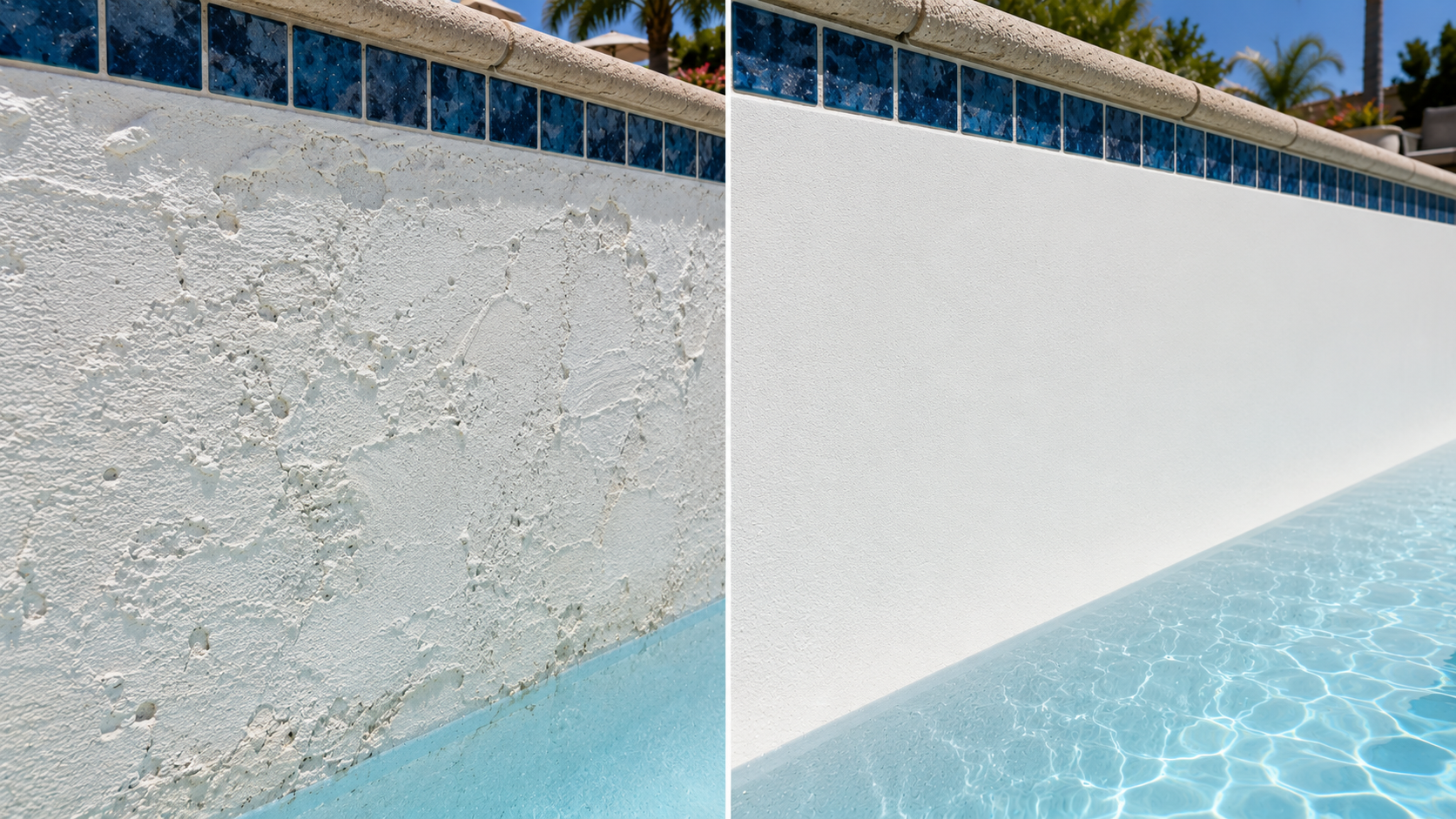 Premature plaster failure. Plaster applied too thin, mixed incorrectly, or cured too fast starts pitting, staining, or flaking within the first year — well before the 10–15 years a properly applied finish should last.
Cracks that get “patched” instead of repaired. A handyman might smear patch compound over a crack without addressing the structural cause. It looks fine for a season, then the crack reopens — sometimes worse. Real concrete pool crack repair requires understanding whether the crack is cosmetic or structural, something a licensed pool contractor is trained to evaluate.
Leaks that never get properly diagnosed. Without proper leak detection equipment and training, a handyman may guess at a leak source, patch the wrong spot, and leave the actual leak active — wasting water and money. Professional pool leak detection and repair uses pressure testing and dye testing to pinpoint the real source before any repair begins.
Surface repairs that don’t match the existing finish. Spot-patching a pool surface without matching plaster type, color, and texture leaves visible patches that stand out and can flake at the seams. Our pool surface repair process is built to blend seamlessly with the surrounding finish.
Botched remodels that require a full redo. Sometimes a homeowner hires a handyman for what should have been a licensed pool remodeling and renovation project, and the result doesn’t hold up to code or lasts only a fraction as long as it should.
Licensed Pool Contractor vs Handyman: The Real Differences
| Attribute | Licensed Pool Contractor | Handyman |
|---|---|---|
| Trade-specific training | Yes — trained and tested in pool construction and repair | Generally no formal pool-specific training |
| Bonding & insurance | Carries trade-specific bonding and liability coverage | Often uninsured for pool work specifically |
| Code knowledge | Understands permitting and inspection requirements | Typically not familiar with pool code requirements |
| Warranty | Stands behind the work with a warranty | Rarely offers a warranty |
| Materials & mix knowledge | Uses correct plaster mix ratios, bonding agents, and cure schedules | May use generic patch materials not designed for pools |
| Accountability | Licensed, traceable business | Can be difficult to locate after the job |
If you’re weighing this decision for a specific project, our guide on how to choose a pool plastering contractor and our list of questions to ask before hiring a pool contractor both walk through exactly what to verify before you sign anything.
Our Service Process
When you hire Baja Pool Plaster, you’re working with a team that treats every job like a licensed contractor should — thorough, documented, and built to last.
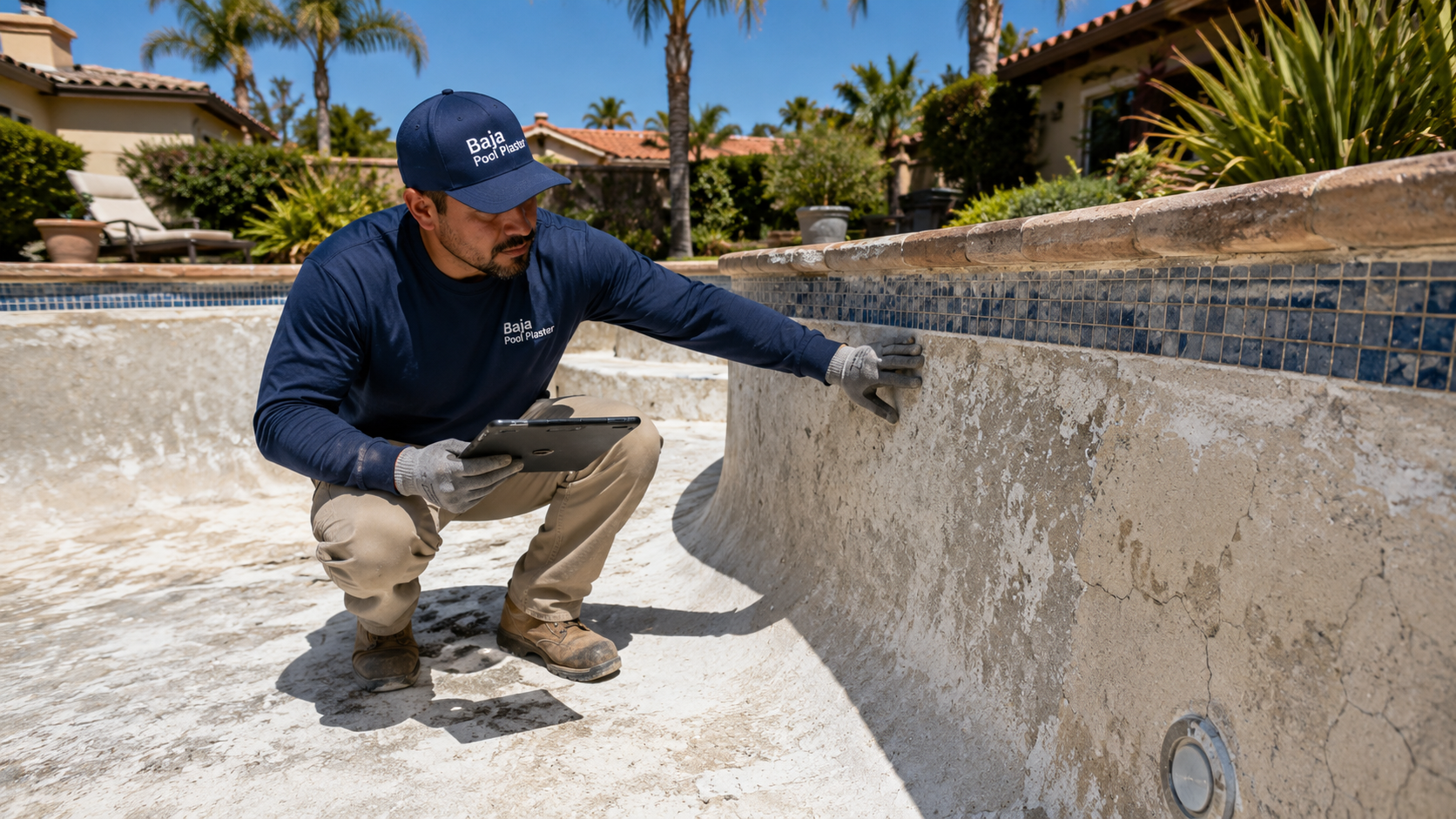
- Initial assessment. We inspect the pool shell, surface, and any known problem areas (cracks, leaks, staining, or aging plaster) and talk through what you’re seeing and what you want long-term.
- Diagnosis, not guesswork. If leaks, cracks, or structural concerns are involved, we identify the actual root cause before recommending a fix — rather than patching over a symptom.
- Clear scope and expectations. You get a straightforward explanation of what the project involves, what it will take to complete, and what factors could affect timeline or outcome.
- Proper prep work. Surface preparation — acid washing, bond coat application, crack routing, or shell repair — is done to spec, not skipped to save time.
- Professional application. Plaster, resurfacing material, or repair compound is mixed and applied by trained crews following manufacturer specifications and proper cure procedures.
- Final inspection and walkthrough. We review the finished work with you and go over care and startup instructions so your new surface cures properly.
If your pool needs a full surface refresh rather than a patch job, our pool resurfacing and pool replastering services are built around this same process, and we can help you figure out the right scope before you get a quote.
Why Choose Baja Pool Plaster
- We’re a pool-specific contractor, not a generalist. Pool plastering, resurfacing, and repair are what we do — not a side job.
- Fully licensed, bonded, and insured for pool contracting work in California, so you’re protected if anything goes wrong.
- Local San Diego crews who understand the region’s soil conditions, climate, and common pool issues firsthand.
- Transparent process. We explain what we find and why we recommend a given repair or finish, instead of pushing the most expensive option.
- Standing behind the work. Unlike a handyman who may not be reachable in six months, we’re a local, established business you can call back to if something needs attention.
Serving San Diego and Nearby Communities
Baja Pool Plaster is based in San Diego and works throughout the surrounding areas, where pool ownership is common and the coastal and inland climate creates specific demands on pool surfaces. San Diego’s mix of coastal salt air, intense summer UV exposure, and mineral-heavy water can accelerate plaster wear and make DIY or handyman patch jobs fail faster than they would elsewhere — which is exactly why hiring a licensed pool contractor matters here more than in milder climates.
We’ve worked on pools throughout the region, including recent projects and reviews from homeowners in La Jolla and Rancho Bernardo, as well as inland communities like El Cajon, La Mesa, Lakeside, and Bonita. Whether your home is a coastal property near the water or further inland, older homes with aging pool shells and newer construction alike benefit from having a licensed contractor evaluate the work before it starts. Our full range of San Diego pool repair services covers everything from small surface fixes to full renovations.
Cost, Timeline, and What to Expect
Pricing for licensed pool contractor work depends on several factors: the size and shape of your pool, the extent of any structural damage, the type of finish you choose (plaster, PebbleTec, quartz, or another surface), current surface condition, and accessibility of the pool area for equipment and materials. A small surface repair will cost and take far less time than a full resurfacing or remodel, and a pool with active leaks or cracking will need diagnosis time factored into the timeline.
We don’t publish flat, one-size-fits-all pricing because every pool and every repair scope is different — but if you want a general sense of what affects cost before requesting a quote, our pool resurfacing cost guide breaks down the variables in detail. If you’re comparing finish types and how material choice affects both cost and lifespan, our comparison of PebbleTec vs. pool plaster is a good starting point for budgeting ahead of a project.
Timelines depend on scope: a surface patch may take a day or two, while a full resurfacing or remodel involves draining, surface prep, application, and a cure period before the pool can be refilled and used. We’ll walk you through a realistic timeline as part of your assessment — no guesswork, no surprises.
Get a Licensed Pool Contractor, Not a Guess
Your pool is a major investment, and the person working on it should be licensed, trained, and accountable — not someone learning on your dime. If you’ve been comparing licensed pool contractors vs handymen and want the job done right the first time, Baja Pool Plaster is ready to help.
Call (619) 458-3443 or email info@bajapoolplaster.com to schedule an assessment with a licensed San Diego pool contractor. We’ll evaluate your pool, explain exactly what it needs, and give you a straightforward plan — no pressure, no shortcuts.
Frequently Asked Questions
What’s the real difference between a licensed pool contractor and a handyman?
What’s the real difference between a licensed pool contractor and a handyman?
A licensed pool contractor has trade-specific training, carries insurance and bonding for pool work, understands code and permitting requirements, and typically warranties their work. A handyman is a general repair worker who usually lacks pool-specific training, insurance for pool work, and formal accountability if something goes wrong.
Is it legal to hire an unlicensed handyman for pool plaster repair in California?
Is it legal to hire an unlicensed handyman for pool plaster repair in California?
For work above certain cost thresholds set by California law, contractors are generally required to be licensed. Even below those thresholds, pool structural and plaster work carries enough risk that hiring an unlicensed worker can leave you without insurance protection or recourse if the work fails.
Can a handyman patch a pool crack instead of hiring a contractor?
Can a handyman patch a pool crack instead of hiring a contractor?
A handyman may be able to apply a surface-level patch, but without properly diagnosing whether a crack is cosmetic or structural, that patch is likely to fail again. Structural cracks need a contractor who understands concrete pool shells to prevent the issue from returning.
How do I know if my pool contractor is actually licensed?
How do I know if my pool contractor is actually licensed?
Ask directly for their license number and verify it through the California Contractors State License Board. A licensed contractor should be able to provide this without hesitation, along with proof of bonding and insurance.
Why does unlicensed pool work cost more in the long run?
Why does unlicensed pool work cost more in the long run?
Improperly applied plaster, unpatched structural cracks, and misdiagnosed leaks tend to fail faster than professional work, which means homeowners often end up paying twice — once for the handyman, and again for a licensed contractor to fix it correctly.
Does Baja Pool Plaster serve areas outside San Diego?
Does Baja Pool Plaster serve areas outside San Diego?
Yes, Baja Pool Plaster serves San Diego and the surrounding communities. Contact us directly to confirm service availability for your specific address.
What should I ask a pool contractor before hiring them?
What should I ask a pool contractor before hiring them?
Ask about their license number, insurance and bonding, experience with your specific type of repair, expected timeline, and whether they offer a warranty. Our guide on questions to ask before hiring a pool contractor covers this in more detail.
How long does a professional pool plaster job last compared to a handyman patch?
How long does a professional pool plaster job last compared to a handyman patch?
A properly applied plaster finish from a licensed contractor typically lasts significantly longer than a handyman patch, which often shows wear, staining, or cracking within the first year due to improper mixing or application.