
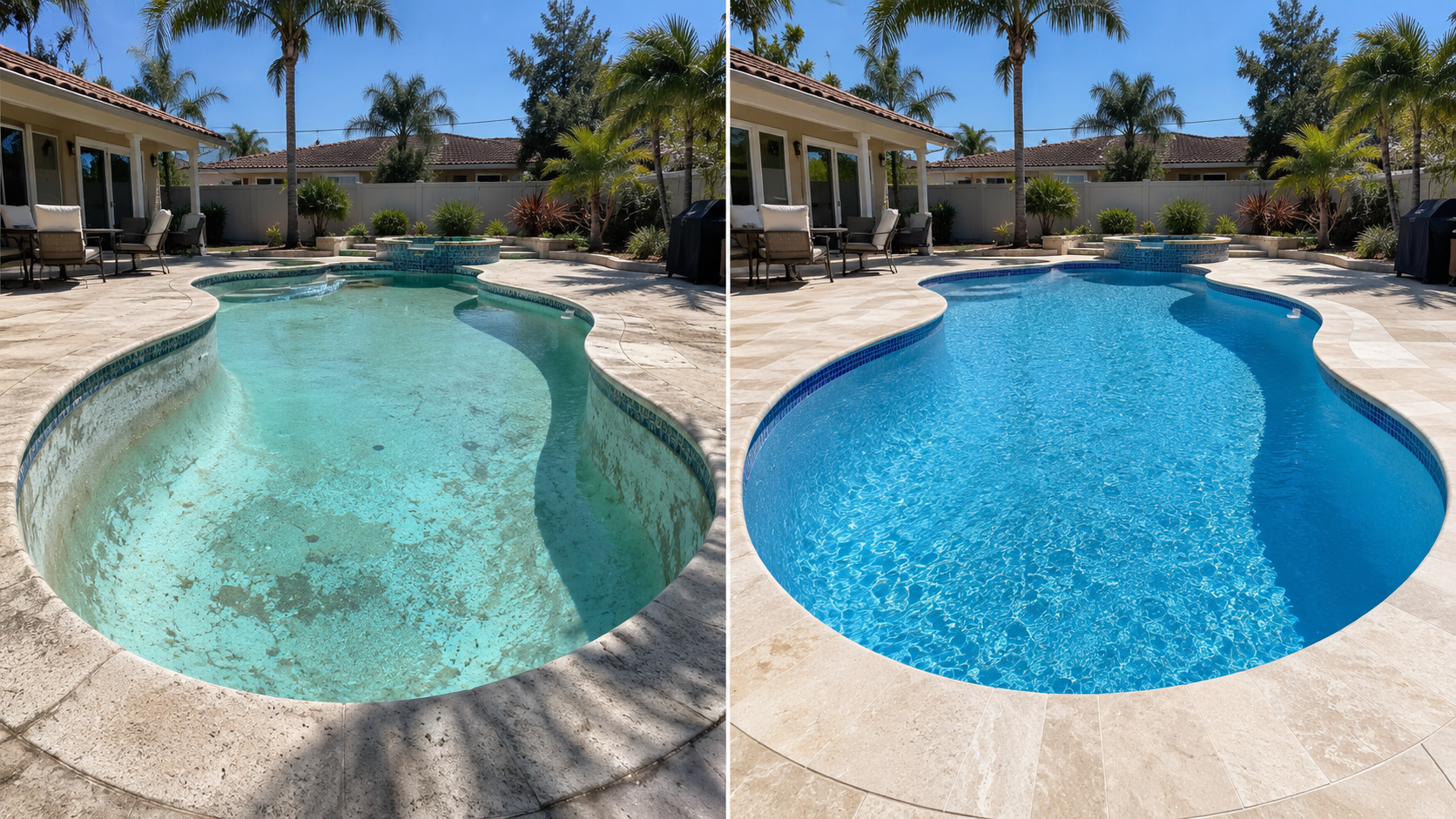
 If your backyard pool is showing its age — faded plaster, rough surfaces, outdated tile, or a design that no longer fits how your family actually uses the space — a full pool remodeling and renovation in San Diego can transform it into something that looks, feels, and functions like new. At Baja Pool Plaster, we specialize in comprehensive pool renovations for San Diego homeowners who want more than a quick patch job: a lasting, professionally finished pool that holds up to the coastal climate and daily use.
Pool remodeling isn’t just about appearances. Over time, plaster wears thin, concrete shells develop cracks, tile grout deteriorates, and outdated equipment becomes inefficient and costly to run. A well-planned renovation addresses all of it at once — surface, structure, and finish — so you’re not chasing separate repairs year after year. Whether you’re refreshing a decades-old pool or reimagining its entire look, our team brings the technical expertise and local experience to do it right the first time.
Why Pool Remodeling & Renovation Matters
A pool is one of the largest investments in a San Diego backyard, and neglecting its condition creates problems that compound over time. Understanding why renovation matters — and why timing is important — helps homeowners make smarter decisions about their property.
The risks of waiting too long:
- Surface deterioration accelerates. Once pool plaster starts pitting, staining, or roughening, the underlying material is exposed to water chemistry stress, speeding up further breakdown.
- Small structural issues become expensive ones. Hairline cracks in the pool shell can widen under pressure, ground movement, or freeze-thaw cycles, eventually leading to leaks that are far costlier to fix than they would have been early on.
- Old equipment drains money. Outdated pumps, filters, and heaters typically use significantly more energy than modern equivalents, and inefficient circulation can contribute to water quality problems.
- Safety and comfort suffer. Rough or degraded pool surfaces can be uncomfortable — even abrasive — on skin and feet, and worn tile or coping can become slip hazards around the pool deck.
The benefits of renovating proactively:
- A renovated pool restores both function and curb appeal, which matters for homeowners planning to sell as well as those simply wanting to enjoy their backyard again.
- Modern finishes, tile, and design updates can dramatically change how a pool looks and feels without the cost of building an entirely new pool.
- Addressing structural and surface issues together, rather than piecemeal, typically results in a more durable, cohesive outcome.
Common Problems Pool Remodeling Solves
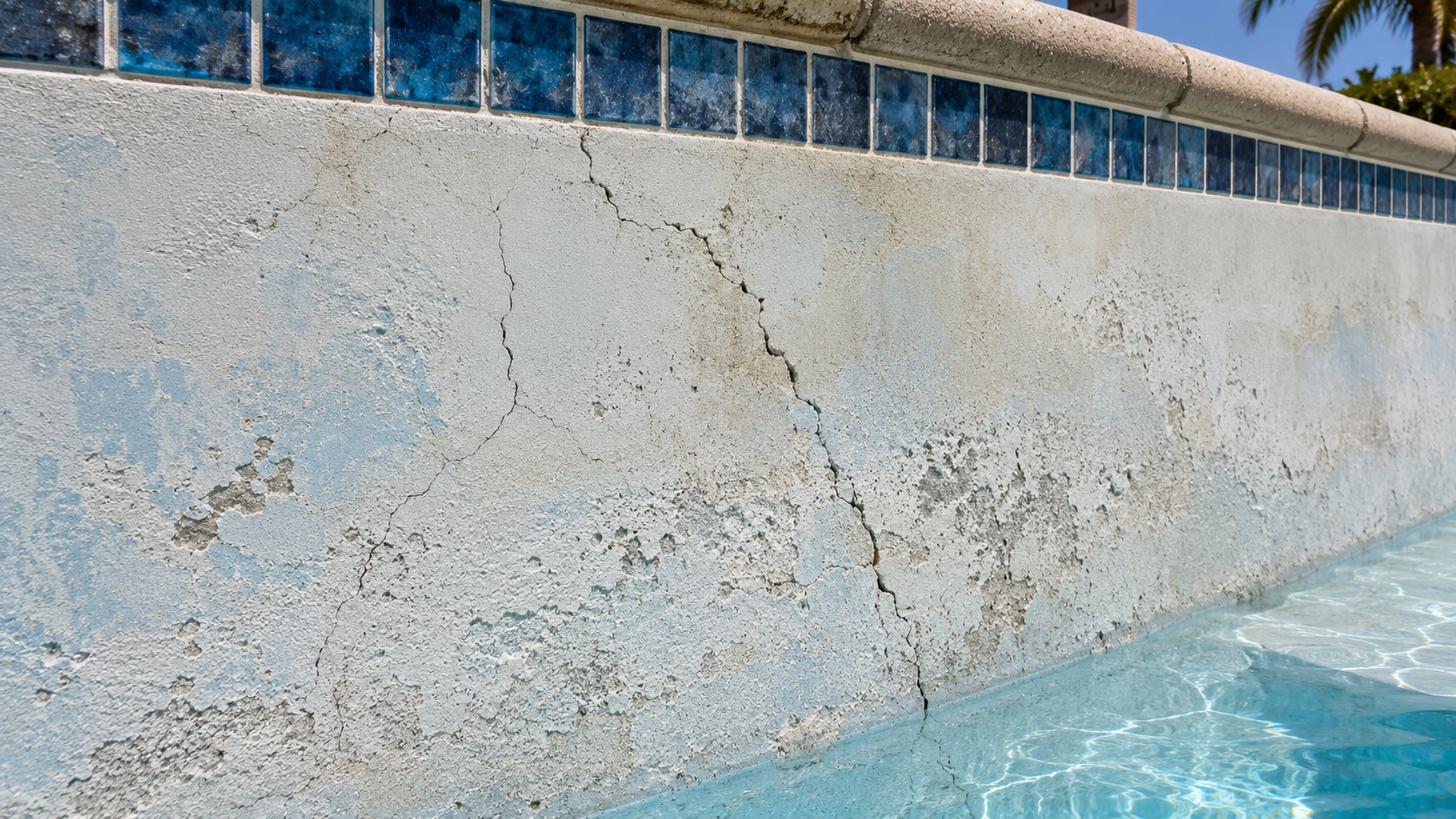 Homeowners often reach out after noticing specific issues rather than deciding to “remodel” in the abstract. Here are the real-world problems a full pool renovation addresses:
- Faded, stained, or rough plaster that no longer looks clean even after cleaning and balancing chemistry — often a sign the surface has worn past the point where spot repair helps.
- Visible cracks in the pool shell or deck that suggest the concrete has shifted or deteriorated, which our team evaluates using the concrete pool crack repair process detailed on our concrete pool crack repair page.
- Unexplained water loss, which is frequently linked to hidden leaks in plumbing, fittings, or shell cracks — something we investigate thoroughly using the process outlined on our pool leak detection and repair page.
- Outdated design or layout — pools built decades ago often have dated tile, shallow-end configurations, or steps that no longer match how the family uses the space.
- Chronic surface repairs that keep recurring, which usually signal that resurfacing or full replastering is a better long-term solution than another round of patching. If you’re comparing scope, our guide on pool replastering vs. a full pool remodel breaks down which approach fits which situation.
- Rough or peeling surface texture, which can sometimes be resolved through targeted pool surface repair rather than a full renovation, depending on severity.
Our Pool Remodeling & Renovation Process
We approach every renovation methodically, so homeowners know what to expect at each stage and the finished pool performs well for years to come.
- Initial Assessment & Consultation — We evaluate the pool’s current surface, shell condition, plumbing, and equipment to identify what’s driving the need for renovation, whether that’s cosmetic wear, structural cracking, or persistent leaks.
- Scope & Design Planning — Based on the assessment, we outline the right combination of services — resurfacing, replastering, crack repair, tile replacement, or equipment upgrades — and walk through finish and design options with the homeowner.
- Draining & Surface Preparation — The pool is drained and the existing surface is properly prepped, which may include removing old plaster or hydro-blasting the shell, so the new finish bonds correctly.
- Structural & Crack Repair — Any cracks or structural concerns identified during assessment are addressed before new finishes are applied, since applying plaster over unresolved structural issues only masks the problem temporarily.
- Resurfacing or Replastering — New plaster, pebble, or quartz finish is applied using proper technique and curing procedures. Homeowners weighing finish types often find our PebbleTec vs. pool plaster and quartz finish vs. pebble finish comparisons useful during this stage.
- Tile, Coping & Design Updates — If the scope includes tile or deck updates, these are installed to match the renovated surface and overall design.
- Refill & Startup Chemistry — The pool is refilled and water chemistry is carefully balanced during the initial curing period, which is critical to how the new surface sets and performs long term.
- Final Walkthrough — We review the completed renovation with the homeowner and go over basic care guidance for the new surface.
Why Choose Baja Pool Plaster
San Diego homeowners choose Baja Pool Plaster for pool remodeling and renovation because we focus specifically on pool surfaces, structure, and renovation work rather than treating it as a side offering. That focus means:
- Specialized expertise. Our work centers on plastering, resurfacing, crack repair, leak detection, and full renovations — not general pool cleaning or a broad list of unrelated services.
- A structural-first approach. We don’t apply new finishes over unresolved cracks or leaks. Addressing the underlying issue first is part of how we approach every renovation.
- Local familiarity. Working throughout San Diego means understanding how the region’s coastal climate, soil conditions, and older pool construction methods affect renovation decisions.
- Clear communication. Homeowners get a straightforward explanation of what their pool needs and why, rather than a one-size-fits-all recommendation.
- A resource-driven process. From our pool replastering checklist to our pool renovation planning guide, we give homeowners the information to make informed decisions, not just a sales pitch.
If you’re still comparing contractors, our guides on how to choose a pool plastering contractor, the questions to ask before hiring a pool contractor, and the difference between licensed pool contractors vs. handymen are worth reading before you decide.
Local Relevance: Pool Remodeling in San Diego
San Diego’s pool ownership landscape comes with conditions that make professional renovation especially important. The region’s intense sun exposure and consistently warm climate mean pools are used — and exposed to UV and chemical stress — nearly year-round, which accelerates surface wear compared to regions where pools sit dormant part of the year. Coastal air near neighborhoods like Pacific Beach, Mission Beach, and La Jolla can also affect metal fixtures, coping, and equipment over time, making periodic renovation and upgrades more relevant for homes closer to the water.
Many San Diego properties, particularly in established neighborhoods like Clairemont, Point Loma, and Bay Park, have pools that are decades old and were built with older plaster formulations or construction techniques that don’t hold up as well as modern materials. For these homes, a full renovation often makes more sense than repeated spot repairs, especially when the surface, tile, and equipment are all reaching the end of their practical lifespan at similar times.
Renovation timelines and approaches can also be shaped by property layout — sloped backyards, retaining walls, and mature landscaping common in San Diego’s hillside neighborhoods sometimes require additional planning during the prep and refill stages of a renovation.
If your home is in Pacific Beach, Mission Beach, La Jolla, Clairemont, Point Loma, Bay Park, or elsewhere in the greater San Diego area, our team can evaluate your pool’s specific condition and recommend the right scope of work.
Cost, Timeline & Expectations
Every pool renovation is different, so cost and timeline depend on several factors rather than a single flat rate:
- Pool size and shape. Larger pools or pools with complex geometry (freeform shapes, attached spas, tanning ledges) generally require more material and labor time.
- Current condition. A pool needing only resurfacing will typically move faster and cost less than one requiring crack repair, leak resolution, and structural work first.
- Finish type. Standard plaster, pebble, and quartz finishes each have different material costs and application processes, which affects both budget and durability expectations. Our PebbleTec vs. pool plaster comparison is a good starting point for understanding the tradeoffs.
- Additional scope. Tile replacement, coping updates, equipment upgrades, and deck work all add to the overall project scope and timeline.
- Access and site conditions. Sloped yards, limited equipment access, or landscaping obstacles can affect how long preparation and drainage take.
Because these variables shift from property to property, we recommend an on-site or consultation-based assessment rather than relying on a general estimate. For homeowners who want a starting point on typical cost ranges and what drives them, our Pool Resurfacing Cost San Diego 2026 Guide and Pool Replastering Cost Calculator offer helpful context. If crack repair is part of your project, our pool crack repair cost guide explains what typically affects that portion of pricing as well.
In terms of timeline, most renovations move through assessment, draining, prep, repair, resurfacing, and refill/curing in sequence — meaning your pool will be out of use for a period during the project. We’ll walk through an expected timeline specific to your renovation during the consultation, so there are no surprises.
To understand how different pool surfaces tend to hold up over time, our pool surface lifespan comparison is a useful reference, and our pool surface maintenance guide covers how to protect your investment once the renovation is complete.
For homeowners specifically weighing a lighter-touch approach, our dedicated pages on pool resurfacing and pool replastering explain how those services differ from a full remodel, and our broader San Diego pool repair services overview covers everything we offer beyond renovation.
Ready to Remodel Your Pool?
Your backyard pool shouldn’t be a source of stress — worn plaster, cracks, or a design that no longer fits your home. Baja Pool Plaster provides expert pool remodeling and renovation in San Diego built on a structural-first approach, clear communication, and finishes designed to last. Whether you need a full renovation or want to understand which service fits your pool best, our team is ready to help.
Call (619) 458-3443 today or reach out at info@bajapoolplaster.com to schedule your consultation and get a clear, honest plan for your pool renovation.
Frequently Asked Questions
1. How do I know if I need a full pool remodel or just resurfacing?
1. How do I know if I need a full pool remodel or just resurfacing?
If your pool’s surface is worn but the shell, tile, and equipment are otherwise sound, resurfacing or replastering alone may be enough. A full remodel makes more sense when multiple issues — cracking, leaks, outdated tile, aging equipment — are happening at the same time. Our pool replastering vs. full pool remodel guide breaks this down in more detail, and a professional assessment can confirm which approach fits your pool.
2. How long does a pool renovation take in San Diego?
2. How long does a pool renovation take in San Diego?
Timelines vary based on pool size, current condition, and scope of work. A straightforward resurfacing project typically moves faster than a renovation involving crack repair, leak resolution, or tile replacement. We provide a project-specific timeline after assessing your pool’s condition.
3. What’s the difference between pool resurfacing and replastering?
3. What’s the difference between pool resurfacing and replastering?
Resurfacing is a broader term that can include several finish types, while replastering specifically refers to applying a new plaster coat. Both address a worn or deteriorated surface, but the right choice depends on your pool’s current finish and condition. Our resurfacing and replastering pages explain each service in detail.
4. Can a pool remodel fix cracks and leaks?
4. Can a pool remodel fix cracks and leaks?
Yes. A proper renovation addresses structural issues like cracks and leaks before new surfacing is applied, rather than covering them up. We evaluate the shell and plumbing during the assessment phase and resolve underlying problems as part of the process, using dedicated crack repair and leak detection services when needed.
5. What pool finish options are available for a renovation?
5. What pool finish options are available for a renovation?
Common options include standard plaster, pebble finishes, and quartz finishes, each with different textures, appearances, and expected durability. Our PebbleTec vs. pool plaster and quartz vs. pebble finish comparisons can help you decide which fits your goals and budget.
6. How much does pool remodeling cost in San Diego?
6. How much does pool remodeling cost in San Diego?
Cost depends on pool size, current condition, chosen finish, and any additional work like tile or equipment upgrades. Because every pool is different, we recommend a consultation for an accurate estimate rather than relying on a general figure. Our cost guide explains what typically drives pricing.
7. Does Baja Pool Plaster serve areas near San Diego, not just the city itself?
7. Does Baja Pool Plaster serve areas near San Diego, not just the city itself?
Yes, we work with homeowners throughout the greater San Diego area, including surrounding neighborhoods and communities near our Pacific Beach location. Contact us to confirm service availability for your specific address.
8. How often should a pool be resurfaced or remodeled?
8. How often should a pool be resurfaced or remodeled?
This depends heavily on the finish type, water chemistry maintenance, and usage, but visible signs like roughness, staining, or persistent cracking are usually a clearer indicator than a fixed timeline. Our pool surface lifespan comparison explains how different finishes tend to age over time.
9. What should I ask a contractor before hiring them for a pool remodel?
9. What should I ask a contractor before hiring them for a pool remodel?
Ask about their specific experience with pool surfaces and structural repair, how they handle cracks or leaks discovered mid-project, what finish options they offer, and whether they’re licensed for this type of work. Our guide on questions to ask before hiring a pool contractor covers this in more depth.
10. Do I need to drain my pool completely for a remodel?
10. Do I need to drain my pool completely for a remodel?
Most renovation work, including resurfacing, replastering, and crack repair, requires draining the pool so the shell and surface can be properly prepped and repaired. We’ll explain the draining and refill process specific to your project during the consultation.