
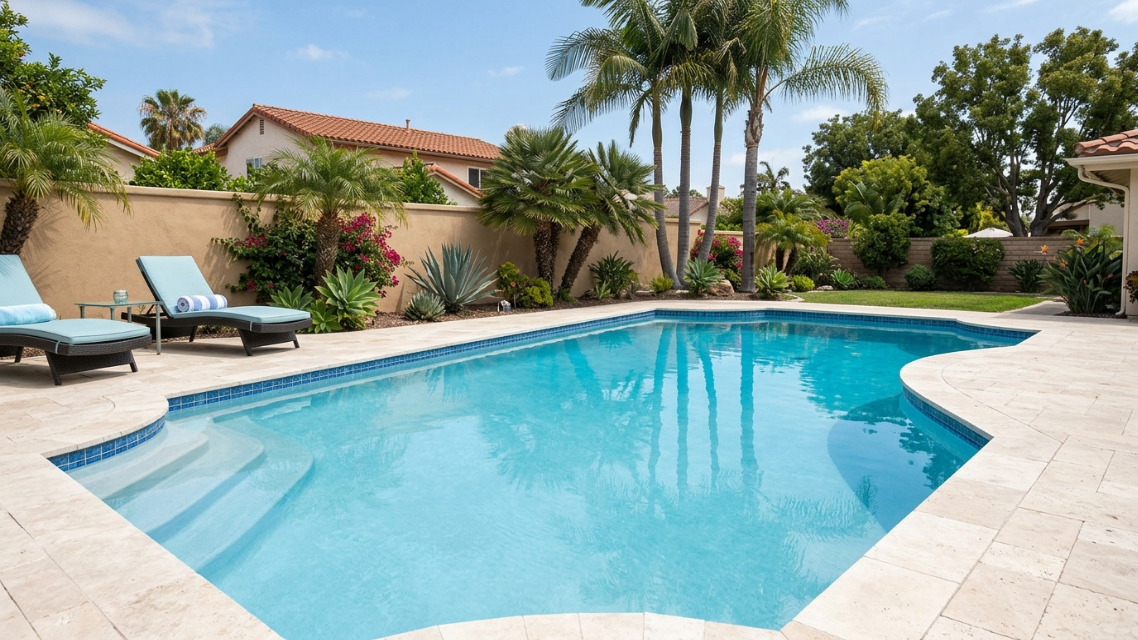
 If your pool’s surface is looking chalky, stained, rough to the touch, or cracked in places, pool resurfacing in San Diego is one of the most cost-effective ways to bring it back to life without the expense of a full rebuild. At Baja Pool Plaster, we resurface residential and commercial pools throughout San Diego, replacing worn plaster, pebble, or quartz finishes with a smooth, durable, long-lasting surface that protects the pool shell underneath and makes swimming enjoyable again.
Pool surfaces don’t fail overnight. They wear down gradually from years of sun exposure, chemical balancing, water chemistry swings, and everyday use, until one day the plaster is rough, the color is patchy, and small cracks start to show. Resurfacing addresses all of that at the source, rather than papering over symptoms with patch repairs that don’t last.
Why Pool Resurfacing Matters
A worn pool surface isn’t just a cosmetic issue — it’s a structural and safety issue waiting to happen.
The risks of putting off resurfacing include:
- Rough or pitted plaster that scrapes skin and snags swimwear
- Etching and staining that make the water look dirty even when it’s properly balanced
- Hairline cracks that widen over time and allow water to seep behind the surface, which can undermine the pool shell
- Increased chemical usage, since a rough, porous surface holds more algae and bacteria and requires more sanitizer to keep clean
- Lower resale value, since a visibly deteriorated pool is one of the first things buyers and home inspectors flag
On the upside, a properly resurfaced pool restores a smooth, comfortable swimming surface, makes water chemistry easier to manage, and can meaningfully improve how the whole backyard looks and feels — which matters in a city like San Diego, where the pool is often the centerpiece of outdoor living for most of the year.
Common Problems Pool Resurfacing Solves
![Pool Resurfacing San Diego: showing close-up of cracked or worn pool plaster before resurfacing]](https://bajapoolplaster.com/wp-content/uploads/2026/07/worn-pool-plaster.png) Homeowners typically reach out for resurfacing after noticing one or more of these issues:
Homeowners typically reach out for resurfacing after noticing one or more of these issues:
- Rough, sandpaper-like texture underfoot or against skin, usually a sign the plaster has worn down to the aggregate below
- Discoloration or staining that won’t respond to acid washing or draining and cleaning
- Visible cracks in the plaster, especially spider cracks that spread across the shallow end or steps
- Chalky white buildup or calcium scaling that makes the surface look dull no matter how often it’s brushed
- Persistent algae staining in a surface that’s become too porous to keep clean with normal maintenance
- An older pool nearing the end of its finish’s typical service life, even if there’s no obvious damage yet
If any of these sound familiar, it’s worth comparing pool resurfacing against a full pool remodel to see which fits your situation, especially if the pool has other issues beyond the surface, like outdated tile or deck cracking.
Our Pool Resurfacing Process
We keep the process straightforward so homeowners know exactly what to expect from first call to final fill.
- Initial assessment. We evaluate the current surface, look for cracks, delamination, or shell issues, and talk through your goals — whether that’s a straightforward replaster or an upgrade to a pebble or quartz finish.
- Draining and surface prep. The pool is drained and the old, worn surface is chipped out or properly prepped so the new material bonds correctly. This step also surfaces any underlying issues, like concrete cracks that need repair before resurfacing proceeds.
- Repairs before resurfacing. Any cracks, chips, or rough spots in the shell are addressed first. If there’s any indication of a leak, we recommend pool leak detection and repair before new plaster goes down, since resurfacing over an active leak just hides the problem.
- Applying the new finish. We apply the new plaster, pebble, or quartz surface evenly across the pool shell, working in sections to keep consistency in texture and color.
- Curing and start-up. The pool is refilled and a proper start-up chemical process begins immediately, which is critical for how the new surface cures and how long it lasts.
- Final walkthrough. We review the finished surface with you, answer any care questions, and make sure you know how to handle water chemistry during the first few weeks, which matters most for a long-lasting finish.
Why Choose Baja Pool Plaster
San Diego pools face a specific combination of stressors — near-constant sun exposure, minimal rain to dilute water chemistry, and heavy year-round use — that make surface wear happen faster than in cooler, cloudier climates. We focus specifically on pool plastering and resurfacing in this market, which means:
- Local familiarity with how San Diego’s climate and water conditions affect plaster, pebble, and quartz finishes over time
- A process-driven approach, from prep through start-up, rather than rushing straight to a new coat of plaster
- Straight answers about condition and scope, including telling you if a full remodel or crack repair should happen first
- Direct communication — you’ll know what’s being done and why at each stage
If you’re comparing contractors, our guide on how to choose a pool plastering contractor and our list of questions to ask before hiring a pool contractor can help you evaluate any company, including us, with confidence.
Pool Resurfacing in San Diego: Local Considerations
San Diego’s climate is part of what makes pool resurfacing here different from other regions. With sun exposure most of the year and relatively little rainfall to naturally dilute pool chemistry, surfaces here are constantly working against UV degradation, evaporation-driven mineral concentration, and heavy swim season use that can stretch from spring through fall.
We resurface pools across San Diego and the surrounding areas, and we regularly see the same patterns in homes near the coast versus inland. Coastal properties closer to areas like La Jolla often deal with salt air exposure, which can accelerate wear on certain finishes and hardware. Inland neighborhoods tend to see faster water evaporation and higher chemical demand during peak summer heat, which puts extra strain on an aging surface.
Regardless of where in the San Diego area your pool is located, older backyard pools — especially those built with plaster finishes from decades past — are prime candidates for resurfacing, particularly if the surface hasn’t been redone in ten-plus years. Property styles across the region range from classic mid-century backyard pools to newer resort-style designs, and our resurfacing approach adjusts to the shell type, age, and finish material involved.
Cost, Timeline, and What to Expect
Every pool is different, so pricing and timelines depend on several factors rather than a flat rate:
- Pool size and shape — larger and more complex shapes require more material and labor
- Current surface condition — a pool with only cosmetic wear costs less to resurface than one with extensive cracking or shell repairs needed first
- Finish type chosen — standard plaster, pebble, and quartz finishes vary in material cost and labor time; our comparison of quartz finish versus pebble finish breaks down the differences if you’re deciding between them
- Additional repairs required, such as crack repair or leak detection, which are typically handled before resurfacing begins
- Accessibility of the pool, since equipment access and site conditions can affect labor time
As a starting point for budgeting, our pool resurfacing cost guide for San Diego and pool replastering cost calculator walk through the variables that typically drive pricing up or down, without guessing at a number that won’t apply to your specific pool.
Timeline-wise, most resurfacing projects involve drain, prep, application, and a curing/start-up period before the pool is ready for regular swimming again. We’ll walk you through a realistic timeline for your specific project during the initial assessment, since prep work and repairs can extend the schedule.
For homeowners weighing resurfacing against other options, it’s also worth reviewing our pool surface lifespan comparison and pool surface maintenance guide to understand how long a new finish should last and what upkeep helps it get there. And if your pool needs more than a surface refresh, our pool remodeling and renovation services cover larger-scope updates.
Ready to Restore Your Pool’s Surface?
A worn, cracked, or stained pool doesn’t have to stay that way. Baja Pool Plaster provides expert pool resurfacing in San Diego, CA, backed by a process built around getting the prep work right so the new surface actually lasts. Whether you need a straightforward replaster, an upgrade to pebble or quartz, or repairs before resurfacing begins, we’re ready to walk you through it.
Call Baja Pool Plaster today at (619) 458-3443 or email info@bajapoolplaster.com to schedule your assessment and get a clear picture of what resurfacing your pool will involve. Your backyard pool is worth restoring properly — let’s get it done right.
Frequently Asked Questions
How do I know if my pool needs resurfacing instead of just a repair?
How do I know if my pool needs resurfacing instead of just a repair?
If the wear is limited to a small crack or chip, a targeted repair may be enough. But if the surface is rough overall, staining across large areas, or the finish is aging out (typically a decade or more old), resurfacing addresses the whole surface rather than patching isolated spots that will likely fail again elsewhere.
How long does pool resurfacing take in San Diego?
How long does pool resurfacing take in San Diego?
Timelines vary based on pool size, the extent of prep and repair work needed, and the finish chosen. The process includes draining, surface prep, any necessary crack or shell repairs, applying the new finish, and a curing/start-up period before the pool is ready for regular use. We provide a project-specific timeline after assessing your pool.
What’s the difference between plaster, pebble, and quartz pool finishes?
What’s the difference between plaster, pebble, and quartz pool finishes?
Plaster is the traditional, most budget-friendly finish. Pebble finishes use small aggregate stones for added texture and durability. Quartz finishes blend quartz crystals into the plaster for extra strength and a shimmering look. Each has different lifespan, cost, and maintenance characteristics, which we cover in more detail on our finish comparison pages.
Can pool resurfacing fix cracks and leaks?
Can pool resurfacing fix cracks and leaks?
Resurfacing addresses the surface finish, but cracks and leaks in the pool shell itself need to be repaired first. Resurfacing over an unrepaired crack or active leak just conceals the problem rather than solving it, so we assess for these issues before beginning any resurfacing work.
How often should a pool be resurfaced?
How often should a pool be resurfaced?
This depends heavily on the finish type, water chemistry maintenance, and climate exposure. San Diego’s near-constant sun and minimal rainfall tend to shorten the practical lifespan of a surface compared to cooler, wetter climates, which is why many local pools need resurfacing sooner than the finish’s theoretical maximum lifespan.
Do you serve areas outside of San Diego proper?
Do you serve areas outside of San Diego proper?
Yes, we resurface pools throughout San Diego and the surrounding areas. If you’re unsure whether your location is within our service range, give us a call and we can confirm.
Is pool resurfacing worth it before selling a home?
Is pool resurfacing worth it before selling a home?
A worn, stained, or cracked pool surface is often flagged by buyers and inspectors, and it can affect a buyer’s perception of the whole backyard. Resurfacing before listing can improve first impressions and head off negotiation points tied to visible pool condition, though the value impact depends on your local market and the pool’s overall condition.