
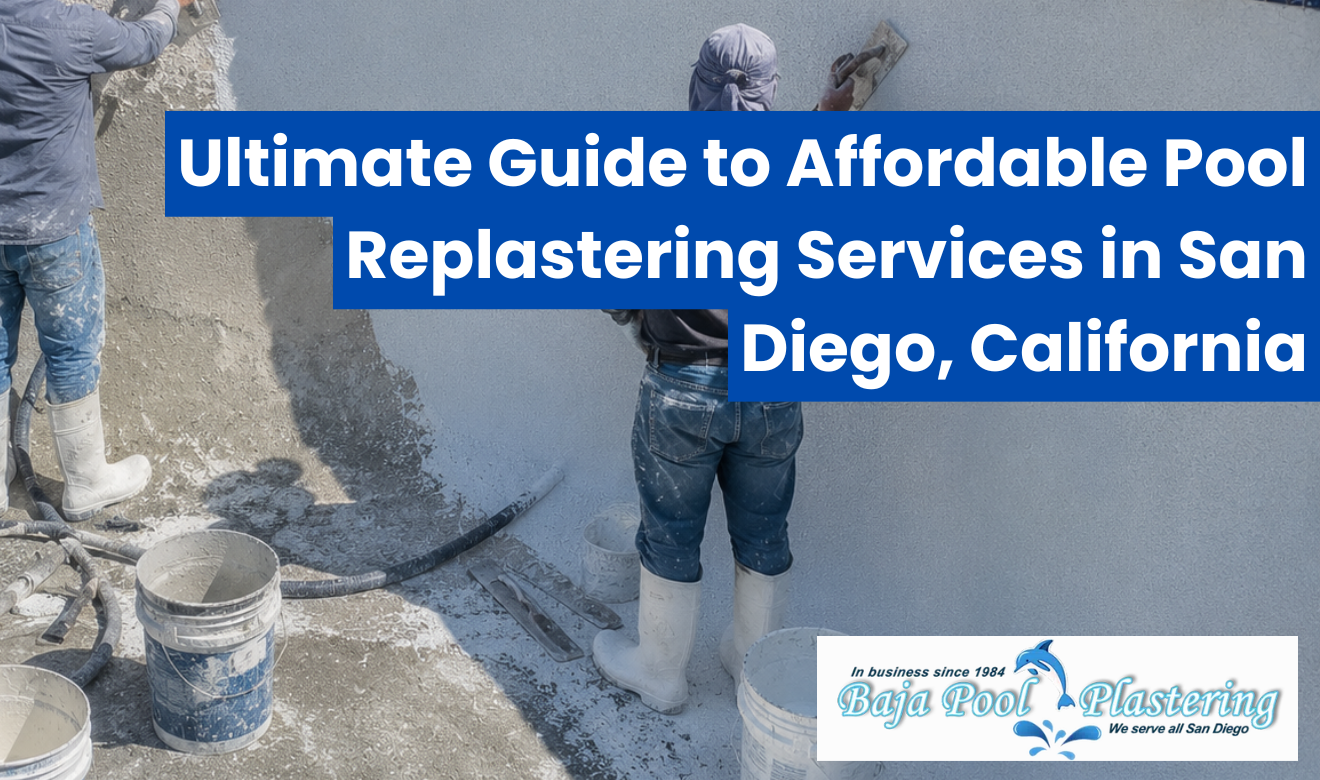
Executive Summary
Affordable pool replastering San Diego is achieved by locking down a contract-grade scope that prioritizes correct prep (chip-out to sound material, clean/neutralized substrate), a finish matched to local water chemistry, and a written continuous-fill start-up plan that prevents early defects. The definitive “affordable” path is value-driven: predictable pricing comes from clear line items, defined allowances for hidden conditions, and verified on-site installation controls—not the lowest bid.
3 Core Insights
- Affordable Means Scope-Controlled Value: Pricing stays predictable when the shell is sound, prep and thickness requirements are written, and optional upgrades (tile/coping/fittings) are separated as line items to reduce change orders.
- Prep Quality Determines Service Life: Chip-out of hollow/delaminated areas, dust-free conditioning, and complete acid-wash neutralization (when used) are non-negotiable steps that prevent early delamination, spotting, and roughness.
- Start-Up Is Part of the Installation: Continuous fill plus a documented brushing and gradual chemistry-balancing plan is the most direct way to prevent mottling, scale, streaking, and calcium nodules in San Diego’s hard-water conditions.
Affordable pool replastering San Diego is the process of renewing a swimming pool’s interior finish at a cost that fits typical local budgets while restoring a smooth, watertight surface. In San Diego, replastering most often means removing hollow or delaminated plaster, patching cracks, and applying a new white plaster or quartz-based finish to match the pool’s chemistry demands. Common local triggers include spalling and roughness from high calcium hardness water, etching from low pH, and tile-line scaling from hard-water evaporation in inland areas like El Cajon and Poway. A practical scope usually includes draining to a storm-compliant point, hydrostatic relief checks for high groundwater zones near Mission Valley, bond-coat application, and a 3/8-inch to 1/2-inch finish coat with tight trowel passes for uniform density. Pricing stays predictable when the pool shell is structurally sound, the existing surface is not extensively delaminated, and add-ons like new waterline tile, coping repair, or major crack stitching are clearly separated. Expect technical prep details to matter, such as proper acid wash neutralization, dust-free substrate conditions, and controlled fill water start-up to prevent mottling, streaking, and early calcium nodules. This guide focuses on what San Diego homeowners can verify on-site, what to request in a written scope, and which finish and start-up choices typically deliver the best durability per dollar.
What “Affordable” Replastering Means in San Diego (Without Cutting Corners)
Affordable pool replastering in San Diego means controlling scope, minimizing change orders, and selecting a finish system that matches your water conditions and pool structure. The “deal” is not the lowest bid—it’s the best value when prep, material specs, and start-up procedures are written and verified on-site.
In practice, pricing stays stable when these variables are managed up front:
- Shell condition: sound gunite/shotcrete with no active structural movement.
- Bond integrity: limited hollow areas and no widespread delamination behind the existing plaster.
- Defined scope: tile, coping, lights, drains, and crack repair are clearly itemized (not bundled vaguely).
- Finish choice aligned to chemistry: standard white plaster vs. quartz/plaster blends based on your fill water and maintenance practices.
Because San Diego has microclimates (coastal humidity, inland heat, and hard-water scaling zones), the “right” approach often depends on where you are and how your pool is operated year-round.
On-Site Conditions That Usually Trigger Replastering
Most replasters are driven by surface failure, not aesthetics alone, and the failure mode tells you what prep and patching must be included. A correct diagnosis prevents repeating the same damage pattern on the new finish.
Common triggers San Diego homeowners can verify visually and by touch include:
- Roughness and “sandpaper” texture: often tied to etching from low pH or aggressive water (low calcium hardness / low alkalinity).
- Spalling and pop-offs: localized surface breakouts that can indicate bond loss, freeze/thaw damage in rare higher-elevation exposures, or material/chemistry stress.
- Hollow-sounding areas: delamination where the plaster has separated from the substrate; these areas must be removed to sound material.
- Cracks: hairline crazing vs. structural cracks—each requires different repair methods and documentation.
- Tile-line scale: especially in inland neighborhoods where evaporation concentrates calcium; scale control must be part of start-up and ongoing chemistry.
If you suspect broader structural issues (beam cracks, deck movement, or recurring leak symptoms), a repair-first scope is usually more economical than plastering over unresolved problems.
San Diego Draining Rules and Jobsite Compliance That Affect Cost
Drain-and-discharge compliance is not optional in San Diego County and can impact scheduling and labor. A compliant plan reduces risk of stop-work events and protects stormwater infrastructure.
Key field realities homeowners should confirm before draining:
- Discharge location: pool water must not be allowed to flow into storm drains; stormwater systems discharge to receiving waters and are regulated.
- Dechlorination: when required by local rules or site conditions, water may need dechlorination and controlled discharge (especially after recent shocking).
- Hydrostatic pressure: in areas with higher groundwater potential (e.g., near river valleys), hydrostatic relief planning is critical to avoid shell “float.”
- Equipment access and noise: pump placement, truck access, and work hours can affect labor and staging.
A written scope should state who is responsible for discharge setup, whether filtration/dechlorination is included, and what happens if groundwater is encountered after the pool is empty.
Replastering Workflow: What a Correct Scope Should Include
A reliable replaster job is defined by surface preparation, bond strategy, finish thickness, and curing/start-up control. If any of these are missing from the contract, the finish life is shortened and cosmetic defects become more likely.
Request a step-by-step scope that includes these standard phases:
- Drain and protect
- Confirm shutoff/tag-out of applicable circuits before light work.
- Protect decking, coping edges, and nearby landscaping from debris and overspray.
- Demolition and soundness checks
- Chip out all hollow/delaminated plaster to solid bond.
- Remove failed patches and any loose material around fittings.
- Crack and fitting treatment
- Differentiate cosmetic crazing from structural cracks; structural cracks typically require more than a surface skim.
- Address returns, drains, skimmers, and lights so transitions don’t become leak paths.
- Surface conditioning
- Acid wash only when appropriate; require complete neutralization and rinse to avoid leaving reactive residue.
- Ensure a clean, dust-free substrate immediately before bond coat/finish application.
- Bond coat (when specified)
- Confirm product type and manufacturer instructions are followed for open time and substrate moisture condition.
- Finish installation
- Target typical plaster thickness of approximately 3/8 inch to 1/2 inch with uniform trowel densification.
- Maintain consistent crews and timing to reduce visible trowel/stop marks.
- Controlled fill and start-up
- Continuous fill (no stopping midline) to prevent ring lines and streaking.
- Start-up brushing and chemistry balancing to reduce mottling, nodules, and scaling.
Finish Options That Balance Durability and Budget
Choosing the right interior finish is the fastest way to control lifetime cost per year of service. In San Diego, the best value often comes from matching material to your fill water hardness and your willingness to maintain stable water chemistry.
Common finish categories (from baseline to upgraded) include:
- Standard white plaster (marble-based): lowest upfront cost; can look excellent but is more sensitive to aggressive water and start-up errors.
- Quartz-enhanced plaster: improved resistance to spotting and etching compared to basic plaster; often a strong value for inland hard-water conditions.
- Pebble/aggregate finishes: typically higher cost; long service life but texture is more pronounced, and start-up still matters.
Ask for a written statement of what finish is included (brand/system if applicable), what color additives are used (if any), and whether a bond coat is part of the system.
Core Metrics to Verify Before You Sign (Data Table)
Replaster durability is strongly correlated with measurable install and start-up controls. Use the checklist below to compare proposals apples-to-apples and prevent vague scopes.
| Feature / Metric | Specifications | Local Guidelines |
|---|---|---|
| Finish coat thickness | Typically ~3/8″ to 1/2″ uniform plaster/finish application with consistent trowel densification | Specify thickness expectations in the scope; thin areas are prone to early wear and spotting |
| Delamination removal standard | Chip-out to sound material; no plastering over hollow areas | Require a “soundness test” step and written allowance for additional hollow area removal if discovered |
| Acid wash neutralization | Neutralize and rinse until residue is removed; keep substrate clean and dust-free | Avoid leaving reactive acid on site surfaces; confirm wastewater handling plan before work starts |
| Hydrostatic relief planning | Check relief points/conditions before extended empty time where groundwater risk exists | Higher attention in low-lying zones; define who assumes risk and what mitigation is included |
| Fill and start-up method | Continuous fill, brushing schedule, controlled chemistry adjustment | Start-up errors are a common cause of mottling and nodules; require written start-up steps |
How to Keep Replastering “Affordable” Without Sacrificing Service Life
The most effective cost control is separating must-do structural/prep items from optional cosmetic upgrades. When proposals itemize correctly, you can choose upgrades strategically instead of paying for bundled markups.
Use these tactics to hold value:
- Insist on line-item add-ons: waterline tile replacement, coping repair, light niche replacement, main drain work, and autofill repairs should be separate.
- Set a defined allowance for hidden conditions: e.g., a written unit rate for additional chip-out if more delamination is discovered.
- Choose the simplest finish that fits your chemistry reality: quartz blends often outperform basic plaster in hard-water areas without moving into premium aggregate pricing.
- Bundle only logically connected tasks: if you already need leak diagnostics or fitting repair, align that work before plaster goes in.
- Plan scheduling around weather and access: avoid rushed work windows that lead to trowel inconsistencies or hurried start-up.
If you need broader corrective work beyond the interior finish, start with San Diego Pool Repair so the surface investment isn’t placed over unresolved defects.
Start-Up and Water Chemistry Controls That Prevent Mottling, Scale, and Nodules
Start-up is part of the installation, not an optional afterthought, because new plaster hydrates and cures while interacting with fill water. Proper brushing and balanced chemistry are the most direct controls for preventing early discoloration, calcium nodules, and roughness.
Operational controls to request in writing (and follow closely):
- Continuous fill: do not stop water mid-surface line; stopping can leave a permanent ring.
- Early brushing: brush the entire surface on the start-up schedule provided to remove plaster dust and prevent scaling.
- Controlled adjustments: avoid aggressive chemical swings; stabilize pH, alkalinity, and calcium hardness gradually to avoid etching or rapid scale precipitation.
- Filtration oversight: clean filters as needed during dust-heavy early days so circulation remains consistent.
San Diego’s hard-water profile in many neighborhoods makes scale control especially important at the waterline, where evaporation concentrates minerals. For a general overview of pool components and finishes, see swimming pool.
What to Require in the Written Scope (Contract-Grade Clarity)
A strong scope reads like a checklist a third party could audit, with specific steps, inclusions, and exclusions. This is the simplest way to prevent disputes and ensure the bid reflects the same workmanship you think you’re buying.
Include these contract essentials:
- Surface prep: chip-out standard, crack treatment method, and fitting/niche prep detail.
- Material system: finish type (white plaster, quartz blend, aggregate), any bond coat used, and color/additive disclosure.
- Thickness expectation: target thickness range and uniformity expectations.
- Water management: drain/discharge plan and responsibilities; hydrostatic relief assumptions where relevant.
- Start-up plan: written brushing/chemistry steps and who performs them.
- Exclusions: tile replacement, coping, decking, equipment upgrades, leak repair, and electrical work should be explicitly stated if not included.
If you are also evaluating broader contractor qualifications and what to look for in local bidding, review swimming pool contractor options in San Diego to understand how scopes, timelines, and workmanship standards are typically compared.
A Practical Wrap-Up: The Lowest Risk Path to a Long-Lasting Finish
The most reliable way to keep replastering costs reasonable in San Diego is to demand precise prep language, choose a finish that matches local water behavior, and follow a controlled start-up. When the scope includes delamination removal, clean substrate preparation, correct thickness, and continuous-fill curing practices, you reduce the main causes of premature roughness, staining, and nodules.
Before work begins, do a final on-site confirmation of:
- Where water will be discharged and how compliance will be handled
- How hollow areas and cracks will be treated (and what triggers additional cost)
- What finish system is being installed and how start-up is executed
- Which upgrades are optional vs. required for watertight performance
That combination—clear scope, correct prep, and disciplined start-up—is what consistently delivers the best durability per dollar for San Diego homeowners.
Frequently Asked Questions
Get Your Pool Replastered the Right Way—Before a “Cheap” Bid Turns Into a Costly Do-Over
Replastering isn’t a cosmetic weekend project—it’s a high-stakes reset of your pool’s watertight barrier. And in San Diego, the risks get real fast when the scope isn’t specific and the crew isn’t local: improper drain/discharge can trigger compliance issues, skipped hollow-spot removal can lead to early delamination, rushed prep can lock in staining and roughness, and a sloppy start-up can cause mottling, scale, and calcium nodules that you’re stuck staring at for years.
Here’s the part most homeowners don’t hear until it’s too late: the “lowest” price is often just a vague scope that leaves out the steps that actually make plaster last—chip-out to sound material, correct bond strategy, uniform thickness, clean neutralized substrate, and a controlled continuous-fill start-up. When any of those are missed, you don’t just lose appearance—you risk premature failure, leak paths at fittings, and paying twice to fix what should’ve been done once.
If you want affordable replastering that stays affordable, you need a contractor who understands San Diego water behavior, local discharge realities, and the microclimates that punish shortcuts. We’ll help you lock down a contract-grade scope, choose the finish that matches your fill water, and avoid the hidden-condition surprises that cause change orders and delays.