
Pool Resurfacing · San Diego
Pool Resurfacing in San Diego
If your pool’s surface is chalky, stained, rough to the touch or cracked in places, resurfacing is one of the most cost-effective ways to bring it back to life without the expense of a full rebuild.
Baja Pool Plaster resurfaces residential and commercial pools throughout San Diego, replacing worn plaster, quartz or pebble finishes with a smooth, durable surface that protects the shell underneath.
- Residential & commercial
- Since 1984
- Free on-site estimates
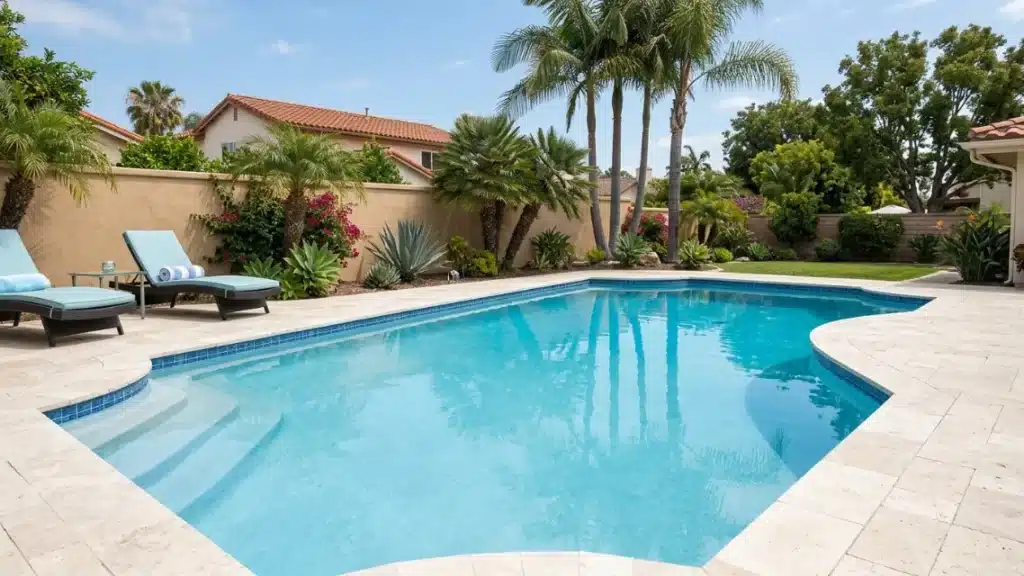
Pool Resurfacing Explained
What is pool resurfacing?
Pool surfaces do not fail overnight. They wear down gradually from years of sun exposure, chemical balancing, water chemistry swings and everyday use, until one day the plaster is rough, the color is patchy and small cracks start to show.
Resurfacing addresses all of that at the source, rather than papering over symptoms with patch repairs that do not last.

Short answer
Pool resurfacing
Replaces a pool’s worn interior finish — plaster, quartz or pebble — with a new one, after the old surface has been prepared or removed and any shell repairs are made. It is the broad category: replastering is resurfacing with plaster.
How it relates to our other services
- Pool ReplasteringA straight plaster-for-plaster replacement.
- Pool Surface RepairIf only one area is damaged, a surface repair may be enough.
- Concrete Pool Crack Repair & Leak DetectionShell cracks and leaks come first, before any new finish.
- Pool RemodelingNew tile, coping or a different layout is a pool remodel.


When to Resurface
Common problems pool resurfacing solves
Homeowners usually reach out about resurfacing after noticing one or more of these — signs that the finish layer itself is wearing out rather than simply being dirty.
Rough, sandpaper-like texture
Underfoot or against skin — usually a sign the plaster has worn down to the aggregate below.
Discoloration or staining
Stains that will not respond to acid washing or draining and cleaning.
Visible cracks in the plaster
Especially spider cracks spreading across the shallow end or steps.
Chalky white buildup or calcium scaling
It keeps the surface dull no matter how often it is brushed.
Persistent algae staining
The surface has become too porous to keep clean with normal maintenance.
An older finish
Nearing the end of its typical service life, even without obvious damage yet.
If the pool has other issues beyond the surface — outdated tile or deck cracking — it is worth comparing replastering against a full pool remodel.
Why Resurfacing Matters
What happens if you put resurfacing off?
A worn pool surface is not only cosmetic. Left too long, it turns into a comfort, maintenance and structural problem.
Water that looks dirty
Etching and staining make the water look dirty even when it is properly balanced.
Cracks that let water in
Hairline cracks widen over time and allow water to seep behind the surface, which can undermine the pool shell.
More chemicals
A rough, porous surface holds more algae and bacteria, so it takes more sanitizer to keep clean.
Lower resale value
A visibly deteriorated pool is one of the first things buyers and home inspectors flag.
What a new surface gives back
A smooth, comfortable swimming surface, water chemistry that is easier to manage, and a backyard that looks cared for — which matters in San Diego, where the pool is the centerpiece of outdoor living most of the year.
Compare Your Options
Resurfacing, surface repair or a full remodel?
If the wear is limited to a small crack or chip, a targeted repair may be enough. If the surface is rough overall, stained across large areas, or the finish is aging out — typically a decade or more old — resurfacing addresses the whole surface rather than patching spots that will likely fail again elsewhere.
| Option | What it covers | Best when |
|---|---|---|
| Surface repair | Localized cracks, chips, rough spots or staining | The rest of the finish is still sound |
| Replastering | A new plaster finish over the whole pool | You want the classic, most budget-friendly finish again |
| Resurfacing | A new plaster, quartz or pebble finish over the whole pool | The surface is worn overall, or you want a more durable or different finish |
| Remodel & renovation | Surface plus tile, coping, decking or layout | The pool needs more than a new surface |
Our Resurfacing Process
From first call to final fill
We keep the process straightforward so you know exactly what to expect at each stage.
Initial assessment
We evaluate the current surface, look for cracks, delamination or shell issues, and talk through your goals — a straightforward replaster or an upgrade to a pebble or quartz finish.
Draining & surface prep
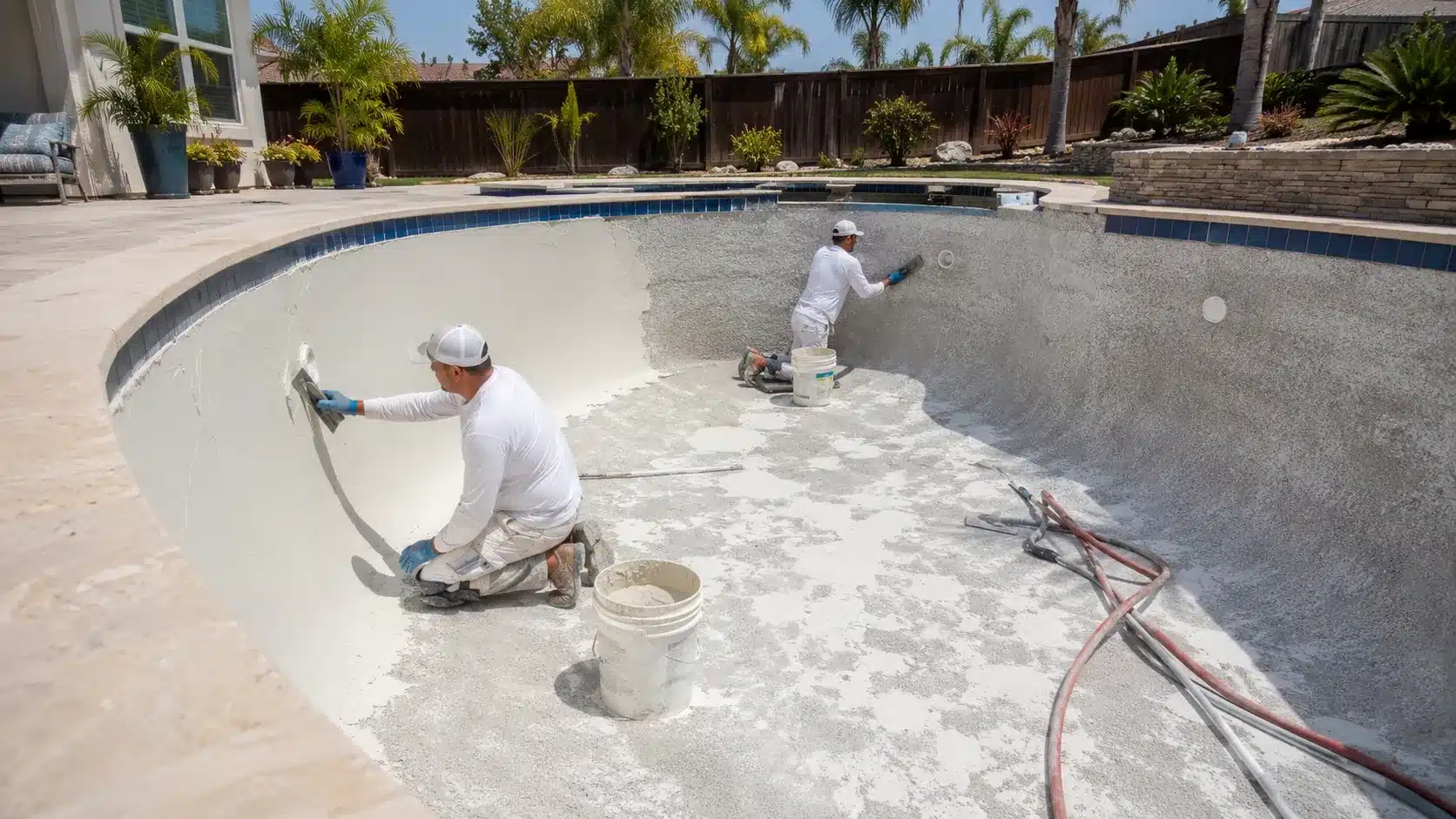
The pool is drained and the old, worn surface is chipped out or properly prepped so the new material bonds correctly. This step also exposes underlying issues such as concrete cracks.
Repairs before resurfacing
Cracks, chips and rough spots in the shell are addressed first. Any sign of a leak means leak detection and repair before new plaster goes down — resurfacing over an active leak just hides it.
Applying the new finish
The new plaster, pebble or quartz surface is applied evenly across the shell, working in sections to keep the texture and color consistent.
Curing & start-up
The pool is refilled and a proper start-up chemical process begins immediately — critical for how the new surface cures and how long it lasts.
Final walkthrough
We review the finished surface with you, answer care questions, and make sure you know how to handle water chemistry during the first few weeks.
Prep work and repairs can extend the schedule, so we walk you through a realistic timeline for your specific pool during the initial assessment.
Finish Options
Choosing plaster, quartz or pebble
Each finish has a different lifespan, cost and maintenance profile. The right one depends on budget, appearance and how the pool is used.
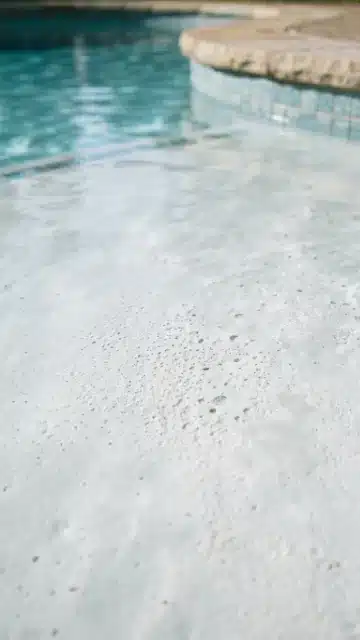
Traditional plaster
The traditional and most budget-friendly finish — smooth, in white or color plasters.
- Cost
- Most budget-friendly
- Texture
- Smooth
- Color
- White or color plasters
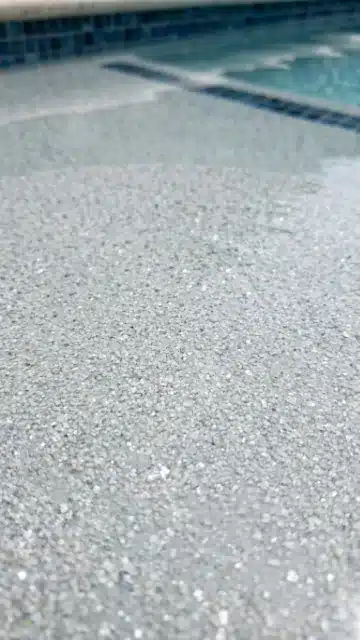
Quartz finish
Quartz crystals blended into the plaster for extra strength, a wider color range and a shimmering look.
- Strength
- Added over plaster
- Color
- Wider range
- Look
- Shimmering
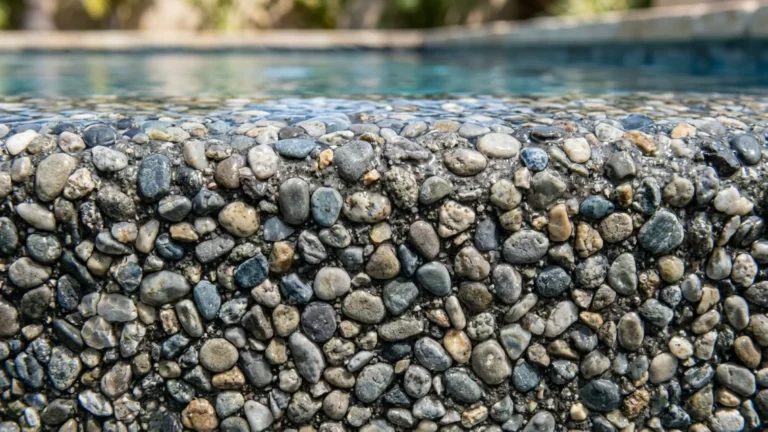
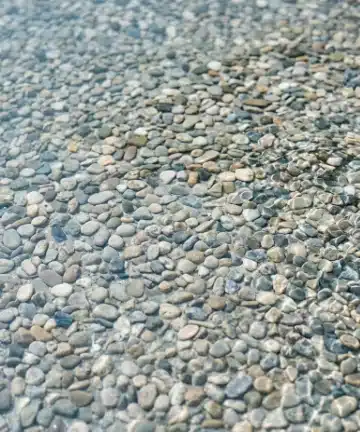
Pebble finish
Small aggregate stones for added texture and durability — the longest-wearing of the three.
- Durability
- Longest-wearing
- Texture
- Added texture
- Made with
- Small aggregate stones
Deciding between them? Read quartz finish vs pebble finish, PebbleTec vs pool plaster and our pool surface lifespan comparison.
Cost & Timeline
What affects the cost and timeline of pool resurfacing?
Every pool is different, so pricing and timelines depend on several factors rather than a flat rate.
Cost factors
What shapes the price
There is no flat rate: the price is set for your pool after an on-site look, and the estimate is free.
- Pool size and shape — larger and more complex shapes need more material and labor.
- Current surface condition — cosmetic wear costs less to resurface than extensive cracking or shell repairs.
- Finish type — plaster, pebble and quartz vary in material cost and labor time.
- Additional repairs — crack repair or leak detection, handled before resurfacing begins.
- Accessibility — equipment access and site conditions affect labor time.
For budgeting, our pool resurfacing cost guide for San Diego and replastering vs resurfacing cost comparison walk through the variables — without guessing at a number that will not apply to your pool.
Timeline factors
How the schedule runs
Prep work and repairs can extend the schedule — you get a realistic timeline for your specific pool at the initial assessment.
Most resurfacing projects move through the same stages before the pool is ready for regular swimming again:
- Drain the pool
- Prep the old surface so the new one bonds
- Repair cracks, chips or leaks found along the way
- Apply the new finish
- Cure and start up with a proper chemical start-up
To see how long a new finish should last and what upkeep helps it get there, read our pool surface maintenance guide.


Local Considerations
Pool resurfacing in San Diego’s climate
San Diego pools wear faster than pools in cooler, cloudier climates: sun most of the year, little rain to dilute pool chemistry, and a swim season that stretches from spring through fall.
Surfaces here are constantly working against UV degradation, evaporation-driven mineral concentration and heavy use. We resurface pools across San Diego and the surrounding areas, and we see the same patterns near the coast and inland:
San Diego conditions
- Coastal environment
- Coastal properties, closer to areas like La Jolla, deal with salt air that can accelerate wear on certain finishes and hardware.
- Sun exposure
- Sun most of the year keeps surfaces working against UV degradation.
- Pool chemistry
- Inland neighborhoods see faster evaporation and higher chemical demand during peak summer heat, which puts extra strain on an aging surface.
- Surface age
- Older backyard pools — especially plaster finishes from decades past — are prime candidates for resurfacing, particularly if the surface has not been redone in ten-plus years.
- Usage
- A swim season from spring through fall means heavy use.
From classic mid-century backyard pools to newer resort-style designs, the approach adjusts to the shell type, age and finish material involved.
Why Baja Pool Plaster
Why San Diego homeowners choose Baja for resurfacing
We focus specifically on pool plastering and resurfacing in this market. If you are comparing contractors, our guides on how to choose a pool plastering contractor and questions to ask before hiring a pool contractor will help you evaluate any company — including us.
Local familiarity
We know how San Diego’s climate and water conditions affect plaster, pebble and quartz finishes over time.
A process-driven approach
From prep through start-up — rather than rushing straight to a new coat of plaster.
Straight answers about scope
Including telling you when a full remodel or crack repair should happen first.
Direct communication
You will know what is being done and why at each stage — and your estimate comes from Ruben Castillo, the owner.
Licensed since 1984
Pool plastering since 1984, CSLB License #452824, with standard guarantees on all pool work.


Related Services
Related pool services
Resurfacing often sits alongside other surface and shell work. These are the services most closely connected to it.
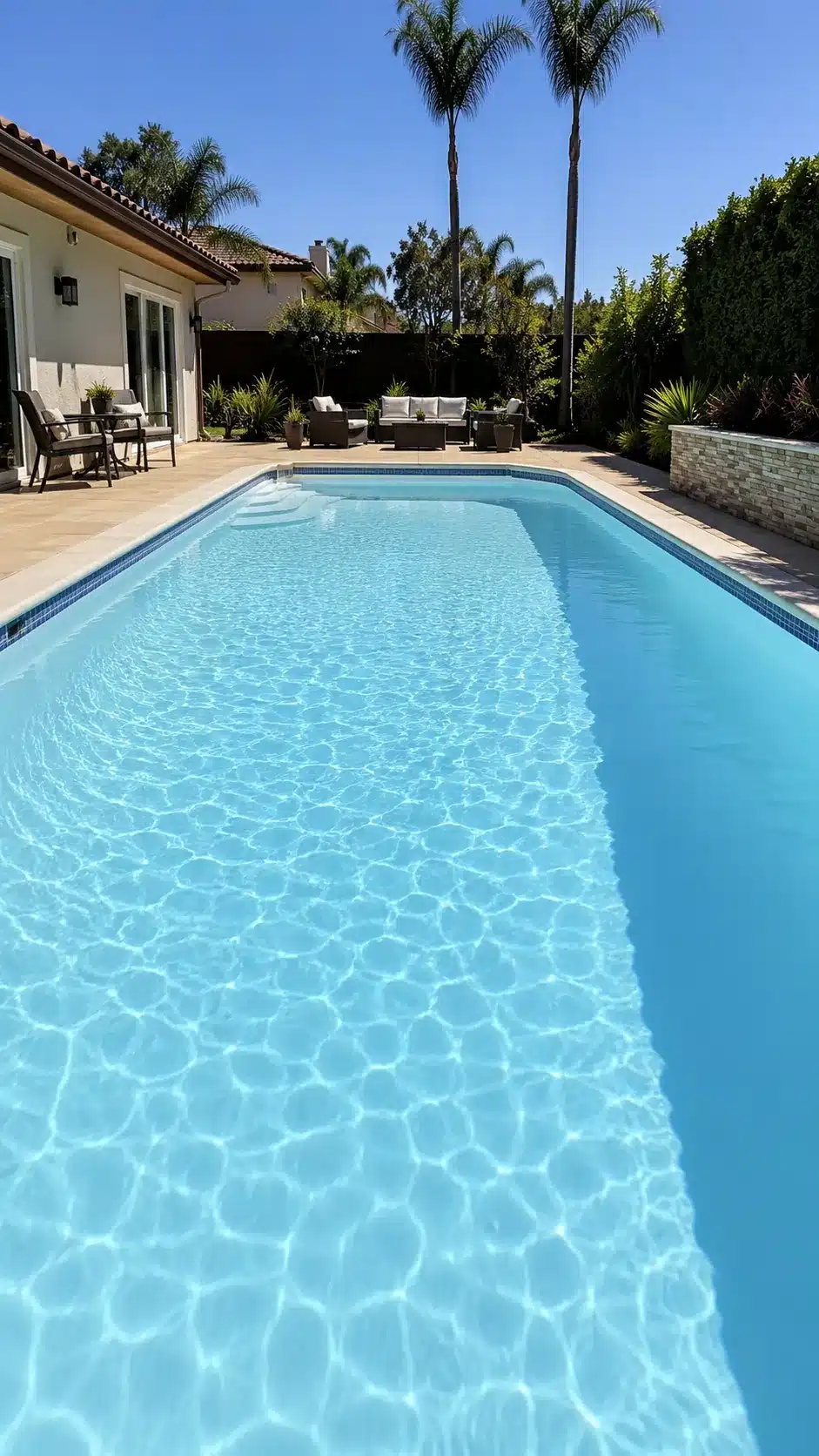
Plaster finish
A new plaster coat when the classic finish is the right fit.

Localized damage
When one area is failing and the rest is still sound.
Beyond the surface
When the pool needs new tile, coping, decking or layout as well as a new surface.
Shell work comes first: Concrete Pool Crack Repair fixes structural cracks before any new finish goes on, and Pool Leak Detection & Repair finds and fixes leaks before resurfacing.
Pool Owner Resources
Resurfacing guides
Costs, lifespans and how to look after a new surface once it is in. Still deciding? Read the signs a pool needs resurfacing and how long a resurfaced finish lasts.

Pool Cost Guide
Why resurfacing is usually the better investment, and when replacement makes sense.
Pool Finish Comparison
How long plaster and pebble finishes typically last, and why.

Hiring & Planning Guide
How water chemistry, brushing and seasonal care protect a plaster surface.
Frequently Asked
Pool resurfacing questions
Direct answers to what San Diego homeowners ask most about resurfacing. For anything specific to your pool, call Ruben — the advice is free.

How do I know if my pool needs resurfacing instead of just a repair?
If the wear is limited to a small crack or chip, a targeted repair may be enough.
But if the surface is rough overall, stained across large areas, or the finish is aging out (typically a decade or more old), resurfacing addresses the whole surface rather than patching isolated spots that will likely fail again elsewhere.
How long does pool resurfacing take in San Diego?
It varies with pool size, the extent of prep and repair work, and the finish chosen.
The process includes draining, surface prep, any necessary crack or shell repairs, applying the new finish, and a curing and start-up period before the pool is ready for regular use. We provide a project-specific timeline after assessing your pool.
What’s the difference between plaster, pebble, and quartz pool finishes?
Plaster is the traditional, most budget-friendly finish; pebble uses small aggregate stones for texture and durability; quartz blends quartz crystals into the plaster for strength and a shimmering look.
Each has different lifespan, cost and maintenance characteristics — see quartz vs pebble and the lifespan comparison.
Can pool resurfacing fix cracks and leaks?
No — cracks and leaks in the shell have to be repaired first.
Resurfacing addresses the surface finish. Resurfacing over an unrepaired crack or active leak just conceals the problem, so we assess for these issues before beginning any resurfacing work.
How often should a pool be resurfaced?
It depends on the finish type, water chemistry maintenance and climate exposure.
San Diego’s near-constant sun and minimal rainfall tend to shorten the practical lifespan of a surface compared to cooler, wetter climates, which is why many local pools need resurfacing sooner than the finish’s theoretical maximum lifespan.
Do you serve areas outside of San Diego proper?
Yes — we resurface pools throughout San Diego and the surrounding areas.
If you are unsure whether your location is within our service area, give us a call and we can confirm.
Is pool resurfacing worth it before selling a home?
It can be. A worn, stained or cracked pool surface is often flagged by buyers and inspectors.
Resurfacing before listing can improve first impressions and head off negotiation points tied to visible pool condition, though the value impact depends on your local market and the pool’s overall condition.
Start Your Project
Ready to restore your pool’s surface?
A worn, cracked or stained pool does not have to stay that way. Call (619) 458-3443 or email info@bajapoolplaster.com to schedule your assessment — whether you need a straightforward replaster, an upgrade to pebble or quartz, or repairs before resurfacing begins.
What happens next
- Call or send the form — three details are enough.
- Ruben looks at your pool — the surface, cracks and any shell issues.
- Written estimate on the spot — free, with a realistic timeline.
Request a free estimate
Three details and Ruben will call you back to arrange a look at the pool.
"*" indicates required fields
Or call (619) 458-3443.