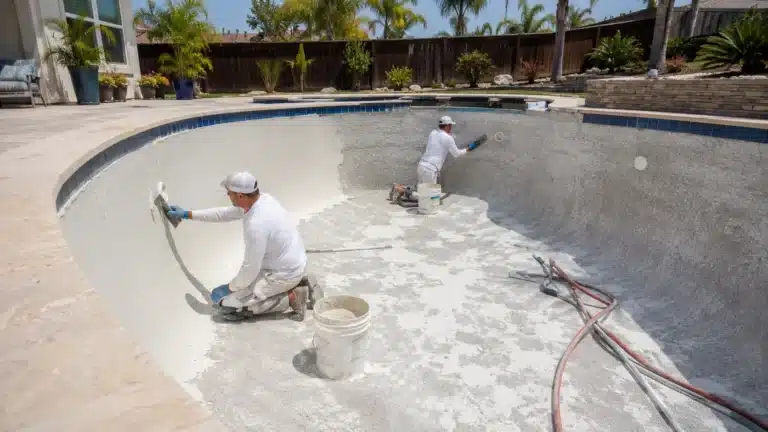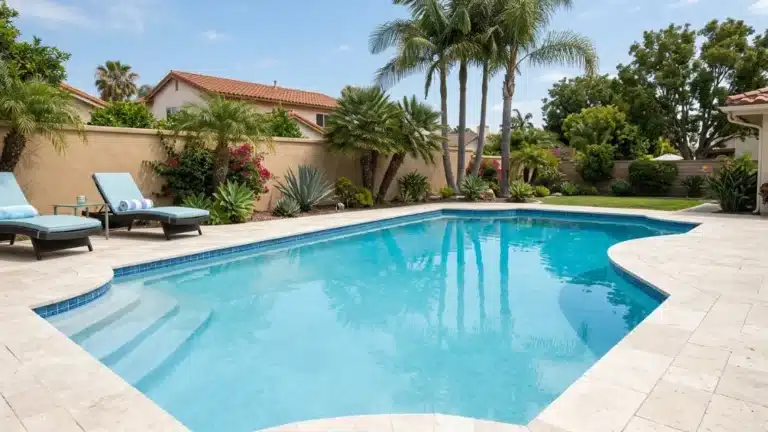
Baja Pool Plaster works on existing pools and does not build new swimming pools. If you already own a pool, the pool resurfacing cost guide explains what drives renovation pricing instead.
For example, a simple rectangular pool on a flat lot with easy backyard access may move quickly once permits are approved. But a hillside yard in areas like La Jolla or Carmel Valley might require extra engineering, retaining walls, or specialized excavation, which can add weeks. Adding features like a spa, baja shelf, glass tile, or custom lighting also increases the number of inspections and trades involved, which can extend the schedule.
Even timing matters. Starting during peak demand can mean longer waits for crews and certain finishes, while rain or utility line conflicts can pause work unexpectedly. The more straightforward the plan and the easier the site, the faster—and often more predictably—the build tends to go.
What Drives Pricing Differences in San Diego Pool Builds?
If you’ve been comparing bids and wondering why pool construction costs vary San Diego, you’re not alone. Even when two pools look similar on paper, the behind-the-scenes requirements—engineering, access, soil conditions, utilities, finishes, and scheduling—can change labor hours and subcontractor coordination dramatically.
In practical terms, the differences come down to three categories:
- Fixed requirements: permits, code compliance, safety barriers, inspections
- Site-driven variables: excavation conditions, access, slope, drainage, utilities
- Choice-driven upgrades: finishes, water features, automation, decking, landscaping
Quick answer
Quick Answer: Why Do Pool Construction Costs Vary in San Diego?
Pool construction costs in San Diego usually vary because of a mix of permitting/engineering needs, the difficulty of excavation and site access, the number of specialty features added, and the price/availability of labor and materials at the time you build.
Cost and Timeline Are Tied Together (Here’s How)
Homeowners often separate “price” and “schedule,” but they’re connected. The same factors that stretch a timeline often increase costs—more days on site, more trades to coordinate, more inspections, more equipment rentals, and higher risk of rework.
That’s a big reason bids differ: a build that requires extra engineering or a second round of inspections isn’t just slower—it’s typically more expensive.
Major Cost Factors That Change from Yard to Yard
1) Permits, Plan Checks, and Local Requirements
Permitting in San Diego County and individual municipalities can vary by jurisdiction and scope of work. Requirements can increase when you add:
- Retaining walls or substantial grade changes
- New gas line runs for heaters or fire features
- Electrical upgrades (subpanels, long conduit runs, service changes)
- Drainage modifications tied to hardscape and runoff
This is a core cost driver: more paperwork, more engineering stamps, and more inspection steps mean more professional time and coordination.
2) Site Access and Staging Space
Backyard access can make or break a budget. A wide side yard for equipment and material staging typically costs less than a tight access route that forces manual hauling or smaller machinery.
- Easy access: faster excavation, simpler material delivery, fewer labor hours
- Limited access: more hand demo/hand dig, smaller equipment, extra days
When people compare bids, access is one of the most overlooked but expensive variables—especially in dense neighborhoods and hillside properties.
3) Soil Conditions, Rock, and Groundwater
Excavation assumptions can change quickly once digging starts. If crews encounter rock, expansive soil, or unexpected groundwater, the project may require:
- Additional equipment time (breakers, haul trucks, compaction)
- Over-excavation and engineered base preparation
- Extra drainage solutions or waterproofing steps
These unknowns are a major reason prices differ, even between two homes a few miles apart.
4) Hillside Engineering, Retaining, and Structural Needs
In areas with slopes (including many coastal and canyon-adjacent neighborhoods), engineering and structural work can increase substantially. Common add-ons include:
- Soils reports and structural engineering calculations
- Retaining walls and caissons/grade beams (as required)
- Enhanced drainage planning to protect adjacent structures
This is one of the clearest explanations for higher bids: the pool is not just a “pool”—it’s a structural project interacting with the terrain.
5) Pool Shape, Depth, and Design Complexity
Freeform shapes, deep ends, vanishing edges, raised bond beams, and complex steps all increase forming time, steel placement, plumbing runs, and finishing labor. A simple rectangle often reduces:
- Layout complexity and form labor
- Number of returns, drains, and fittings
- Edge details and tile transitions
Design complexity consistently raises pricing, because it adds specialized labor steps that are hard to “value engineer” without changing the look.
6) Materials and Finish Level (Where Bids Spread Out)
Finishes and surfaces are where pricing can diverge quickly. Choices that commonly raise budgets include:
- Glass tile or intricate waterline tile layouts
- Pebble or premium interior finishes vs. standard plaster
- High-end coping stone and custom masonry
- Large-format porcelain decking with complex base prep
Because material lead times fluctuate, this also explains why prices shift from season to season—not just contractor to contractor.
7) Equipment Package and Energy Efficiency
Modern builds often include variable-speed pumps, cartridge filters, automation, salt systems, and heat pumps or gas heaters. These can be worthwhile, but they change electrical, plumbing, and commissioning time.
When bids don’t line up, compare equipment line items closely—two bids with different “standard” packages may not be apples-to-apples.
8) Utilities, Conflicts, and Safety Requirements
Unexpected utility conflicts (gas, water, sewer, electrical) can pause excavation and require reroutes. And every pool must comply with safety rules—fencing, self-closing gates, alarms, and code-compliant barriers.
This is another practical reason costs vary: the safest, code-correct path can require extra materials and labor depending on your existing yard layout.
Typical Cost Drivers at a Glance
| Factor | What changes on-site | How it affects cost/timeline |
|---|---|---|
| Permits & engineering | Plan checks, inspections, structural needs | More steps = more coordination and calendar time |
| Access & staging | Equipment size, hauling distance, delivery method | Limited access often adds labor days and rental time |
| Soil/rock conditions | Hard digging, extra export, base prep | Can add heavy equipment time and surprise line items |
| Finish level & features | Tile, coping, lighting, spa, automation | More trades + inspections = more cost and longer schedule |
Real-World Scenarios That Explain Price Differences
Scenario A: “Straightforward Build”
- Flat lot with clear access
- Simple geometric pool shape
- Standard plaster finish and basic tile
- Minimal hardscape tie-ins
In this scenario, price differences tend to come down mostly to finish choices, equipment package, and contractor scheduling.
Scenario B: “Hillside + High-End Finishes”
- Slope requires engineered retaining solutions
- Limited access for excavation/export
- Added spa, baja shelf, specialty lighting, and upgraded tile
- More inspections and specialty subcontractors
This is a textbook example of how costs climb: engineering, access constraints, and luxury features compound both labor and calendar time.
How to Compare Pool Quotes Without Getting Burned
If you’re trying to decode the gaps between bids, the best approach is to standardize what you’re comparing. Ask each builder to clarify:
- What’s included vs. excluded: demolition, export, fencing, landscaping, drainage
- Allowances: tile allowance, coping allowance, decking allowance (and what happens if you exceed it)
- Engineering assumptions: slope handling, soils report needs, retaining requirements
- Equipment models: exact pump/filter/heater/automation specs
- Warranty terms: shell, finish, equipment, workmanship
Many price gaps that look mysterious are simply scope differences—one of the most common reasons quotes differ.
Where Homeowners Commonly Overspend (And How to Avoid It)
Budgets can creep when decisions are made out of order. To reduce surprises:
- Lock the layout early: moving a pool even a few feet can affect excavation/export, plumbing runs, and setbacks.
- Pick finishes before final pricing: tile and decking allowances are a frequent source of “unexpected” increases.
- Plan the backyard as a system: drainage, hardscape, and landscaping should be coordinated, not patched in later.
- Right-size features: choose upgrades you’ll use weekly (automation, efficient pump) before purely cosmetic extras.
These steps help control costs by reducing change orders and rework.
Repairs, Renovations, and Rebuild Decisions Affect Total Spend
Not every backyard project is a brand-new pool. If your existing pool has leaks, cracking, or failing plaster, repair or renovation may be the smarter path—especially if the shell is structurally sound.
When evaluating total cost, include the “reset costs” of older pools: bringing plumbing, drains, and safety features up to current expectations can change the true project total.
If you suspect structural issues, leaks, or failing surfaces, start with a targeted assessment like San Diego Pool Repair to determine whether repairs, resurfacing, or partial rebuild makes the most financial sense.
How Long the Build Takes (and Why It Influences Cost)
Longer schedules can increase costs through extended equipment rental periods, repeated mobilizations, and trade stacking conflicts. If you want a deeper timeline breakdown, see how long does it take to build a swimming pool.
Understanding the phases also clarifies why costs vary: a project with more phases (or more pauses) usually costs more to manage.
What a “Swimming Pool” Includes (Beyond the Water)
A swimming pool is more than a hole filled with water—it’s a structural shell, a hydraulic system, an electrical system, and a finished outdoor living space. The more complex those systems become, the more you’ll feel it in both the bid and the timeline.
Smart Questions to Ask Before You Sign a Contract
- What site conditions could trigger a change order, and how are those documented?
- Which items are allowances, and what are the realistic mid-range costs in San Diego right now?
- Who pulls permits and schedules inspections?
- How many active projects does your team run at once?
- What is the projected start-to-swim timeline, assuming normal inspection windows?
These questions don’t just protect your budget—they directly address the reasons costs vary by forcing clarity on scope, assumptions, and process.
Build with Fewer Surprises, Not Just a Lower Bid
At the end of the day, cost differences come down to risk and complexity: difficult sites, higher-end finishes, tighter access, and heavier engineering all require more labor and coordination. The most reliable way to keep costs predictable is to choose a builder who documents assumptions, explains allowances clearly, and has a proven process for inspections and trade scheduling.
Look for teams with demonstrated experience in San Diego County conditions (soil variability, hillside construction, coastal environments), strong subcontractor relationships, and clear workmanship standards—because a well-managed build protects both your investment and your long-term maintenance costs.
Frequently Asked Questions
Why do pool construction costs vary so much in San Diego?
Pool construction costs vary in San Diego because every yard and scope is different. Permits and inspections can change by jurisdiction, excavation difficulty can vary due to slope, access, soil or rock, and upgrades like spas, baja shelves, custom lighting, and premium finishes add more trades, materials, and coordination. Labor availability and material lead times also shift pricing seasonally.
What factors increase the cost of building a pool in San Diego?
The biggest cost increases usually come from site-driven conditions (limited access, steep slopes, poor soil, rock, groundwater), added engineering (soils reports, structural calculations, retaining walls), and choice-driven upgrades (glass tile, premium interior finishes, complex decking, automation, heaters, and water features). Utility conflicts and required safety barriers can also add unexpected labor and materials.
How do permits and inspections affect pool construction cost in San Diego?
Permits and inspections affect cost by adding plan-check time, documentation, and inspection scheduling that must be coordinated across trades. Projects that include retaining walls, major grade changes, electrical upgrades, new gas lines, or drainage modifications often require additional engineering and more inspection steps, which increases professional fees and extends time on site.
Why does pool site access and excavation change the price in San Diego?
Access and excavation can change pricing dramatically because they determine equipment size, hauling distance, and how materials are delivered and removed. A flat lot with wide access is usually faster and cheaper to excavate, while tight side yards or hillside properties may require smaller machinery, more hand labor, extra export trips, and added days—raising both labor and equipment costs.
How can I compare pool quotes in San Diego to avoid surprise costs?
To compare quotes fairly, confirm what’s included vs. excluded (demo, export, fencing, drainage, landscaping), identify allowances (tile, coping, decking) and what happens if you exceed them, and verify engineering assumptions for slope/soil conditions. Also compare exact equipment models and warranty terms, and ask what site conditions could trigger change orders and how they’re documented.
Want a Predictable Pool Budget (and Timeline) in San Diego?
If you’re comparing bids and trying to pinpoint why pool construction costs vary San Diego, the fastest way to get clarity is a site-specific game plan—access, soil, engineering needs, and finish selections all change the real number. If you already own a pool and are pricing a resurfacing, replastering or pool remodeling project instead of a new build, Baja Pool Plaster can look at the pool and give you a free written estimate—Baja works on existing pools and does not build new ones.