

Pool Finish Comparison6 min readBaja Pool Plaster · San Diego
Pool Replastering vs Full Pool Remodel: Which Upgrade Actually Saves You Money in San Diego?
Short answer
If the surface is worn, stained or rough but the shape, plumbing and structure are sound, replastering is almost always the smarter, faster and more affordable choice.
A full remodel only makes sense when you are changing the pool’s design, fixing structural damage or upgrading equipment beyond what resurfacing can address.
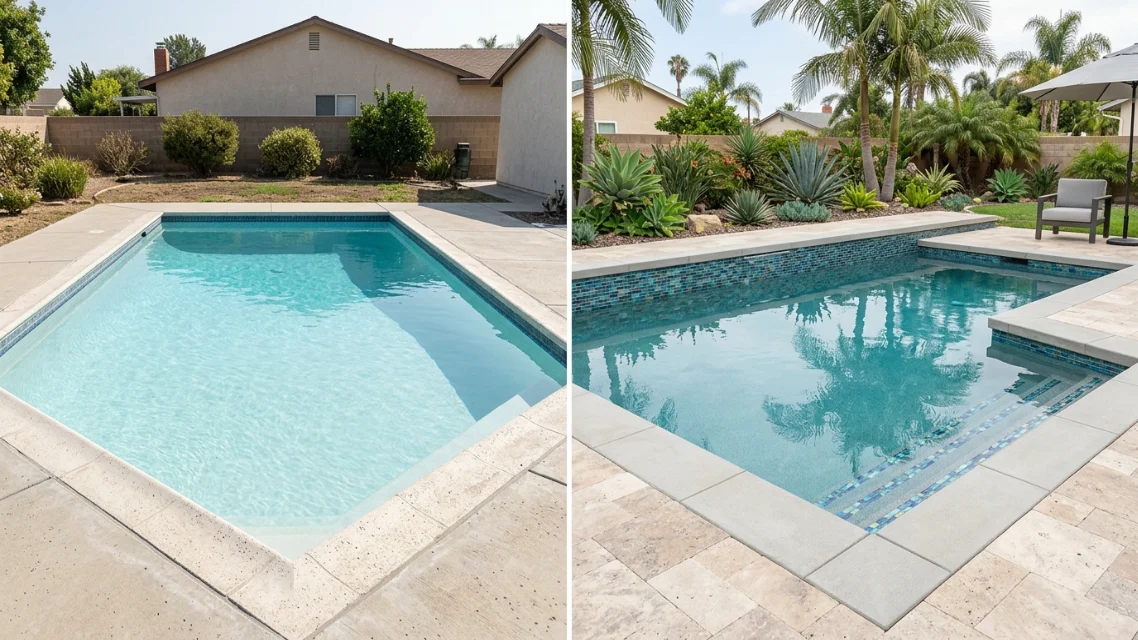
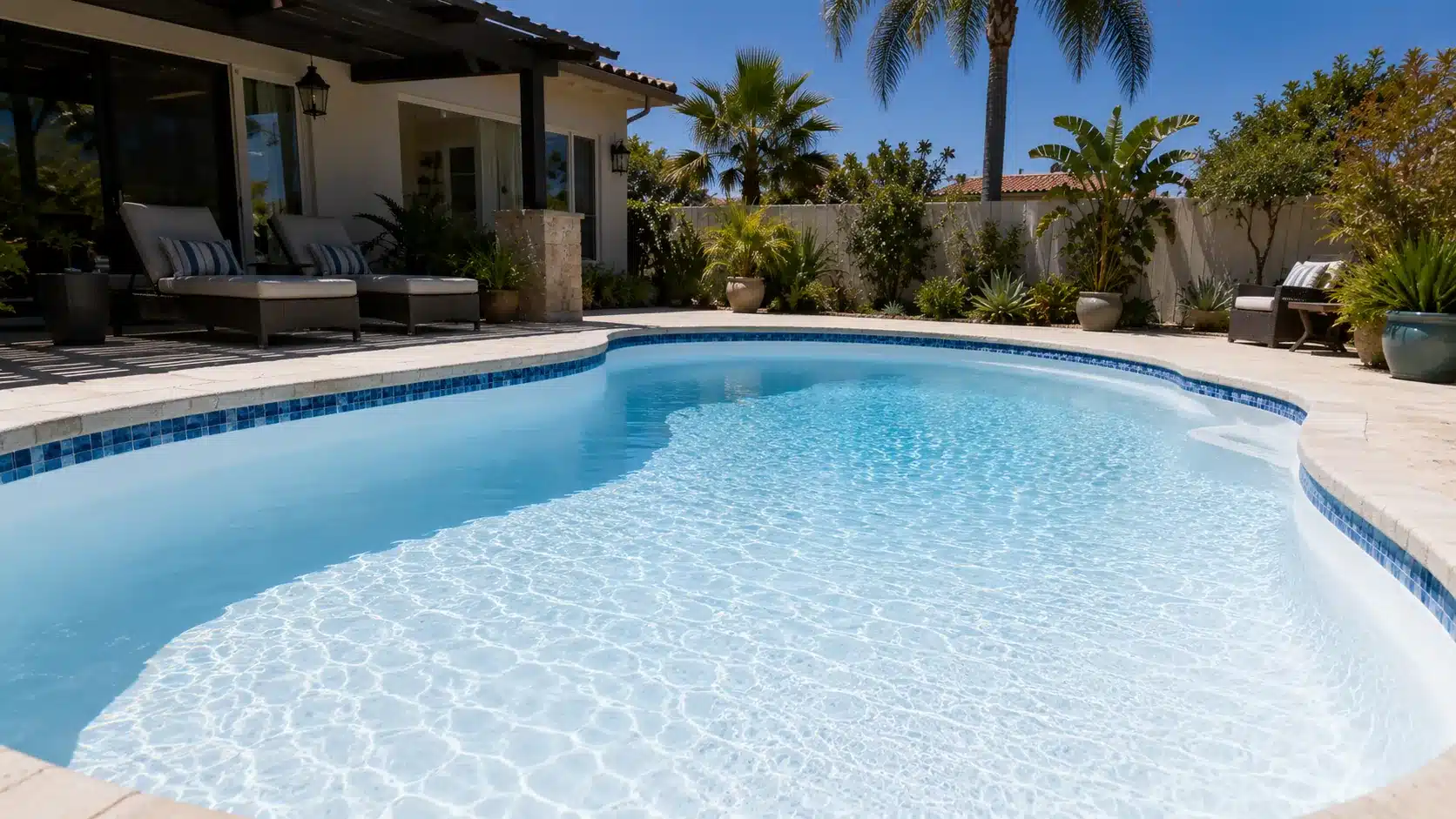
Replaster or remodel
New surface vs. new tile, decking and finish
Free on-site estimate
Ruben looks at the pool and gives you a written estimate on the spot.
What pool replastering involves
Pool replastering is a resurfacing process: the pool’s interior finish — plaster, pebble or quartz — is stripped and reapplied. It is the pool equivalent of refinishing a bathtub rather than gutting the bathroom.
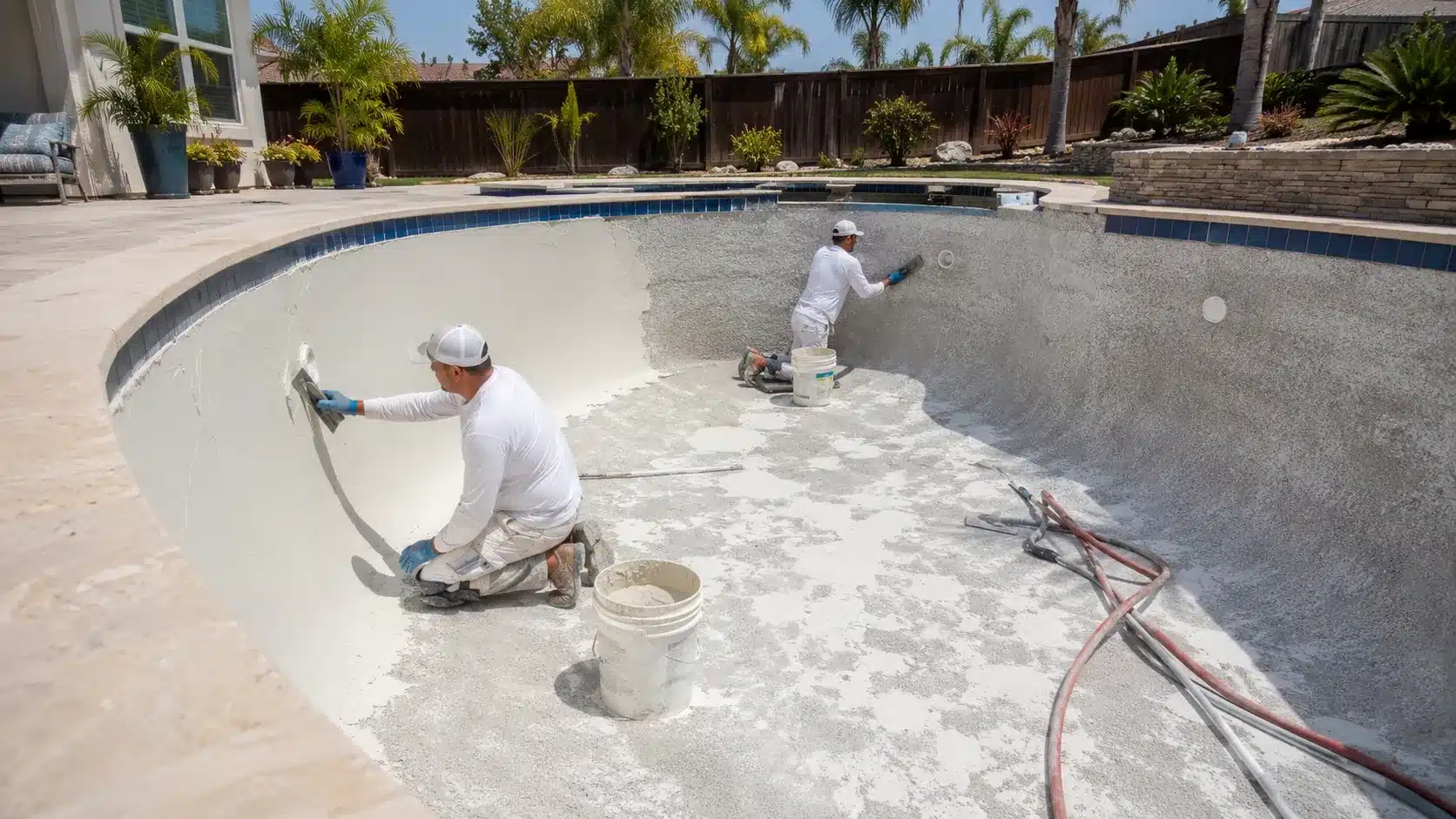
A qualified San Diego pool repair crew drains the pool, chips away the old, deteriorated surface, repairs any minor cracks and applies a fresh coat of plaster, PebbleTec or quartz.
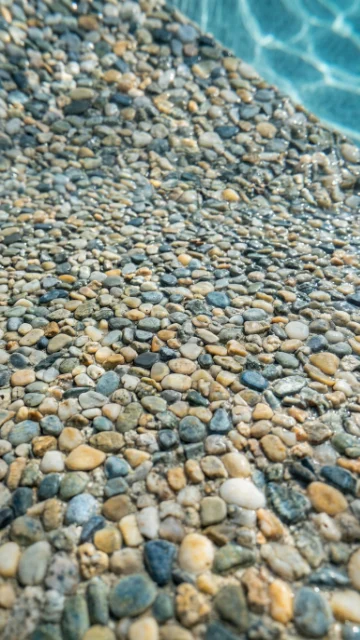
A newly applied pebble finish.
Typical cost
Most San Diego replastering projects are a moderate investment compared with a full remodel, generally priced per square foot of surface, with variation by finish. For a breakdown by finish and pool size, see our pool resurfacing cost guide or our replastering vs resurfacing cost guide.
Core benefits
- Restores a smooth, algae-resistant, comfortable surface
- A much faster turnaround than a remodel — typically days, not weeks
- Deals with staining, roughness and minor surface cracking
- Extends the working life of an otherwise healthy pool shell
When replastering is the right call
When the pool’s bones — plumbing lines, decking and shape — all still work well and the only real problem is a tired, aging surface. Owners comparing PebbleTec vs pool plaster or a quartz finish vs pebble finish are usually already leaning toward replastering rather than a full teardown.
What a full pool remodel involves
A full remodel goes well beyond the surface. It can involve reshaping the pool, replacing tile and coping, upgrading plumbing and equipment, adding features such as baja shelves or a spa, re-decking the surrounding hardscape and — usually — a full resurfacing as part of the larger project.
In other words, replastering is usually one component of a remodel, but a remodel is never just replastering.
Typical cost
A full remodel is a significantly larger investment than replastering alone, because it bundles demolition, new plumbing or equipment, tile, decking and finish work. Costs scale heavily with scope: a remodel that adds a spa, changes the pool’s shape or upgrades to an energy-efficient pump and filtration system lands well above a resurfacing-only project.
Core benefits
- Solves structural problems — major cracking, settling, plumbing failures
- Allows a full design refresh: new shape, tile, decking and lighting
- A chance to modernize equipment for better energy efficiency
- Can add features (spa, sun shelf, water features) that increase home value
When a remodel makes sense
Structural problems, outdated 1980s/90s geometry that no longer fits how the family uses the space, aging equipment that is driving up energy bills, or simply wanting a completely different look.
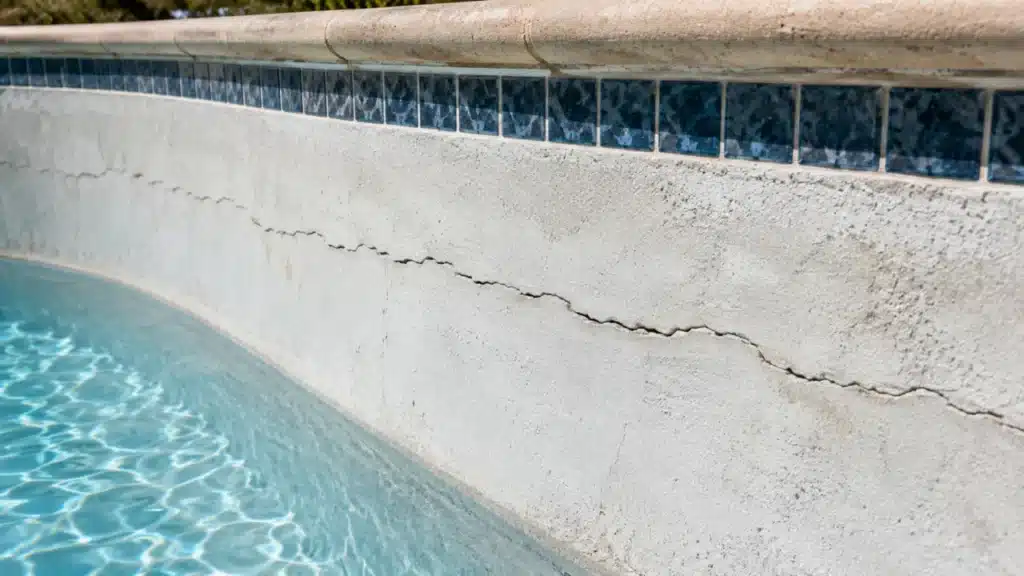
If you suspect cracking is more than cosmetic, start with a concrete pool crack repair assessment — some damage that looks remodel-level can be handled with a targeted repair.
Replastering vs. full remodel at a glance
| Attribute | Pool replastering | Full pool remodel |
|---|---|---|
| Upfront cost | Lower — a moderate investment per square foot | Higher — can be several times the cost of resurfacing alone |
| Project timeline | Typically days | Typically several weeks to a few months |
| Lifespan of the work | 7–15+ years depending on the finish | Resets the clock on the entire pool system |
| Maintenance | Standard ongoing chemical and surface care | The same, and newer equipment often means lower upkeep |
| Look | Refreshes surface color and texture only | Full design transformation — shape, tile, decking and lighting |
| Energy / water efficiency | No change unless equipment is also replaced | A chance to upgrade pumps, heaters and filtration |
| Best for | Cosmetic wear, staining and minor roughness | Structural problems, outdated design and major new features |
Pros and cons of each option
Pool replastering
Pros
- Fast — most pools are back in use within about a week
- Budget-friendly compared with a remodel
- Immediately improves the feel, hygiene and appearance of the surface
- Low disruption to landscaping and decking
Cons
- Does not fix structural, plumbing or equipment problems
- Will not change the pool’s shape, size or footprint
- Any underlying problems will come back to the surface later
Full pool remodel
Pros
- Solves structural and equipment problems at the root
- Complete freedom over shape, finish, tile and features
- Long-term efficiency gains from modern equipment
- Can significantly boost resale value
Cons
- A substantially higher upfront investment
- A longer project — weeks without the pool
- More permitting and planning, especially for structural changes
Which option is better for your pool?
The honest answer is that most San Diego pools do not need a remodel — they need a resurfacing. If the pool holds water, the plumbing and equipment work, and the only complaint is a rough, stained or dated-looking surface, replastering delivers nearly all of the visual and tactile benefit at a fraction of the cost and downtime.
The verdict
Replaster or remodel?
- Choose replastering if…
- the structure is sound, the equipment still works well and your main goal is a clean, smooth, attractive surface without a major project. It is by far the more common situation — which is why so many owners start by comparing pool surface lifespans rather than jumping to a teardown.
- Choose a full remodel if…
- you see signs of structural failure, the shape or layout no longer fits your family, old equipment is pushing running costs up, or you want a spa, tanning ledge or new tile and decking. Here resurfacing alone is a temporary patch — budget for a proper remodel from the start.
The San Diego angle
Year-round use wears pool surfaces faster than in cooler climates, which is why replastering is such a common, cost-effective mid-life upgrade here. At the same time, many older San Diego homes — especially those built before the 1990s — have pools with outdated equipment and geometry, which is where a full remodel tends to make more financial sense long-term.
Not sure which category your pool falls into? Hairline cracks, unexplained water loss or discoloration that returns soon after cleaning can mean the problem runs deeper than the surface. A pool leak detection and repair inspection or a broader pool surface repair assessment will show whether you are looking at a resurfacing job or something more involved.
Get a professional opinion before you decide
Every pool tells a different story, and the fastest way to know whether yours needs replastering or a full remodel is a hands-on evaluation. Baja Pool Plaster offers consultations for San Diego owners weighing exactly these options.
Surface only?
Ask for a straightforward pool replastering quote.
Bigger changes?
Talk through a full pool remodeling and renovation project.
Still exploring?
Start with our pool resurfacing overview and the pool renovation planning guide before you request a bid.
Conclusion and recommendation
For most San Diego owners, the decision comes down to one question: is the problem cosmetic or structural? If it is cosmetic — staining, roughness, a dated color — replastering solves it quickly and affordably. If it is structural, involves outdated equipment, or you want a genuinely new design, a full remodel is the investment that pays off.
Key takeaway
When in doubt, start with an inspection rather than guessing. It is the only way to know which path fits your pool, your timeline and your budget.
FAQ
Frequently asked questions
How do I know if my pool needs replastering or a full remodel?
If the pool holds water, the plumbing and equipment work and the surface is simply worn, stained or rough, replastering is usually enough. Structural cracking, persistent water loss, or wanting to change the shape or add features points to a full remodel.
How long does pool replastering take compared to a full remodel?
Replastering is typically finished within about a week. A full remodel can take several weeks to a few months, depending on scope, permitting and the extent of structural or design changes.
Is pool replastering cheaper than a full remodel?
Yes. Replastering is generally a fraction of the cost of a full remodel, because it deals only with the surface finish, not the structure, plumbing, equipment, tile and decking.
Can I add a spa or sun shelf without a full remodel?
Usually not. New features such as a spa, tanning ledge or water feature normally need structural and plumbing changes that fall under a remodel rather than a resurfacing.
How often does a San Diego pool need replastering?
Most plaster and pebble finishes last roughly 7 to 15+ years depending on the material and how well the water chemistry has been kept, and San Diego’s year-round use can shorten that compared with cooler climates.
Will replastering fix a leaking pool?
Not on its own. A leak from the plumbing or a structural crack has to be dealt with separately — often through leak detection and targeted repair — before or alongside any resurfacing.
Do I need a permit for pool replastering or a remodel in San Diego?
Simple resurfacing typically does not need a permit, but full remodels — especially with structural changes, new equipment or added features — usually do. Confirm current requirements with your contractor or the local building department before starting.
What is the difference between PebbleTec and traditional plaster for a replastering project?
PebbleTec is a more durable, textured aggregate finish that generally outlasts smooth plaster but costs more upfront. The right choice depends on budget, the look you want and how long you want it to last — see PebbleTec vs pool plaster.
Should I upgrade my pool equipment during a replastering project?
Replastering does not require equipment changes, but many owners upgrade pumps or filtration while the pool is drained anyway — which moves the project closer to a mini-remodel in scope and cost.
How do I choose the right contractor for a replastering or remodel project?
Look for a licensed, experienced pool contractor with strong local reviews and a clear, itemized quote. Our guide on how to choose a pool plastering contractor and our list of questions to ask before hiring a pool contractor help you vet candidates.
Related Services
Where Baja Pool Plaster can help
Replastering, remodeling and crack repair for pools across San Diego County.

Surface, tile & coping
Surface, structure, tile and coping planned as one project.
Shell, deck & coping
Assessing and repairing cracks in the pool shell.
Pool Owner Resources
Related guides
Keep reading: more guides for San Diego pool owners.
Hiring & Planning Guide
A roadmap for planning a resurfacing, replastering or full remodel project.

Pool Finish Comparison
How long plaster and pebble finishes typically last, and why.

Pool Cost Guide
Why resurfacing is usually the better investment, and when replacement makes sense.
Start Your Project
Want a straight answer about your pool?
Call (619) 458-3443 or send the short form. Ruben will look at the pool and give you a written estimate on the spot. Estimates and advice are free.
What happens next
- Call or send the form — three details are enough.
- Ruben looks at your pool — and explains what it needs.
- Written estimate on the spot — free.
Request a free estimate
Three details and Ruben will call you back to arrange a look at the pool.
"*" indicates required fields
Or call (619) 458-3443.