Key Takeaways
Pool surface repair San Diego homeowners consider typically targets damage to the interior finish—such as roughness, chips, staining, small cracks, and limited delamination—to restore smoothness and protect watertight performance. Choosing between localized repair and resurfacing comes down to whether the damage is isolated and stable or widespread and progressive, with prep quality, material compatibility, and proper startup strongly influencing results.
- What surface repair covers (and what it doesn’t): Pool surface repair corrects interior finish problems like pitting, staining, pop-offs, and limited delamination, but it typically does not fix major structural movement, plumbing leaks, or equipment failures unless they are contributing to the surface damage.
- Repair vs. resurfacing hinges on scope and recurrence: Spot repairs can make sense for small, well-defined defects when surrounding material is solid, while full resurfacing is usually the smarter investment when roughness, etching/pitting, hollow spots, or recurring stains and cracking patterns are widespread or keep returning after repair.
- San Diego conditions and chemistry can accelerate wear: UV exposure, evaporation and refill cycles that concentrate minerals, and water-balance swings can drive scaling or etching, while coastal humidity and salt air can add staining or corrosion risk—so repeated symptoms are a cue to evaluate underlying causes rather than repeating the same fix.
Pool surface repair San Diego homeowners request is most often needed when plaster, pebble, or fiberglass finishes start to crack, pit, delaminate, or stain, creating rough spots and potential leaks. Addressing surface damage early helps protect the shell, improves water chemistry stability, and reduces the risk of more extensive structural repairs.
In San Diego’s coastal and inland microclimates, finishes can be stressed by sun exposure, temperature swings, and salt or mineral-heavy water, while improper chemistry can accelerate etching and discoloration. Common repair paths range from localized patching and bond-coat touch-ups to full resurfacing when widespread wear, hollow spots, or recurring stains indicate the finish has reached the end of its service life.
This guide explains likely causes, how to compare repair vs. resurfacing options, what cost factors typically drive pricing, and how to choose a qualified contractor by evaluating scope, materials, prep steps, timelines, and warranty terms.
What “pool surface repair” includes (and what it doesn’t)
Pool surface repair focuses on correcting damage to the pool’s interior finish—plaster, pebble, quartz, fiberglass, or painted surfaces—so the pool is smooth, watertight, and easier to balance. It typically does not address major structural movement, plumbing leaks, or equipment failures unless those issues are contributing to the surface damage.
Most San Diego homeowners start searching for pool surface repair San Diego when they notice roughness underfoot, discoloration that brushing won’t remove, or chips around steps and benches. These symptoms can be cosmetic, but they can also be early signs of bond failure or water loss that deserves a closer look.
- Surface-level problems may include staining, mottling, light etching, and small chips.
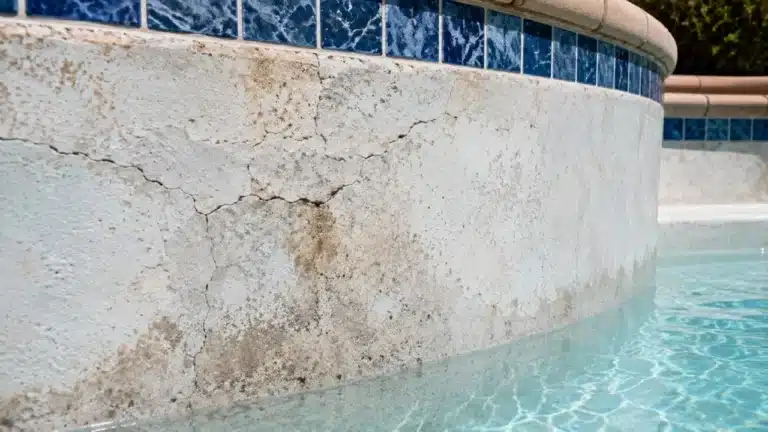
- Finish integrity problems may include craze cracking, pop-offs, delamination (hollow spots), and widespread pitting.
- Non-surface issues may include structural cracking, settlement, hydrostatic pressure problems, or leaks from fittings and plumbing.
Common signs your pool finish needs repair
Most finish failures show up gradually, and early detection can make the repair smaller, faster, and less expensive than waiting. A quick visual and touch inspection—plus watching water loss—often reveals whether you’re dealing with a localized defect or end-of-life wear.
Rough spots, pitting, and “sandpaper” texture
Roughness is often linked to etching, aggregate exposure, or scaling that has built up unevenly on the surface. It can be uncomfortable and may also indicate the finish is thinning in high-wear zones like steps and ledges.
- Plaster/quartz: can become rough from chemical etching or spot delamination.
- Pebble finishes: can feel sharp if cement matrix wears away or if improper water balance accelerates erosion.
- Fiberglass: can feel rough if the gelcoat is oxidized or if blisters form and break.
Cracks: hairline vs. “moving” cracks
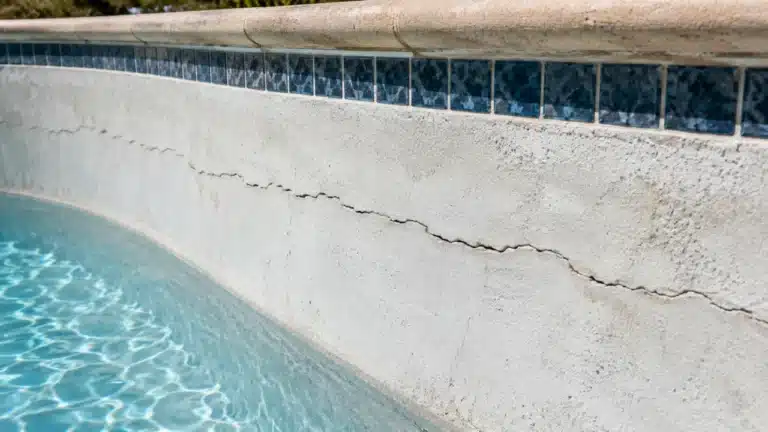
Not all cracks mean a structural issue, but they should be evaluated in context. Hairline crazing can occur as finishes age, while cracks that widen, telegraph through patches, or follow a straight line across the shell may indicate movement that requires a different repair strategy.
- Note the location: steps, corners, around fittings, and along tile lines are common stress points.
- Check if it’s isolated: single crack vs. a network pattern.
- Watch for changes: if it grows, reopens after patching, or leaks, it needs professional assessment.
Stains that return after brushing
Recurring stains can be organic, metallic, or mineral-related—and each type has a different remedy. Treating a metal stain like algae (or vice versa) often wastes time and can worsen the finish if harsh methods are used.
- Organic staining: often from leaves/debris; may lighten with proper sanitation and brushing.
- Metal staining: can be related to source water, corrosion, or certain algaecides; may require targeted treatment.
- Calcium scale: typically forms as deposits; removal method depends on thickness and finish type.
Hollow spots, flaking, and delamination
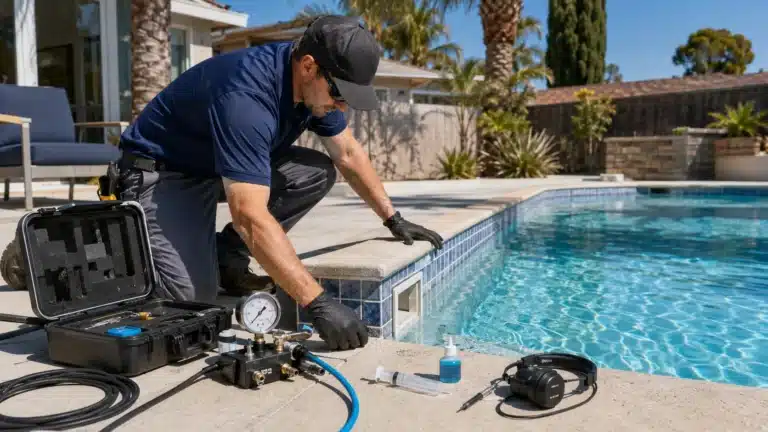
When sections of plaster or pebble lose bond to the shell, repairs can shift from “spot fix” to “resurface planning.” Hollow spots can sometimes be identified by a change in sound when tapped, but confirmation and scope mapping are best done by a professional during an in-person inspection.
San Diego context
Why finishes fail faster in San Diego (coastal vs. inland)
San Diego’s microclimates can stress pool finishes differently depending on sun exposure, temperature swings, and local water characteristics. Chemistry habits and maintenance routines often matter just as much as climate.
Coastal areas can experience salt air and more frequent marine layer conditions, while inland neighborhoods often see higher heat and more evaporation. These differences can shift how quickly scale develops, how often water needs topping off, and how aggressively disinfectant and pH drift.
- UV exposure: can accelerate fading and surface breakdown, especially in shallow areas.
- Evaporation and refill cycles: can concentrate minerals and contribute to scale if water balance isn’t managed.
- Water balance swings: low pH and low alkalinity can etch cement-based finishes; high pH and high calcium hardness can drive scaling.
- Salt systems: not “bad” for finishes by default, but they can amplify corrosion/staining risks if bonding/metal components are compromised or chemistry is neglected.
Because each pool is a controlled water environment, finish longevity often depends on consistent testing and adjustment rather than a single “perfect” reading. If you’re seeing repeated surface problems after treatment, that’s a clue to evaluate underlying causes instead of repeating the same fix.
Repair vs. resurfacing: how to decide
The key decision is whether damage is isolated and stable, or widespread and progressive. Localized repairs can buy time and improve comfort, but resurfacing is often more cost-effective if the finish is near end-of-life or repeatedly failing.
When localized surface repair can make sense
Spot repairs are best when the surrounding finish is still well-bonded and the issue is confined to a small area. The goal is to restore smoothness and seal vulnerable spots without redoing the entire interior.
- Small chips or spalls on steps and benches
- Limited pop-offs where the rest of the finish is solid
- Minor delamination confined to a small, clearly defined area
- Touch-ups around fittings after a minor repair
Limitations matter: patched areas may not match perfectly in color or texture, and some stains will reappear if water chemistry or source-water metals aren’t addressed.
When full resurfacing is the smarter investment
Resurfacing is typically recommended when wear is widespread, bond failure is recurring, or the finish has become consistently rough or stained. It’s also common when multiple patch jobs have created a “quilted” look and the owner wants a uniform surface again.
- Multiple hollow spots or widespread delamination
- General roughness across large sections of the pool
- Etching/pitting across the majority of the surface
- Recurring stains that return despite appropriate treatment
- Significant cracking patterns that repeatedly reopen after repair
Finish options that affect the repair approach
Different finishes have different repair compatibility, bonding requirements, and blending challenges. Understanding what you have (and what you want) helps a contractor propose the right scope.
- White plaster: classic look, can be repaired and resurfaced; may show mottling or staining more easily.
- Quartz finishes: harder than standard plaster; repairs require careful color/aggregate matching.
- Pebble finishes: durable texture; spot repairs can be noticeable if aggregate blend differs.
- Fiberglass: repairs often involve gelcoat or resin systems; blistering requires diagnosis of underlying moisture/chemistry issues.
Repair methods contractors may recommend (and what each is best for)
Pool surface repair can range from simple smoothing and patching to more involved bond-coat and finish applications. The right method depends on the finish type, the size of the damaged area, and what’s causing the damage in the first place.
Spot patching and chip repair
Spot patching targets isolated defects such as small chips, spalls, or pop-offs. It typically involves removing loose material, prepping edges, applying a compatible patch material, and blending the texture.
- Remove hollow/loose finish back to sound material
- Clean and profile the area for bonding
- Apply patch material designed for the finish type
- Blend and cure per product requirements before refilling
Even with good workmanship, perfect color matching is not always possible due to age, water chemistry history, and sun exposure on the existing surface.
Bond-coat touch-ups and transitions
Bond coats are used to improve adhesion between the existing substrate and new finish material, especially during partial resurfacing or when transitioning between materials. They’re also used when previous layers need a reliable “bridge” for the new finish.
- Common in resurfacing prep to improve adhesion
- Helpful when older surfaces are too smooth or contaminated for direct application
- Requires strict prep—dust, residue, and moisture conditions can affect bond strength
Acid washing (limited use) and stain treatments
Acid washing can reduce some staining and lighten discoloration on cement-based finishes, but it also removes a thin layer of material. Overuse can shorten finish life, so it should be approached cautiously and only when appropriate for the stain type and finish condition.
- Best for: certain mineral deposits and discoloration on plaster-type finishes
- Not ideal for: fiberglass gelcoat, significant delamination, or surfaces already thin/etched
- Risk: can increase roughness or expose aggregate if the finish is already worn
Full resurfacing (new interior finish)
When a pool needs a new interior finish, resurfacing replaces the functional “skin” of the pool. Prep quality drives performance: removing weak material, addressing bond issues, and preparing a clean, sound substrate are critical.
If your project includes broader rehabilitation beyond the surface—like addressing multiple defects in one scope—some homeowners start by reviewing a complete pool repair overview to understand how surface work fits into the overall plan.
What drives cost and timelines for pool surface repair in San Diego
Pricing and schedules vary based on the extent of damage, access, prep requirements, and the finish system selected. The biggest “cost multipliers” tend to be prep intensity, material choice, and how much of the pool must be drained and dried.
- Size and depth: larger pools and deep ends require more labor and material.
- Extent of removal: sound surfaces may accept localized repair; widespread bond failure needs more demolition/prep.
- Surface type: pebble/quartz systems can require more specialized application and blending.
- Access constraints: tight side yards, stairs, or limited staging can affect labor time.
- Dry time and cure conditions: coastal humidity and shade can extend drying; rushing can compromise results.
- Added scope: tile, coping, drains, or light niches may be addressed at the same time depending on condition.
Timelines also depend on the method. A small patch may be completed quickly, but curing and refill timing should follow the product and finish requirements to reduce the chance of premature discoloration or bond problems.
Comparison table: repair vs. partial resurfacing vs. full resurfacing
Use this as a practical starting point when a contractor explains your options. Final recommendations should be based on an on-site inspection, including checking for hollow areas, cracking patterns, and recurring stain causes.
| Option | Best Fit / Typical Scope | San Diego Considerations |
|---|---|---|
| Localized surface repair (patching) | Small, isolated chips, pop-offs, or rough spots; surrounding finish is solid and well-bonded. | Color blending can be harder in high-UV areas; chemistry issues must be corrected or repairs may deteriorate faster. |
| Stain treatment / limited surface cleanup | When discoloration is the main complaint and the finish is otherwise sound; may include targeted treatments or light removal of deposits. | Hard fill water and evaporation can contribute to mineral deposits; identify stain type before choosing a method. |
| Partial resurfacing / blend work | Damage concentrated in one zone (e.g., steps/bench) but too extensive for simple patching; requires careful transitions. | Matching older plaster/pebble is unpredictable; shaded vs. sunny areas often show different aging and color. |
| Full resurfacing (new interior finish) | Widespread etching, pitting, roughness, delamination, or repeated stain problems; aims for uniform appearance and performance. | Plan for proper drying/curing and a controlled startup; coastal humidity and cooler seasons can affect timelines. |
How to evaluate a contractor’s scope and proposal
A good proposal explains not just what will be applied, but how the surface will be prepared and why that method fits your pool’s condition. The prep steps and startup plan often determine whether the repair lasts.
Questions to ask during an estimate
These questions help you compare bids on “apples to apples” scope rather than just price. Clear answers also reduce surprises after draining begins and hidden issues are discovered.
- How will you identify and address hollow/delaminated areas?
- What prep steps are included (removal, cleaning, profiling), and what triggers additional work?
- Which repair materials are compatible with my existing finish?
- How will you handle transitions so edges don’t telegraph through?
- What is the refill/startup plan to protect the new or repaired surface?
- What does the warranty cover (materials vs. workmanship), and what maintenance is required?
What “good prep” typically includes
While details vary by finish type and damage, most durable repairs rely on clean, mechanically sound surfaces. Skipping steps to save time can lead to bond failure, visible patch outlines, or rapid deterioration.
- Soundness verification: mapping delamination and removing weak material
- Thorough cleaning: removing scale, oils, and residues that interfere with bonding
- Profile creation: preparing the substrate so patch/bond materials can grip
- Detail work: addressing cracks, corners, fittings, and transitions
- Controlled cure/startup: refilling and balancing water carefully to protect new material
How to reduce the chance of repeat surface damage
Long-lasting repairs depend on controlling the conditions that caused the damage in the first place. That often means tightening up water chemistry habits, improving circulation, and addressing source-water issues when staining is involved.
- Maintain stable water balance: avoid big swings in pH and alkalinity that can accelerate etching or scaling.
- Brush and circulate consistently: reduces localized deposits and helps prevent “dead zones.”
- Address staining causes: if metals are suspected, consider testing fill water and reviewing treatment products used.
- Use gentle methods first: aggressive abrasion and repeated acid washing can shorten finish life.
- Watch early warning signs: small chips and rough patches are easier to correct before they spread.
For homeowners planning bigger improvements—like combining finish work with broader upgrades—it can help to understand overall project sequencing and scheduling, similar to the planning considerations covered in how long it does it take to build a swimming pool.
Setting realistic expectations for appearance and durability
Even well-executed repairs may not be visually “invisible,” especially on older plaster or pebble finishes that have aged unevenly. A responsible contractor should explain what can be improved (smoothness, integrity, leak prevention) versus what may remain (color variation, mottling, or faint outlines).
Durability depends on matching the repair system to the existing surface and executing prep correctly. It also depends on your pool’s environment and maintenance—because a swimming pool finish is constantly exposed to treated water, temperature changes, and sun.
- Color match: may be approximate rather than perfect, particularly for older or sun-faded finishes.
- Texture match: can be improved with skilled blending, but aggregate finishes may still show repair boundaries.
- Recurrence risk: if the root cause is chemical imbalance, movement, or metal contamination, symptoms can return.
Getting to a clear plan for pool surface repair in San Diego
The fastest path to the right fix is identifying whether you have a localized defect, a chemistry-driven surface problem, or broad finish failure. From there, you can compare repair options based on prep quality, material compatibility, visual expectations, and a startup plan that protects the work.
When reviewing estimates, prioritize detailed scope over vague promises: look for written prep steps, defined repair boundaries, a realistic timeline, and clear warranty terms. That approach helps you make a confident decision—whether you’re patching a small area now or planning a full resurfacing to reset the pool’s performance and appearance.
Frequently Asked Questions
What problems does pool surface repair in San Diego address?
Pool surface repair addresses damage to the interior finish such as chips, rough spots, pitting, staining, small cracks, and limited delamination. It typically does not fix major structural movement, plumbing leaks, or equipment issues unless they are contributing to the surface failure.
How can I tell if I need a spot repair or full resurfacing?
You likely need spot repair when damage is isolated and the surrounding finish is solid and well-bonded. Full resurfacing is usually smarter when roughness, pitting, hollow spots, or recurring stains are widespread or when cracking and delamination keep returning after repairs.
Are hairline cracks in the finish a serious issue?
Hairline cracking can be normal finish aging, but cracks that widen, reopen after patching, or run in long straight lines should be evaluated for movement or leaks. Note location and changes over time, and have a professional inspect if water loss or progression occurs.
Why do pool finishes wear faster in San Diego coastal and inland areas?
San Diego finishes wear faster when UV exposure, heat, evaporation, and refill cycles concentrate minerals and drive scale or etching. Coastal humidity and salt air can add staining or corrosion risk, while inland temperature swings and higher evaporation can accelerate water-balance instability.
What should a contractor include in a pool surface repair proposal?
A solid proposal should clearly list prep steps, how hollow or delaminated areas will be identified and removed, what compatible repair materials will be used, and how transitions will be blended. It should also explain curing and refill/startup procedures plus warranty terms and requirements.
Get Clear Answers on Your Pool Surface Repair Options in San Diego
If your pool finish is turning rough, developing chips, or showing stains that keep coming back, a simple patch may help—or it may be a sign the surface is losing bond and needs a larger plan. An on-site assessment can clarify what’s actually failing, what can be repaired safely, and what preparation is required for results that hold up.
Professional guidance can also reduce common risks like mismatched materials, rushed drying/curing, or repeating the same stain treatment without addressing water chemistry or underlying causes.