Baja Pool Plaster

Concrete Pool Crack Repair · San Diego

Concrete Pool Crack Repair in San Diego

If you’ve noticed a crack running through your pool’s shell, deck or coping, you’re not alone — and you shouldn’t wait to deal with it. A crack that looks minor today can turn into a structural or water-loss problem tomorrow.

When you call Baja Pool Plaster about a crack, you get a real inspection, a clear explanation of what’s causing it, and a repair plan built for your specific pool — not a one-size-fits-all patch job.

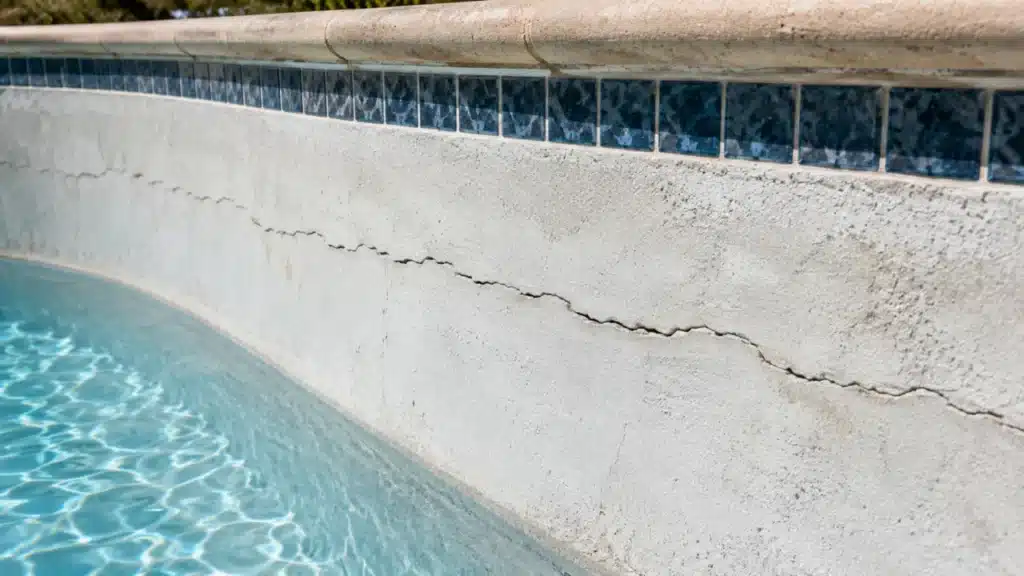
Concrete Pool Crack Repair San Diego: Close-up photo of a visible crack running along the plaster surface of a San Diego backyard pool, showing typical shell cracking
Shell, deck & coping cracks
Inspected before they are repaired

Crack Repair Explained

What is concrete pool crack repair?

Concrete pool crack repair is one of the most common calls we get, because San Diego’s shifting soils, seasonal temperature swings and older pool stock all combine to put steady stress on concrete pool structures.

Baja Pool Plaster has built its reputation on straightforward, honest pool repair work for San Diego homeowners and property managers — and every crack repair starts with finding out why the crack formed, not just where it is.

Crack running along the floor of a drained concrete swimming pool
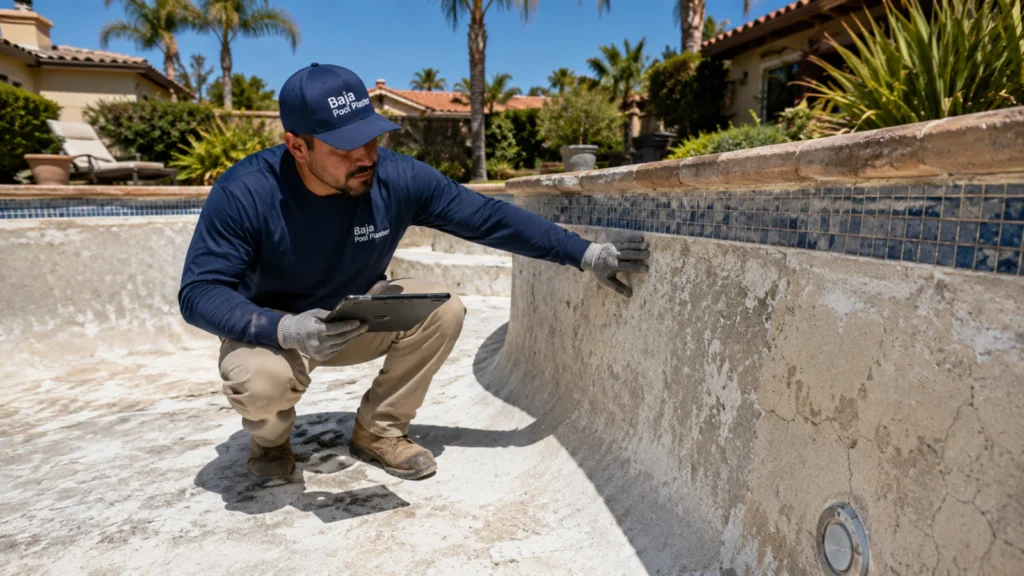
Inspecting a crack in a drained pool floor

Short answer

Concrete pool crack repair

Repairs cracks in a pool’s plaster finish, its gunite or shotcrete shell, or the surrounding deck and coping — after an inspection shows whether the crack is surface-level or structural and what caused it, so the repair solves the problem instead of just covering it.

How it relates to our other services

Cracked and deteriorating plaster on a pool wall below the tile line
Cracking through an aging plaster wall
Close-up of cracking in an aging pool plaster surface

Types of Cracks

Common problems concrete pool crack repair solves

Every pool is different, but the cracks we’re called out for in San Diego tend to fall into a few recognizable categories.

  • Hairline surface cracks in plaster

    Thin, spiderweb-style cracking across the plaster finish, often from curing issues, water chemistry imbalance or age. These are frequently cosmetic but should still be evaluated, since they can widen over time.

  • Structural shell cracks

    Deeper cracks that run through the gunite or shotcrete shell itself, sometimes visible as a straight line across the pool floor or wall. These can be tied to soil movement, settling or hydrostatic pressure and need a more involved repair.

  • Deck and coping cracks

    Cracking in the concrete surrounding the pool — usually a separate (though related) issue from shell cracks, caused by expansion and contraction, tree roots or poor original control-joint placement.

  • Cracks near skimmers, steps or return lines

    These deserve extra attention because they can be a symptom of plumbing movement or a leak rather than a purely cosmetic surface issue — see pool leak detection and repair.

  • Cracks after a pool has sat empty

    Hydrostatic pressure from groundwater can push against an empty shell and cause cracking if a pool isn’t drained and refilled correctly.

If any of these sound like what you’re seeing in your own backyard, it’s worth having a professional take a look before the issue grows.

Why Crack Repair Matters

Why a pool crack should not wait

A crack in a concrete pool is rarely just cosmetic.

01

Water reaches the steel

Concrete and plaster are rigid, so once a crack forms it creates a path for water to move where it shouldn’t — into the rebar and gunite shell, under the deck, or beneath surrounding hardscape. That moisture accelerates corrosion of the steel reinforcement that holds the structure together.

02

Higher water and chemical costs

Water that escapes through a crack still has to be replaced, which means higher water bills and, in some cases, chemical imbalances that are harder to manage.

03

Trip hazards and plumbing clues

Cracks in decking or coping can create trip hazards, and cracks near skimmers or return lines sometimes signal a plumbing issue rather than a surface one — which changes the whole scope of repair.

The good news

Most cracks are very repairable

Caught early, most concrete pool cracks are very repairable — and addressing them proactively is almost always less disruptive and less expensive than waiting until the crack widens, spreads or causes secondary damage to the shell or surrounding structure.

Compare Your Options

A targeted crack repair, or something bigger?

Crack repair targets the specific damaged area, while pool replastering involves resurfacing the entire pool interior. Sometimes a crack repair is a standalone fix; other times, if the surrounding finish is also aging or failing, replastering the whole surface makes more sense.

Types of pool cracks, their common causes and what the repair usually involves
Crack typeCommon causesWhat the repair usually involves
Hairline surface cracks in plasterCuring issues, water chemistry imbalance or ageEvaluation, then a targeted plaster or finish repair — they can widen over time
Structural shell cracksSoil movement, settling or hydrostatic pressureA more involved structural repair, matched to the type and depth of the crack
Deck and coping cracksExpansion and contraction, tree roots or control-joint placementEvaluated and repaired as a separate, related issue
Cracks near skimmers, steps or return linesPlumbing movement or a leakConfirming the source first — leak detection if water is being lost
Cracks plus an aging or failing finishThe surrounding surface is at the end of its lifeReplastering or resurfacing the whole surface

Weighing a targeted repair against something larger? Our guide on pool replastering versus a full pool remodel explains the difference before you commit to either path.

Our Crack Repair Process

From first call to final walkthrough

We keep our process transparent so you know exactly what to expect.

01

Inspection & diagnosis

We physically inspect the crack, check whether it’s surface-level or structural, and look for related symptoms like water loss, staining or shifting nearby decking. This step determines everything that follows.

02

Root cause assessment

Cracks are a symptom, not just a defect — we look at soil conditions, drainage, prior repairs, and the age and construction of the pool to understand why the crack formed, not just where it is.

03

Repair plan & explanation

We walk you through the recommended repair in plain language, along with what could affect scope, timeline, or whether the fix is a targeted repair versus part of a broader resurfacing project.

04

Surface preparation

For plaster or shell cracks, the area is cleaned, chased out along the crack line and prepped so the repair material bonds properly rather than just sitting on top of the existing surface.

05

Structural & surface repair

Depending on the type and depth of the crack: epoxy injection, hydraulic cement, structural patching compounds, or targeted plaster and finish repair, matched to the material and condition of your pool.

06

Finish blending & curing

Repaired areas are finished to blend as closely as possible with the surrounding surface, then given proper time to cure before the pool is refilled or returned to service.

07

Final inspection

We confirm the repair is sound and talk through maintenance steps that can help prevent similar cracking down the road.

For cracks that turn out to be more extensive, this process sometimes overlaps with a broader pool surface repair scope, or leads into a conversation about full pool resurfacing if the existing finish has reached the end of its usable life.

Cost, Timeline & What to Expect

What affects the cost and timeline of crack repair?

Every crack is different, so cost and timeline depend on several factors rather than a flat rate.

Cost factors

What shapes the price

The most accurate way to get a cost and timeline is a direct inspection — we walk you through what’s driving the price, so there are no surprises.

  • Crack type and depth — a hairline surface crack in plaster is generally a faster, lower-cost repair than a structural crack through the shell.
  • Location on the pool — cracks near skimmers, steps or plumbing penetrations often require more careful work than a straight run across an open floor or wall.
  • Underlying cause — if the crack is tied to soil movement, drainage or a prior improper drain-down, addressing the root cause may add scope beyond the visible crack itself.
  • Surface finish match — blending a repair into an existing plaster, pebble or quartz finish affects both timeline and technique, since the goal is a repair that doesn’t stand out.
  • Access and pool condition — pools that need to be drained, or have limited access for equipment, may take longer than a pool that’s already empty.

Weighing crack repair against a larger resurfacing project? The San Diego pool resurfacing cost guide and pool crack repair cost guide explain what moves the needle on price.

Timeline factors

How long it takes

Many targeted repairs can be completed in a matter of days, with additional time for curing before the pool returns to normal use.

What changes the schedule:

  • Crack severity and depth
  • Whether the pool needs to be drained
  • Finish blending into plaster, pebble or quartz
  • Curing time before refill

You get a specific timeline after we inspect your pool.

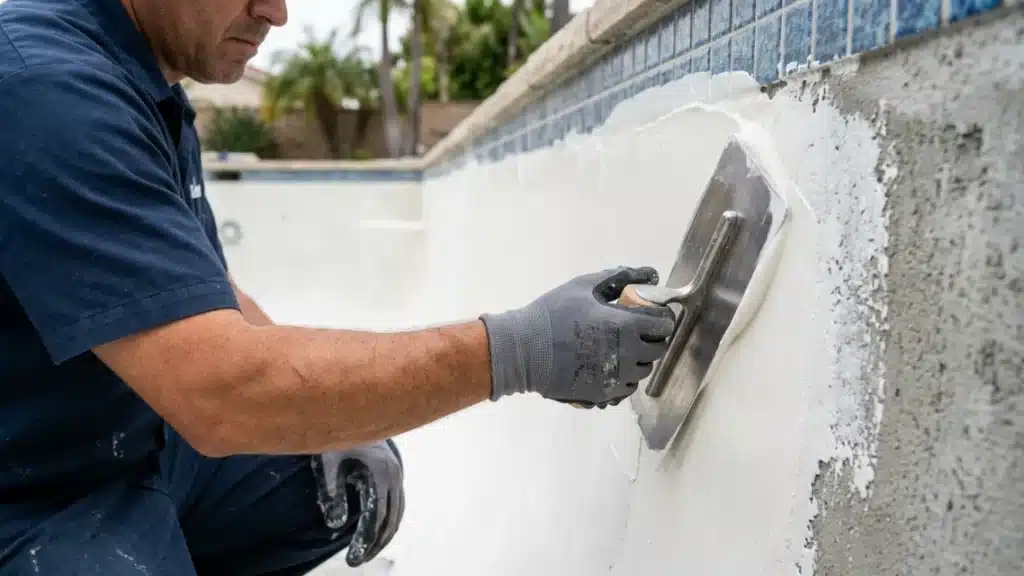
Contractor troweling fresh white plaster onto a pool wall
Troweling a new finish
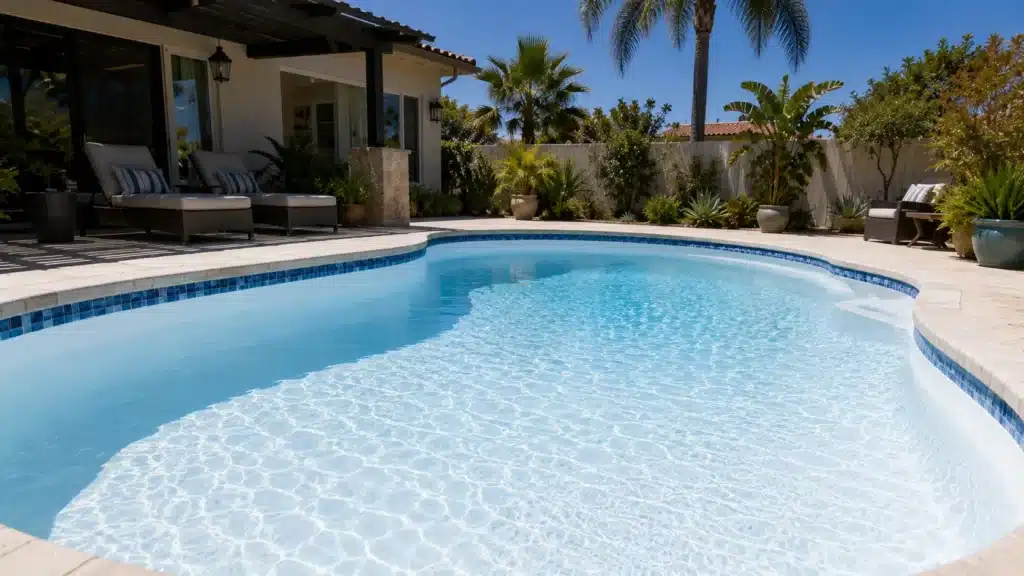
Sunny San Diego backyard swimming pool with a freshly finished interior surface
San Diego pools
Coast, hillsides and inland valleys
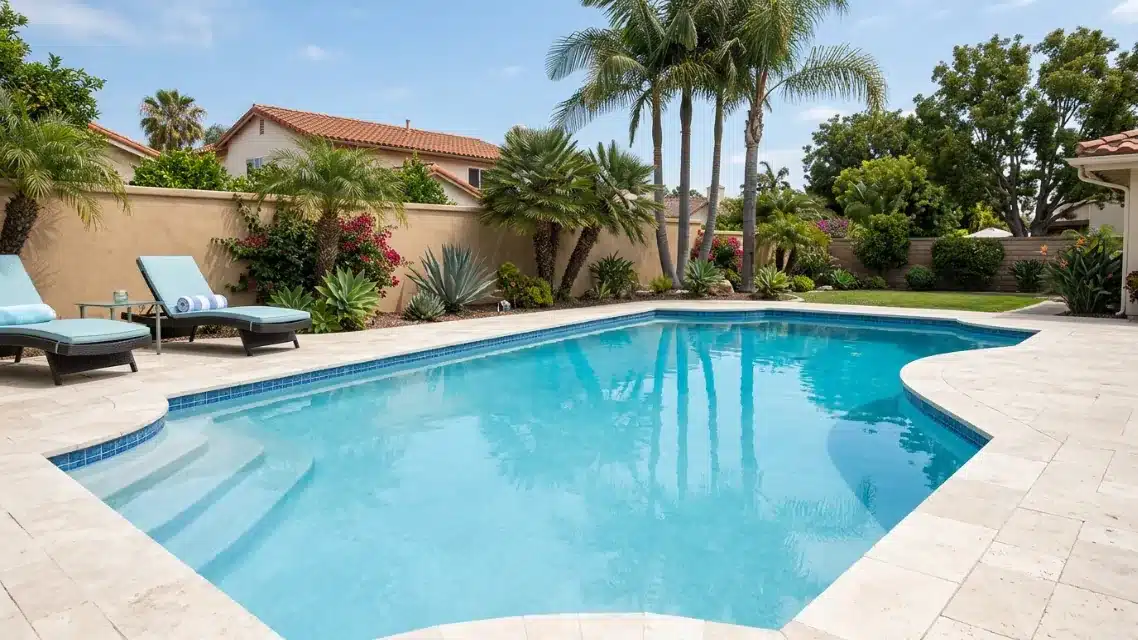
Swimming pool with tiled steps and a freshly plastered interior surface

Across San Diego

Concrete pool crack repair across San Diego

San Diego’s mix of coastal neighborhoods, hillside properties and inland valleys means pools here deal with a wide range of soil and drainage conditions — a major reason concrete pool cracking is so common locally.

What drives cracking here

Soil types
Expansive clay soils in some areas, decomposed granite in others, and everything in between — so a repair approach that works for one property doesn’t always work for the next.
Older pools
Pools in established neighborhoods often show cracking related to original construction methods and decades of soil settling.
Hillside lots
Newer builds on hillside lots can develop cracks tied to grading and drainage around the pool shell.
Coast to inland
Coastal-to-inland climate differences and varied drainage conditions change how a crack forms and how it should be repaired.

Baja Pool Plaster is based right here in San Diego, and we regularly work on pools throughout the city and nearby communities — including properties in La Jolla, La Mesa, Rancho Bernardo, Bonita and Lakeside.

Why Baja Pool Plaster

Why San Diego homeowners choose Baja for crack repair

We treat every pool as its own project, not a template. A crack repair that only addresses the surface without solving the underlying cause tends to come back — so we aim to solve the actual problem.

Since1984Ruben Castillo’s pool plastering business
CSLB License#452824Licensed California contractor
DiagnosisFirstNo repair method until the cause is clear
01

Honest diagnosis first

We don’t recommend a repair method until we understand what’s actually causing the crack. That means you’re not paying for the wrong fix.

02

Local knowledge of San Diego pool conditions

Experience across San Diego’s varied soil types, older pool construction styles and coastal-to-inland climate differences informs how we approach every repair.

03

Straightforward communication

You’ll know what we’re doing, why we’re doing it, and what to expect at each stage — no vague explanations.

04

Repairs built to last, not just look good

A crack repair that only addresses the surface tends to come back. We solve the underlying cause.

05

The full spectrum of pool surface work

Beyond crack repair, we handle pool replastering, pool leak detection and repair and full pool remodeling and renovation — so if your crack is connected to a bigger issue, there’s no second contractor.

Technician injecting a structural crack in the shell of a drained gunite pool
Structural repair
Matched to the crack and the shell
Baja Pool Plaster contractor inspecting a pool surface

Pool Owner Resources

Crack repair guides

What crack repair costs, and when a bigger project makes more sense. For the repair methods themselves, see how concrete pool cracks are repaired.

Frequently Asked

Concrete pool crack repair questions

Direct answers to what San Diego pool owners ask about cracks. For your specific pool, call Ruben — the advice is free.

Freshly plastered pool with a clean white finish
San Diego Pools
Ask Ruben about your pool
Two pool interiors side by side comparing a pebble finish with a plaster finish

How do I know if my pool crack is serious?

Thin, hairline cracks confined to the plaster surface are usually less urgent, while cracks that run through the shell, are widening, or coincide with water loss should be inspected promptly.

If you’re unsure, it’s worth having a professional evaluate it — some structural cracks aren’t obvious to the untrained eye.

It depends on the crack. Minor surface cracks often don’t prevent pool use in the short term.

Structural cracks or cracks near plumbing can worsen with continued water pressure and use. We recommend getting an inspection quickly so you know whether it’s safe to keep using the pool in the meantime.

San Diego’s varied soil composition, seasonal ground movement, older pool construction methods and, in some cases, improper draining are common contributors.

Coastal and hillside properties can also see cracking related to drainage and grading around the pool shell.

Not necessarily. Crack repair targets the specific damaged area, while pool replastering involves resurfacing the entire pool interior.

Sometimes a crack repair is a standalone fix; other times, if the surrounding finish is also aging or failing, replastering the whole surface makes more sense. We’ll walk you through which applies to your pool.

Cost depends on the crack’s size, depth, location and underlying cause, along with how the repair needs to be blended into your existing finish.

Because of that variability, we provide accurate pricing after an in-person inspection rather than a generic estimate. The pool crack repair cost guide explains the variables.

A properly diagnosed and repaired crack, especially one where the underlying cause has been addressed, should hold up well.

Cracks are more likely to reappear when only the visible surface is patched without resolving what caused it — which is why our process starts with root cause assessment, not just a patch.

Yes — we handle both.

Deck and coping cracks are often a separate issue from shell cracks, sometimes caused by expansion and contraction or nearby tree root growth, and we evaluate and repair both types.

Timelines vary with crack severity and whether the pool needs to be drained, but many targeted repairs can be completed in a matter of days.

Additional time is needed for curing before the pool returns to normal use. We’ll give you a specific timeline after inspecting your pool.

Swimming pool with a shade palapa looking out over the coastline

Start Your Project

Get your concrete pool crack repair started

A pool crack won’t fix itself, and the longer it’s left alone, the more likely it is to lead to bigger structural or water-loss problems. Call (619) 458-3443 or email info@bajapoolplaster.com to schedule your inspection — the sooner a crack is evaluated, the simpler, and often less costly, the fix tends to be.

What happens next

  1. Call or send the form — three details are enough.
  2. A real inspection — surface-level or structural, and what caused it.
  3. A clear repair plan — explained in plain language, estimate free.
Mon–Fri 8am–6pmHours
CSLB #452824License

Request a free estimate

Three details and Ruben will call you back to arrange a look at the pool.

"*" indicates required fields

This field is for validation purposes and should be left unchanged.

Or call (619) 458-3443.