Key Takeaways
Pool coping repair San Diego homeowners need is most durable when it addresses the actual failure mode—stable coping may only need joint and sealant restoration, but loose or hollow sections typically require re-setting and possible bond-beam patching. A professional evaluation helps confirm whether the issue is cosmetic or substrate-related, since moisture intrusion and movement can extend beyond the visibly damaged area.
- Movement and water intrusion are the main drivers: UV exposure, wet/dry cycling, chemical splash-out, and especially deck-to-shell movement from a failed or bridged expansion joint can crack, lift, or loosen coping and allow water to migrate behind the tile line and toward the bond beam.
- Regrouting doesn’t fix loose coping: When coping rocks, sounds hollow (“drummy”), or sits unevenly, the bond beneath has failed and proper repair typically involves lifting pieces, cleaning to a sound surface, rebuilding the setting bed, and resetting to consistent elevation and overhang.
- Evaluation and joint geometry affect repair scope and longevity: Pros typically combine perimeter checks, sounding tests, expansion-joint assessment, and tile-line review, with targeted removal when needed, and expansion-joint repairs should remove old sealant (not cap it) and may require backer rod because product, weather, and moisture conditions influence curing and performance.
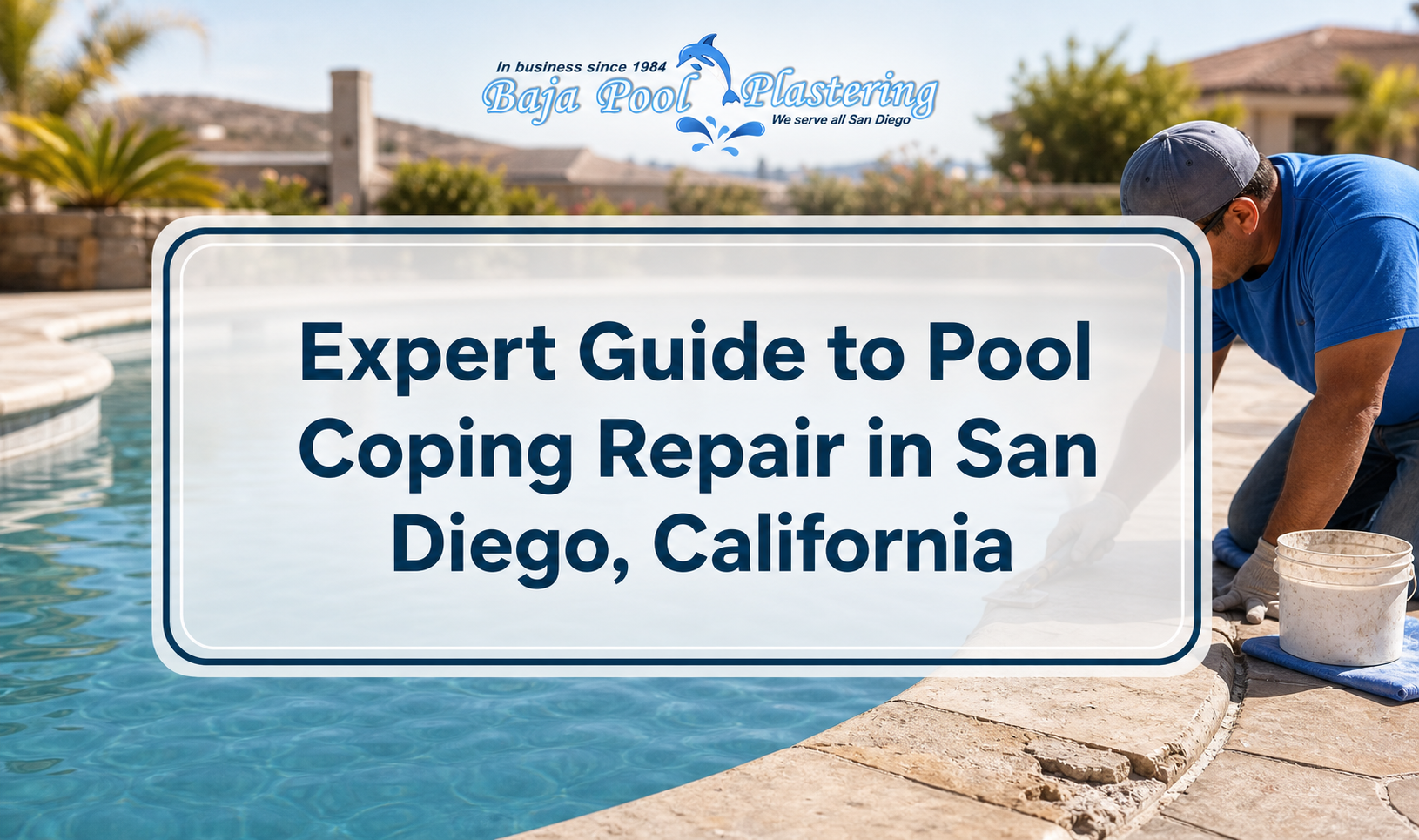
Pool coping repair San Diego homeowners rely on involves restoring the protective cap at the pool’s edge to stop cracking, loosening, and water intrusion from worsening. Proper coping repair addresses failed mortar joints, displaced stones or pavers, and hollow or drummy sections before they become safety hazards or lead to more extensive deck and bond-beam damage.
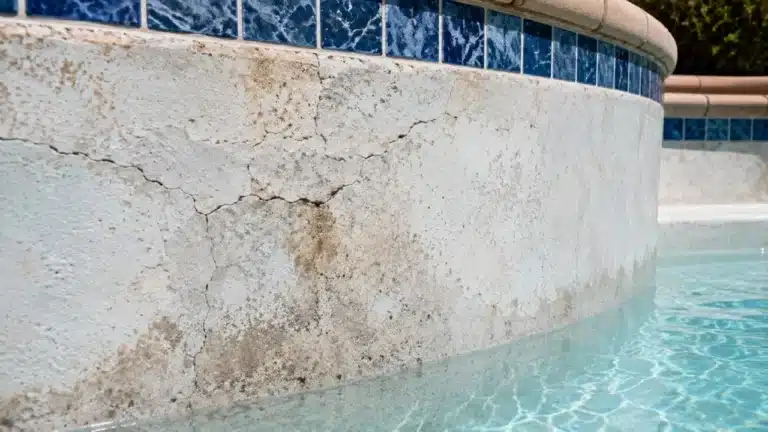
Coping takes constant exposure to sun, pool chemicals, and wet/dry cycles, which can break down grout, thinset, or mortar and allow movement between the deck and the shell. When coping shifts or gaps open up, water can migrate behind the tile line, contribute to efflorescence, and stress the bond beam—often showing up as uneven edges, sharp corners, or cracked joints around the perimeter.
This guide explains common causes of coping failure, how a professional evaluates the bond beam and expansion joints, and the typical repair options—from re-setting loose pieces to re-mortaring and re-caulking—along with what to check before and after the work to keep the pool edge safe and durable.
What Counts as Coping (and Why It Fails Around San Diego Pools)
Pool coping is the finished cap along the pool edge that protects the bond beam and creates a clean transition between the waterline tile and the deck. When coping systems loosen or crack, they can allow water to reach the beam, stain surfaces, and create sharp or unstable edges.
Coping may be natural stone, precast concrete, brick, or porcelain pavers, typically set on a mortar bed or thinset over the bond beam. In many pools, the coping and deck are separated by an expansion joint—this joint is critical because the deck and shell move differently with temperature changes and soil conditions. When that movement is restrained or the joint fails, coping damage accelerates.
- San Diego climate exposure: Strong UV, warm days, and cool evenings create repetitive expansion/contraction that stresses mortar and grout lines.
- Pool chemistry splash-out: Sanitizers and salt systems can contribute to surface wear, especially at edges where water repeatedly evaporates.
- Wet/dry cycling: Water that migrates behind coping can repeatedly saturate and dry, weakening bonds and contributing to mineral deposits.
- Deck-to-shell movement: If the expansion joint is missing, bridged with mortar, or hardened/failed, coping can lift, crack, or shift.
Common Signs You Need Pool Coping Repair
Most coping problems start small—hairline cracks, minor rocking, or open joints—and become more expensive once water reaches the bond beam or undermines adjacent deck sections. Catching early warning signs helps avoid larger tear-outs.
Visible movement, cracking, and safety hazards
Loose coping is often felt before it is clearly seen, especially when stepping near the perimeter. Any sharp edge, rocking piece, or widening joint should be treated as a priority repair.
- Loose, “drummy,” or hollow-sounding coping when tapped
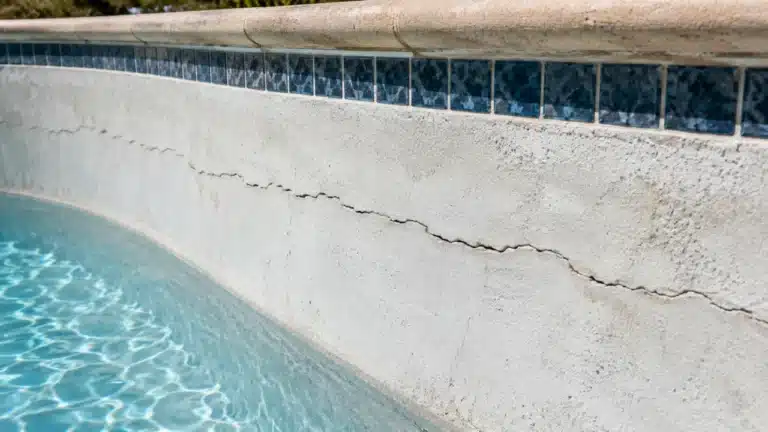
- Cracked mortar joints or missing grout between coping pieces
- Uneven coping heights that create trip hazards or exposed corners
- Spalling or chipping along the outside edge from impact and weathering
- Staining or white deposits (efflorescence) near joints and under overhangs
Water-related symptoms near the tile line
Open joints and failed sealant can allow water to travel behind coping and waterline tile. That moisture can show up as discoloration, persistent damp spots, or debonding tile near the top of the pool wall.
- Gaps between coping and deck where sealant has separated
- Loose or cracked waterline tile directly under coping
- Rust-colored staining that may indicate rebar-related issues inside the beam (requires professional evaluation)
- Persistent wet areas or darkened stone that does not dry uniformly
What Usually Causes Coping to Crack or Come Loose
Coping failure is rarely caused by one factor alone; it’s often a combination of movement, moisture intrusion, and bond breakdown. A good repair plan identifies the “why,” not just the broken piece.
Expansion-joint failure and deck restraint
The expansion joint between the deck and pool shell should remain flexible and continuous. When it is filled with rigid material, deteriorates, or separates, stress can transfer to coping and tile.
- Sealant that has hardened, shrunk, or pulled away from one side
- Improper joint depth or missing backer rod, causing premature sealant failure
- Deck movement pressing against coping due to soil settlement or thermal expansion
Bond breakdown beneath coping
Mortar beds and thinset can lose adhesion from moisture exposure, movement, or improper installation. Once voids form beneath coping, pieces can flex, crack, and progressively loosen.
- Inadequate surface prep on the bond beam (dust, laitance, old thinset not removed)
- Incorrect material choice for the substrate and exposure conditions
- Water intrusion from open joints or failed caulking washing out bedding material
Bond beam distress (cracking inside the structure)
If the bond beam itself is cracked or delaminated, coping repairs may require structural patching before resetting the cap. This condition can’t be confirmed by appearance alone; it may require sounding, localized removal, and visual inspection of the beam.
- Cracks that repeat through multiple coping pieces and the tile line
- Areas that re-loosen shortly after simple regrouting
- Staining patterns that suggest moisture paths into the beam
How a Professional Evaluates Coping Damage Before Repair
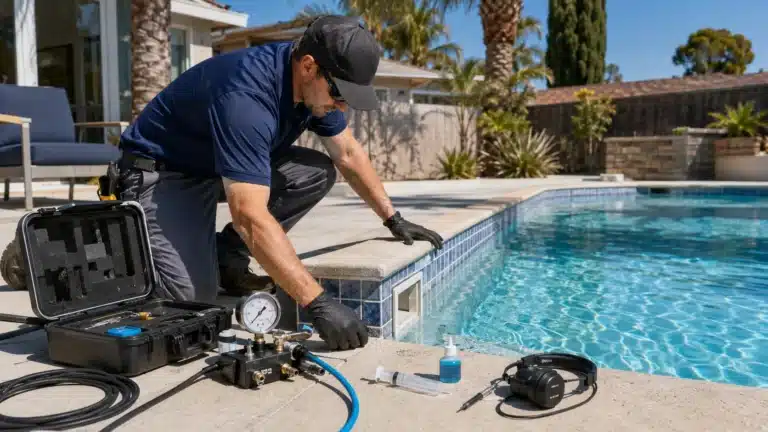
A thorough evaluation separates cosmetic joint issues from substrate failures and identifies how far the problem extends. This is especially important for pool coping repair San Diego homeowners schedule after noticing localized movement—sometimes the “bad spot” is only the visible edge of a larger issue.
- Perimeter walk and movement check: Identifies rocking pieces, uneven elevations, and hazardous corners.
- Sounding test: Tapping coping to locate hollow sections that indicate debonding.
- Joint assessment: Checks whether the expansion joint is continuous, properly sized, and still flexible.
- Tile-line review: Looks for related failures at the waterline tile and grout that may indicate water migration.
- Targeted removal (when needed): In suspect areas, coping may be lifted to inspect mortar condition and bond beam surface integrity.
If the pool also shows tile issues, plaster deterioration, or structural cracking, the scope may expand beyond coping alone. In those cases, it can be more efficient to coordinate coping work with broader pool repair rather than fixing one symptom at a time.
Pool Coping Repair Options (From Small Fixes to Partial Rebuilds)
The best repair method depends on whether the coping is sound and only the joints failed, or whether the bedding and substrate have separated. Matching the repair type to the failure mode helps the fix last longer and look consistent.
| Repair Scenario | What’s Typically Done | Best-Fit Use Cases / Notes |
|---|---|---|
| Replace failed perimeter sealant (expansion joint) | Remove old sealant, install backer rod where appropriate, apply pool-grade flexible sealant | Appropriate when coping is stable but joint is cracked, separated, or letting water through |
| Re-mortar localized loose coping pieces | Lift loose units, clean substrate, rebuild setting bed, reset and align coping, restore joints | Best when a few sections are hollow/rocking and the beam is otherwise sound |
| Re-grout / re-point coping joints | Remove deteriorated joint material and repoint with suitable product for the coping type | Works when coping is bonded and stable; will not correct movement-related failures |
| Partial coping rebuild with bond beam patching | Remove multiple pieces, repair beam defects, rebuild setting bed, reset coping, restore tile/joints as needed | Used when cracking/loosening repeats across an area or when moisture damage is suspected beneath |
| Full coping replacement (often with coordinated upgrades) | Demo existing coping, correct substrate, install new coping system, finish joints and sealant | Consider when coping is widely inconsistent, heavily spalled, or a design/material change is desired |
Re-setting loose coping (the most common “real fix”)
When coping is loose or hollow, simply regrouting the joints rarely solves the problem because the underlying bond has failed. Proper re-setting rebuilds the contact between coping and the bond beam and restores alignment.
- Lift affected coping pieces carefully to avoid breaking adjacent units.
- Remove loose mortar/thinset to reach a clean, sound surface.
- Inspect for voids, cracks, or weak concrete at the beam and patch as appropriate.
- Reset coping to correct elevation and consistent overhang, then restore joints.
Re-caulking the expansion joint (critical for water control)
A flexible joint helps keep deck movement from pushing on the pool structure and helps block water entry at the perimeter. A good joint repair includes proper joint geometry; otherwise, sealant can split or peel prematurely.
- Old sealant should be removed rather than “capped” with new material.
- Backer rod may be used to control sealant depth and support proper curing.
- Edges should be clean and dry for best adhesion (weather can affect scheduling).
When coping repair includes tile-line work
If waterline tile is already loose or cracked beneath the coping, the repair may need to include removing and resetting tile in that area. This prevents a situation where the coping is stabilized but water continues to migrate behind the tile line.
- Localized tile replacement if only small areas are affected
- Rebuilding the beam-to-tile transition if moisture has degraded the substrate
- Color-matching limitations when older tile is discontinued (a common constraint)
What to Check Before Work Starts (Homeowner Prep and Smart Questions)
Clear expectations up front reduce change orders and help you compare repair bids fairly. Because coping repairs can uncover hidden substrate problems, it’s also important to discuss how discoveries will be handled.
- Scope boundaries: Confirm what is included—only coping, or also expansion joint, tile line, and deck interface.
- Material match: Ask how the crew will blend new mortar/grout/sealant with existing finishes and what mismatches may remain.
- Protection plan: Verify how the deck, plaster, and landscaping will be protected from debris and dust.
- Water level and access: Ask whether the pool needs to be lowered and how long the perimeter needs to stay clear.
- Contingency for beam damage: Request an approach for documenting and pricing any bond beam repairs discovered after removal.
It can also help to understand broader project timing if you are planning multiple upgrades, since coping choices sometimes coordinate with resurfacing, tile changes, or deck work. If you’re weighing a larger pool project, the timeline considerations discussed in how long it takes to build a swimming pool can be useful context for planning access, trades, and sequencing.
After the Repair: Cure Time, Use Limits, and Maintenance That Prevents Recurrence
New mortar, grout, and sealants need time to cure and stabilize, and premature use can weaken the bond or pull joints apart. Your contractor’s exact guidance should control, since cure times vary by product, weather, and moisture conditions.
Post-repair checks you can do visually
You don’t need specialized tools to confirm basic quality—alignment, clean joints, and consistent transitions are noticeable when you know what to look for.
- Coping sits flush without rocking, and edges feel smooth underfoot.
- Joints are consistent in width with no crumbling or pinholes.
- Expansion joint sealant is continuous (no gaps), neatly tooled, and bonded to both sides.
- Waterline tile immediately below coping is stable and not cracked from pressure.
Maintenance habits that extend coping life
Good perimeter maintenance focuses on keeping water from traveling behind the coping and limiting chemical/salt residue at the edge. Even well-done coping repairs can fail early if water management and joint maintenance are neglected.
- Rinse splash-out areas periodically to reduce chemical residue on coping and decks.
- Inspect the expansion joint seasonally for separation, hardening, or tears.
- Address minor joint cracks early before they become pathways for water intrusion.
- Avoid using rigid patch materials in flexible joints; mismatched materials often crack again.
How Coping Repair Fits Into the Bigger Picture of Pool Durability
Coping is more than a finishing detail—it’s part of the system that protects the pool structure at its most vulnerable transition point. Keeping this edge intact helps the pool function as intended as a swimming pool, where constant water exposure demands controlled movement and reliable barriers against intrusion.
When pool coping repair San Diego properties need is handled early, repairs often stay localized to resetting, repointing, and joint restoration. When delayed, the same symptoms can spread into the bond beam, tile line, and adjacent deck—turning a perimeter fix into a larger renovation. The most durable outcomes come from combining sound substrate preparation, correct material selection for outdoor exposure, and a properly functioning expansion joint that allows the deck and shell to move independently.
Frequently Asked Questions
How do I know if I need pool coping repair in San Diego, not just regrouting?
You likely need coping repair when pieces rock, sound hollow when tapped, or sit unevenly. Regrouting alone only addresses failed joints, not a broken bond beneath the coping. Loose or “drummy” sections should be reset to restore stability and safety.
What causes coping to crack or come loose around San Diego pools?
Coping commonly fails from deck-to-shell movement, moisture intrusion, and bond breakdown beneath the cap. UV exposure, wet/dry cycles, and chemical splash-out can weaken mortar and grout. A failed or bridged expansion joint often transfers stress into coping and tile.
Should the expansion joint be repaired when doing pool coping repair San Diego homeowners schedule?
Yes, repairing the expansion joint is often necessary to prevent repeat coping movement and water intrusion. Old sealant should be removed, joint depth controlled with backer rod when appropriate, and a flexible pool-grade sealant installed. A continuous joint protects the bond beam and tile line.
What does a professional check before starting a coping repair?
A professional typically checks for rocking pieces, hollow areas, and uneven elevations, then assesses joint condition and nearby waterline tile. If needed, they lift select coping to inspect mortar and the bond beam surface. This evaluation confirms whether the issue is cosmetic or substrate-related.
What should I look for after coping repair to confirm it was done correctly?
You should see coping that sits flush without rocking and joints that are consistent and intact. Expansion-joint sealant should be continuous, neatly tooled, and bonded to both sides without gaps. Waterline tile beneath the coping should remain stable and free of new cracks.
Get Your Pool Coping Checked Before Small Movement Becomes Bigger Repairs
If your coping is rocking, cracking, or opening up at the deck joint, an inspection can clarify whether the issue is isolated to joints and sealant—or if loose bedding and bond-beam conditions need to be addressed. Fixing the right cause helps restore a safer, smoother edge and reduces ongoing water intrusion around the tile line.
A professional evaluation can identify hollow areas, failed expansion-joint sealant, and sections that should be reset (not just regrouted), so the repair plan matches the materials and movement at your pool’s perimeter.