
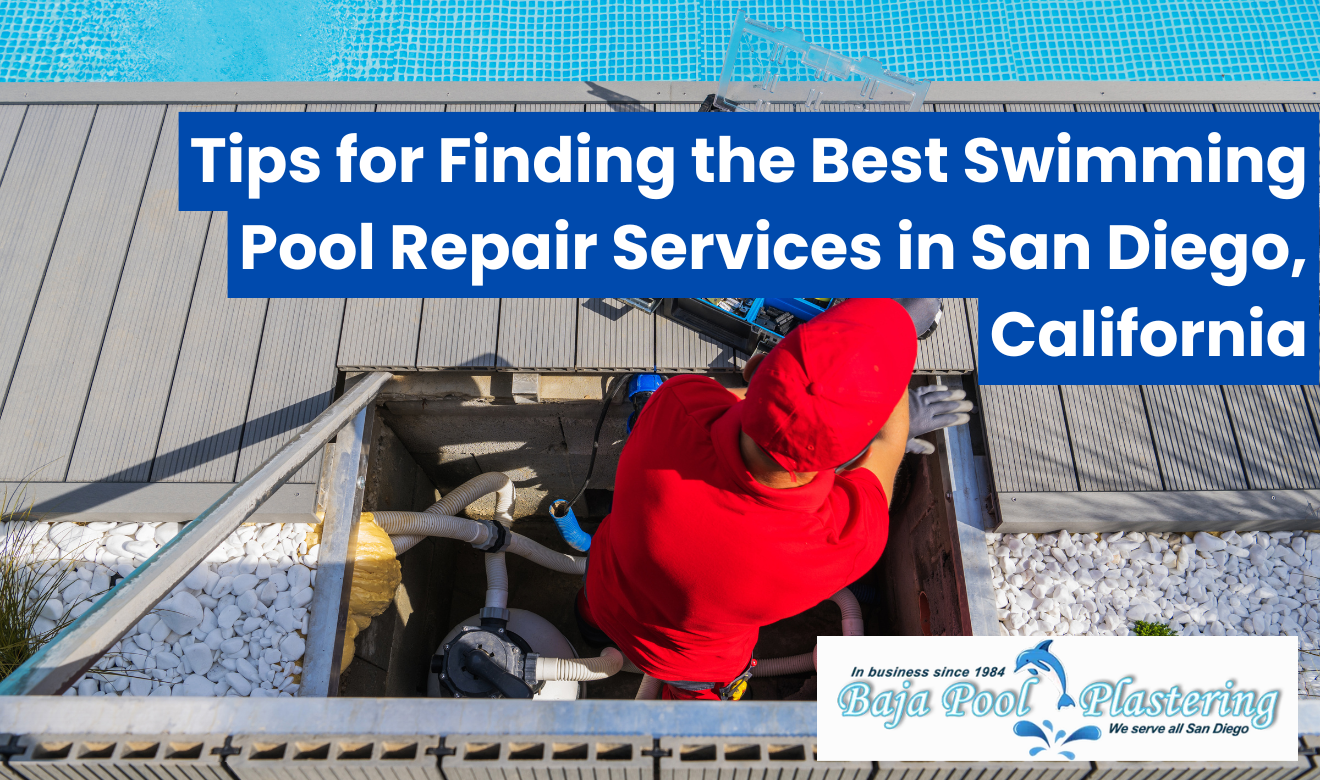
Executive Summary
The article explains how San Diego homeowners can choose reliable swimming pool repair services by prioritizing verified diagnostics, clear written scopes, and post-repair verification—rather than quick guesses or sales-driven recommendations. It also outlines common pool problems, what to ask technicians, and how to compare estimates and warranties to avoid repeat repairs and surprise costs.
Key Takeaways
- Catch early warning signs to prevent expensive repairs: Rapid water loss, air in returns, rising filter pressure, surface cracks, and loose tile/coping often signal problems that worsen if ignored.
- Demand proof-based diagnostics before approving major work: Leak detection should include methods like dye or pressure testing with documented results (photos/readings) before cutting or replacing parts.
- Use a consistent technician checklist to filter out poor providers: Ask for root cause, verification method, repair options, exact parts/part numbers, labor hours, and clear parts vs. labor warranty terms.
- Compare estimates by scope—not the total price: The best bids itemize materials, labor, exclusions, timeline, and verification steps (retest/run test with recorded PSI) to prevent “apples-to-oranges” comparisons.
- Long-lasting repairs depend on prep, curing, and aftercare: Plaster/tile failures often come from poor preparation or rushed start-up, so confirm prep steps, cure timelines, and maintenance requirements that protect the warranty.
To find the best swimming pool repair services San Diego homeowners rely on, start by confirming the provider is licensed, insured, and experienced with your exact pool system. Then compare a few detailed estimates, check recent local reviews, and ask what warranty they provide on parts and labor. This quick process helps you avoid surprise costs and repeat repairs.
For example, if your pool is losing water, ask whether they can perform a leak detection test and show you the results before recommending a fix. If your pump is loud or the filter pressure is high, request a clear diagnosis like a worn motor bearing, a clogged impeller, or a failing multiport valve—along with the part numbers and labor hours. And if you’re dealing with cracked plaster or loose tiles, ask what prep work they’ll do, how long curing will take, and what maintenance you should follow afterward.
Keep the conversation simple: “What’s causing the issue, what are my options, and what will it cost in writing?” When a technician can explain the problem in plain language and back it up with measurements or photos, you’re usually on the right track.
How to spot the most common pool problems (before they get expensive)
Most calls for swimming pool repair services San Diego technicians come down to a few repeat issues: leaks, circulation failures, surface damage, and chemistry-related wear. Catching the early warning signs helps you limit demolition, avoid repeat repairs, and keep water and energy bills under control.
Fast signs your pool needs professional repair
- Water level drops faster than normal evaporation (especially if it continues after you stop running water features).
- Air bubbles in returns or the pump losing prime (often suction-side air leak, low water level, or lid O-ring issues).
- Filter pressure trends up quickly after cleaning (flow restriction, dirty grids/cartridge, clogged impeller, or valve problem).
- Visible cracks, hollow spots, or rough plaster (can lead to delamination, staining, and algae footholds).
- Loose tiles or coping movement (often indicates bond beam or deck movement, or water intrusion behind tile line).
Quick reality check: evaporation vs. leak
According to the U.S. Geological Survey (USGS), evaporation is a major driver of water loss in warm, dry regions; hot, windy days increase it. If your pool is losing significantly more than typical day-to-day evaporation and splashing, it’s time to call swimming pool repair services San Diego for proper leak detection rather than guessing and patching.
What to ask a pool repair technician (script you can use)
If you want to quickly separate “sales talk” from real diagnostics, keep your questions consistent. Good swimming pool repair services San Diego providers usually answer clearly and document the findings.
Use this 6-question checklist
- What’s the root cause? (not just the symptom)
- How did you verify it? (pressure test, dye test, photos, meter readings)
- What are my repair options? (good/better/best if available)
- What parts are being replaced? (brand + part numbers where possible)
- How many labor hours are included?
- What warranty applies to parts and labor? (and what voids it)
Red flags that usually mean “get another estimate”
- They recommend a major repair before documenting diagnostics.
- They won’t provide a written scope of work with line items.
- They skip safety basics (no mention of shutting off power at the breaker, no bonding/grounding awareness).
- They won’t discuss curing, start-up, or aftercare for plaster/tile work.
Cost: what swimming pool repairs typically depend on in San Diego
Homeowners searching swimming pool repair services San Diego usually want pricing fast. Exact costs vary widely because “pool repair” can mean anything from replacing a seal to cutting and re-plumbing lines under concrete. The most reliable way to compare bids is to compare scope, not just the bottom number.
Key factors that move the price up or down
- Access (tight equipment pads, buried plumbing, or hard-to-reach leaks)
- Age and compatibility of equipment (older systems may need adapters or broader updates)
- Type of pool (gunite/plaster vs. fiberglass vs. vinyl; each has different repair methods)
- Extent of demolition (deck removal, trenching, tile line removal)
- Permitting/electrical when required (especially for major equipment changes)
Typical repair categories and what they usually include
| Repair category | What a good scope includes | What to verify in writing |
|---|---|---|
| Leak detection + leak repair | Isolation testing, dye testing, pressure testing (as applicable), clear location of leak | Test results, repair method, restoration (deck patching), retest after repair |
| Pump/filter circulation problems | Diagnosis of suction vs. return restriction, impeller inspection, seal/O-ring inspection | Part numbers, labor hours, run-test verification (pressure/flow) |
| Valve/plumbing pad rebuild | Replacement of failing valves/unions, clean plumbing layout, proper primer/cement and cure time | Which lines are replaced, alignment/support, leak test after cure |
| Surface/tile repair | Prep/grind/demo details, bond coat/mortar method, cure schedule, start-up instructions | Exact materials, curing timeline, brushing/chemistry plan, workmanship warranty |
If you’re comparing swimming pool repair services San Diego quotes, ask each contractor to put the diagnostic findings and the repair method in the estimate. That single step prevents “apples to oranges” pricing.
How leak detection works (and why guessing costs more)
When homeowners look for swimming pool repair services San Diego, leaks are one of the top concerns because they’re stressful and hard to see. The goal of a real leak investigation is simple: isolate the system, identify the leak location, and prove it before repairs begin.
Common leak detection methods you may hear about
- Bucket test (basic comparison of pool evaporation vs. water loss; useful as a first check)
- Dye testing around suspected cracks, fittings, skimmers, and lights
- Pressure testing on suction/return lines to confirm plumbing leaks
- Equipment pad inspection for slow drips at seals, valves, heater manifolds, and unions
What “good proof” looks like
- Photos/videos of dye pull or the exact failure point
- Pressure test readings that hold (or fail) over a stated time
- A marked location on deck/surface before any cutting starts
For homeowners planning broader updates, it can help to review the overall pool build and repair timeline expectations—this overview on how long it takes to build a swimming pool gives context for scheduling and cure times that also affect many major repairs.
What to do when your pump is loud, your filter pressure is high, or your water is cloudy
Not every circulation issue needs full replacement. Experienced swimming pool repair services San Diego providers typically troubleshoot in a sequence so you don’t pay for parts you didn’t need.
Loud pump: most common causes
- Worn motor bearings (often a high-pitched whine or grinding)
- Cavitation from suction restriction (dirty skimmer basket, clogged pump basket, blocked suction line)
- Air leak at the pump lid O-ring, unions, or valves
- Debris in impeller (reduced flow + noise)
High filter pressure: what it usually indicates
- Dirty filter media (cartridge, DE grids, sand)
- Return-side restriction (partially closed valves, clogged return fittings)
- Multiport/selector valve issues (internal gasket problems can cause odd pressure behavior)
Cloudy water after a repair: what to verify
- Filter is clean and correctly reassembled
- Pump run time is adequate for current bather load and weather
- Basic chemistry is in range (sanitizer, pH, alkalinity)
When you hire swimming pool repair services San Diego, ask for the before/after filter pressure readings and confirmation that the system holds prime and runs leak-free after the work is complete.
Why plaster, tile, and coping fail—and how to avoid repeat repairs
Surface and tile-line problems often look cosmetic, but they can signal water intrusion behind the finish. Over time, that can loosen tiles, stain plaster, and damage the bond beam.
Common reasons plaster and tile repairs don’t last
- Poor prep (insufficient removal of hollow/failed material)
- Wrong material pairing (thinset/mortar not matched to application)
- Rushed cure and start-up (aggressive chemistry too soon can etch or discolor finishes)
- Underlying movement from deck or soil expansion that wasn’t addressed
What to ask about prep and curing (simple and specific)
- “How will you prep the area—chip-out, grind, bond coat?”
- “How long until it can be refilled?”
- “What brushing and chemistry start-up steps do you recommend?”
- “What does the warranty exclude (chemistry, freezing, movement)?”
If you’re scheduling finish work as part of broader swimming pool repair services San Diego, it’s smart to bundle tasks that require draining (tile line work, light niche repairs, certain crack repairs) to reduce downtime.
How to compare estimates from swimming pool repair services San Diego (without getting tricked)
Two estimates can look similar but include totally different outcomes. Use this structure to compare bids cleanly.
What a “comparable estimate” should include
- Scope: exact work steps (demo, install, test, cleanup)
- Materials: brand/model/part numbers where applicable
- Labor: hours or crew days and what’s included
- Exclusions: deck repair, electrical, permits, water, startup chemicals
- Timeline: start date window and duration
Tip: look for “verification steps”
Strong swimming pool repair services San Diego proposals often include verification like “pressure test after plumbing cure” or “run system and record filter PSI.” That’s a sign they plan to prove the repair worked.
Services that homeowners most often bundle together
Many repairs overlap. Bundling can reduce repeat drain/refill cycles and shorten total downtime.
Common bundle examples
- Leak detection + plumbing repair (one diagnostic, one mobilization)
- Pump replacement + valve rebuild (better hydraulics, fewer future leaks)
- Tile repair + surface repair (one drain, coordinated cure/start-up)
If you already know you need professional help, you can review a dedicated pool repair service option and compare it against your estimates to ensure the scope covers diagnostics, repair, and post-repair verification.
What a good repair warranty should cover (and what it usually doesn’t)
Warranty terms vary, but reputable swimming pool repair services San Diego providers typically separate parts warranties (often manufacturer-controlled) from labor/workmanship warranties (contractor-controlled).
What to get in writing
- Warranty length for labor and for parts
- Whether diagnostics/return visits are covered if the same symptom returns
- Maintenance requirements that keep the warranty valid (especially for plaster and chemistry)
Common exclusions to understand
- Water chemistry damage (etching, scaling, staining)
- Freeze damage (rare in San Diego, but still appears in contracts)
- Ground movement or structural shifts beyond the repair area
Why pool safety and code awareness matters during repairs
A swimming pool isn’t just a “water feature”—it’s a regulated body of water with electrical and entrapment risks. Even if you’re only hiring swimming pool repair services San Diego for equipment work, the technician should work safely around electrical systems and suction plumbing.
At a minimum, repairs should respect basic safety concepts like proper bonding/grounding, functional suction covers, and safe chemical handling. If you want a general technical reference for what a swimming pool system includes, it helps to understand why circulation, filtration, and surface integrity all work together.
How to choose swimming pool repair services San Diego homeowners trust long-term
When you want a repair that lasts, prioritize documentation, diagnostic ability, and communication—not just speed. The best swimming pool repair services San Diego providers tend to be consistent about how they test, how they write scopes, and how they explain maintenance after the job.
Simple selection criteria that work
- Proven diagnostics: they measure and verify (pressure tests, readings, photos)
- Clear scopes: line items, materials, exclusions, and timelines
- Local track record: recent reviews that mention similar repairs to yours
- Specialization match: leak detection, equipment, plumbing, or plaster/tile depending on your issue
If you’re unsure what “full-scope repair” looks like, this overview of pool repair is a helpful baseline for the kinds of issues and solutions typically addressed by swimming pool repair services San Diego.
“Done once, done right” — the trust markers of a real pool repair professional
The strongest indicator you hired the right swimming pool repair services San Diego team is that they can show the evidence: test results, photos, part details, and post-repair verification. Look for technicians who are comfortable discussing hydraulics (flow/pressure), basic water chemistry impacts on surfaces, and electrical safety fundamentals around pumps, timers, and heaters.
In practice, long-lasting repairs come from three habits: (1) diagnose before replacing, (2) document the scope and materials, and (3) verify performance after the repair. If the provider you’re considering consistently does those three things, you’re far more likely to avoid surprise costs, repeat failures, and downtime—exactly what most homeowners want from swimming pool repair services San Diego.
Frequently Asked Questions
Ready to Stop the Guesswork and Fix It Right the First Time?
If your pool is losing water, your pump sounds like it’s struggling, or your plaster and tile are showing early damage, don’t wait for a small issue to turn into a major repair. Baja Pool Plaster helps San Diego homeowners get clear answers fast with real diagnostics, written scopes, and repair options that fit your pool and budget—so you can get back to a clean, quiet, leak-free pool with fewer surprises.