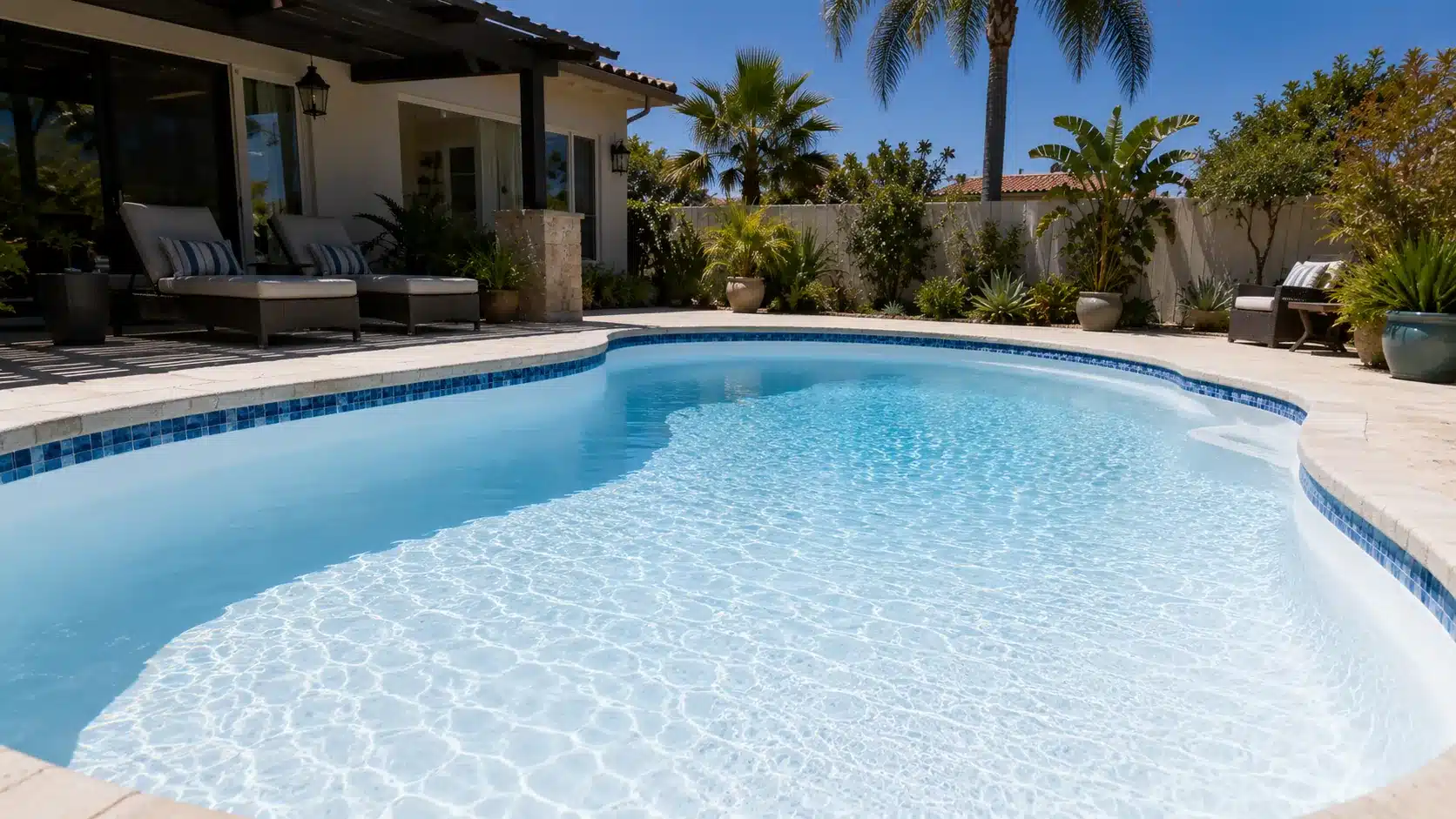

To verify a pool contractor’s license in San Diego, California, look up their license number on the California Contractors State License Board (CSLB) website and confirm the status is active, the classification matches pool work, and the insurance details are current. This is the quickest way to choose a licensed pool contractor San Diego homeowners can trust, because you’re checking the same records the state uses.
For example, if a contractor gives you a number like “1234567,” enter it into the CSLB search and make sure the name and business address match what’s on their quote and truck. If the listing shows “expired,” “suspended,” or a classification that doesn’t cover pool construction, that’s a red flag. Another concrete check: confirm workers’ compensation is on file if they’ll have a crew on-site, and verify any bond information shown before you sign a contract or pay a deposit.
Why licensing matters when you hire a pool contractor
In California, a contractor’s license isn’t just a formality—it’s the state’s way of confirming minimum competency, accountability, and consumer protections. When you hire a properly licensed contractor, you’re reducing the risk of:
- Unpermitted work that can trigger fines or forced tear-outs during inspections
- Code violations (bonding/grounding, suction safety, drainage, setbacks)
- Insurance gaps that can leave you exposed if someone gets hurt on your property
- Deposits taken with little legal recourse if the contractor disappears
Pool projects combine structural work, plumbing, electrical, waterproofing, and finish trades—so the “right” contractor is the one whose licensing and insurance match the exact scope of your job. That’s the heart of choosing a contractor you can trust for repairs, remodels, or new builds.
Quick CSLB checklist: what to confirm in under 3 minutes
If you want the fastest, most reliable method to choose a licensed pool contractor San Diego property owners feel confident about, use this checklist while viewing the CSLB license record:
- License status: Active (not expired, suspended, or revoked)
- Correct classification: Appropriate for pool construction/repair and related trades
- Business name + address: Matches the proposal, website, and work vehicle branding
- Bond info: Listed and current
- Workers’ comp: On file if they have employees (or anyone besides the license holder will work on-site)
- Disciplinary actions: Any history of citations or enforcement actions
This is the baseline due diligence step that leads to a hire with fewer surprises.
Which CSLB classification should a pool contractor have?
Pool work can fall under multiple classifications depending on scope. In many cases, pool construction is commonly associated with specialty classifications that cover swimming pool work, and pool remodels can involve additional trades (plumbing, electrical, concrete, waterproofing). You want a license classification that aligns with what they’ll actually do—not just what they say they do.
How to match classification to your project scope
- New pool build: Structural excavation, steel, gunite/shotcrete, plumbing, electrical, tile/coping, interior finish
- Remodel: Demolition, re-plaster, tile, coping, deck repair, equipment upgrades
- Repair: Leak detection/repair, plumbing lines, skimmer/returns, pump/filter/heater replacement
If the CSLB record doesn’t clearly support the scope on your proposal, ask the contractor to explain which licensed entity is performing which portion. That way you don’t have to “hope” the work is covered.
Insurance: the detail most homeowners miss (and regret later)
Licensing is only one layer. Before you bring any contractor onto your property, insurance verification is the next step.
What to ask for (and what to look for)
- General liability insurance: Ask for a certificate of insurance (COI) and confirm it’s current.
- Workers’ compensation insurance: If a crew will be on-site, confirm workers’ comp is active/on file.
- “Additional insured” option: For larger remodels, ask if you can be listed as additional insured for the project duration.
Tip: A COI is only useful if it’s current and issued by the insurer/agent. If anything looks off (wrong company name, outdated dates, generic template), pause and verify. This step alone helps you avoid taking on unnecessary liability.
Contract basics that protect you in California
A license and insurance help, but the contract is what governs your day-to-day experience. Insist on clear, written terms.
Key items that should be in writing
- Exact scope of work: Materials, brand/model for equipment, finish type, tile line length, coping material
- Start date + estimated timeline: With clarity on what causes delays (weather, inspections, material lead times)
- Payment schedule: Tied to milestones, not calendar dates
- Change order process: Written approval required before extra work starts
- Warranty terms: What’s covered, what’s excluded, duration, and who provides it
- Permit responsibility: Who pulls permits and schedules inspections
Projects tend to go smoother when expectations are documented—especially around change orders and finish selections.
Red flags that should make you walk away
Even if a license exists, the situation can still be risky. Use these practical warning signs to avoid a hire you’ll regret.
High-risk red flags
- They won’t provide a license number or discourage you from checking CSLB
- License is inactive (expired/suspended/revoked) or doesn’t match the scope
- Large upfront payment pressure or “today-only” pricing
- No written contract or vague scope like “pool remodel” without specifics
- Unmarked vehicles / shifting company names that don’t match CSLB records
- Won’t pull permits and tells you permits “aren’t needed” for significant work
The goal isn’t to be suspicious—it’s to be precise. These checks help you choose a licensed pool contractor San Diego homeowners can trust with a major home improvement investment.
Compare bids the right way (so you’re not just choosing the cheapest)
The best choice is usually the most clearly defined bid—not necessarily the lowest number.
What to standardize across bids
- Same scope: Ensure each quote covers the same tile length, coping type, finish, and equipment list
- Same assumptions: Access constraints, demo/haul-away, deck repair allowances
- Same equipment specs: Pump horsepower/variable speed, filter size, heater BTUs, automation bundle
- Same warranty language: Written warranty terms, not verbal promises
Bid review table (fast comparison)
Use this structure to quickly spot missing items or vague language:
| Bid Item | What “Good” Looks Like | Red Flag |
|---|---|---|
| Scope detail | Line-item materials + labor, named products, finish specs | “Remodel pool” with no quantities, brands, or finish type |
| Timeline | Phased timeline, acknowledges inspections and curing time | Over-promised speed with no explanation of steps |
| Permits/inspections | Contractor pulls permits where required and schedules inspections | “You don’t need permits” for major work |
| Payment milestones | Milestones tied to completed phases (demo, plumbing, finish) | Big deposit pressure or unclear payment triggers |
This approach keeps the decision objective, so you hire based on clarity, not just price.
San Diego context
Local factors in San Diego that affect pool projects
San Diego’s coastal and inland microclimates, soil conditions, and older neighborhoods can all influence pool work. A qualified local contractor should be able to explain how these factors change materials and timelines.
Common local considerations
- Coastal exposure: Salt air can accelerate corrosion—equipment placement and material selection matter.
- Hard water and scaling: Surface selection and startup chemistry are critical to reduce calcium buildup.
- Older plumbing/electrical: Remodels may reveal outdated lines that need upgrades for safety and performance.
- Drainage and slope: Decking and drainage planning can prevent runoff issues and future cracking.
How to verify experience beyond the license (photos, permits, and references)
Verify real project experience—not just marketing photos.
Best ways to validate workmanship
- Ask for recent addresses (or cross streets): So you can confirm they work in your area.
- Request “before/after” sets: Especially for plaster, tile, coping, and equipment pads.
- Call references with specific questions:
- Did they stick to the scope and communicate change orders clearly?
- Was the site kept clean and safe?
- How did they handle punch-list items?
- Would you hire them again?
- Confirm they understand pool safety: Covers, barriers, drain/suction safety—key for any swimming pool project.
If you need repairs now: prioritize licensed diagnostics and transparent options
Not every situation needs a full remodel. If you’re dealing with leaks, cloudy water from circulation issues, noisy equipment, or surface damage, start with a licensed assessment and a repair plan that shows options.
Many homeowners start with a focused repair visit—then expanding the scope only if needed. If you’re at that stage, explore San Diego Pool Repair to see common repair categories and what typically gets addressed first.
Smart next steps before you sign (a simple sequence)
Use this order of operations for fewer delays and fewer surprises:
- Verify CSLB status + classification and check for disciplinary history.
- Confirm workers’ comp (if a crew will be present) and request a current COI for liability.
- Get a detailed, line-item proposal with equipment model numbers and finish specifications.
- Align bids to the same scope and compare apples-to-apples.
- Confirm permits and inspections are addressed in writing.
- Sign a clear contract with milestone payments and written change orders.
This checklist is practical, fast, and repeatable—exactly what you want when you’re hiring for a major project.
Make the choice with confidence, not guesswork
When you choose a licensed pool contractor San Diego homeowners can trust, you’re not just picking a crew—you’re selecting a regulated professional who can legally contract, carry the proper protections, and deliver work that can pass inspection. The best results usually come from contractors who combine verified licensing, current insurance, clear documentation, and proven local experience.
Use the CSLB record as your foundation, confirm coverage, demand a clear scope, and compare bids consistently. Do that, and you’ll hire with confidence—because the decision is based on facts, not promises.
Proof of professionalism to look for (industry standards)
- Active CSLB license in the correct classification(s)
- Current bond and documented insurance (liability + workers’ comp when applicable)
- Written contract with a clear scope, schedule, and change-order process
- Demonstrated experience with local conditions, permits, and inspection workflows
Following these standards is the most reliable way to find a contractor you can depend on for quality, safety, and long-term value.
Frequently Asked Questions
How do I verify a pool contractor’s license in San Diego?
Go to the California Contractors State License Board (CSLB) “Check a License” search, enter the contractor’s license number, and confirm the record shows an Active status. Then verify the business name and address match their proposal and branding, check the classification aligns with pool work, and review bond and insurance details before you sign or pay a deposit.
What CSLB license classification should a pool contractor have in California?
The correct CSLB classification depends on your scope (new build, remodel, or repair). Pool projects often require licensing that covers swimming pool construction and may also involve plumbing, electrical, concrete, and waterproofing work. Make sure the classification(s) on the CSLB record clearly support the exact work listed in your quote.
What insurance should a licensed pool contractor carry in San Diego?
Ask for a current certificate of insurance (COI) for general liability, and confirm workers’ compensation is on file if anyone besides the license holder will work on-site. For larger projects, you can also ask to be listed as an additional insured for the duration of the job. If dates, company names, or coverage details don’t match, pause and verify with the insurer/agent.
What are red flags when hiring a pool contractor in San Diego?
Walk away if they won’t provide a license number, discourage CSLB verification, have an inactive (expired/suspended/revoked) license, or the classification doesn’t match your scope. Other major warnings include big upfront payment pressure, vague proposals with no line-item scope, refusal to pull permits for significant work, and business names/vehicles that don’t match the CSLB listing.
How much deposit can a pool contractor legally ask for in California?
In California home improvement and swimming pool contracts, the deposit (down payment) is generally limited to 10% of the contract price or $1,000—whichever is less—and later payments shouldn’t get ahead of the work actually completed. California rules can vary by contract type and project. Verify current requirements with CSLB. A safer approach is to use milestone-based payments tied to completed phases (demo, plumbing, equipment set, finish) and require written change orders before any extra work begins.
Ready to Hire a Licensed Pool Pro in San Diego (Without the Guesswork)?
Verifying a contractor on the CSLB site is the smart first move—whoever you hire, confirm the license, classification and insurance before you sign. If you already own a pool and need resurfacing, replastering, repair or remodeling work, Baja Pool Plaster can evaluate the project and give you a free written estimate—so you can make a confident decision based on facts, not fuzzy promises. Baja works on existing pools and does not build new ones.