San Diego County gets several stretches of extreme heat most summers and early autumns, and inland areas such as Ramona, El Cajon, Escondido and the East County can run far hotter than the coast on the same day. When a heat wave arrives, families spend more time in the pool, and the pool itself changes: water warms quickly, chlorine is used up faster, algae grows sooner, and equipment runs harder. Over repeated seasons, the way a pool is looked after during these spells has a real effect on how long its plaster lasts.
This is a practical heat-wave routine for San Diego pool owners, with the reasons behind each step.
What a heat wave does to a pool
- Chlorine demand rises. Warm water and strong sun break chlorine down faster, and more swimmers add sunscreen, oils and debris that use it up.
- Algae has an opening. If sanitizer falls behind for even a day or two in warm water, algae can appear on steps, corners and shaded walls.
- Evaporation increases. The water level drops faster, and minerals left behind raise the risk of scale on the plaster and tile line.
- Equipment works harder. Pumps may need longer run times, and a low water level can let the pump draw air through the skimmer.
Heat does not damage plaster directly, since the surface is underwater. The damage comes from the chemistry swings that heat makes more likely: scale-forming water leaves crusty deposits, and aggressive water slowly roughens and etches the surface.
A heat-wave pool care routine
1. Test more often
Test sanitizer and pH at least every other day during a heat wave, and daily if the pool is heavily used. Check total alkalinity and calcium hardness at least weekly. Commonly used targets for plaster pools are a pH of about 7.4–7.6, total alkalinity of roughly 80–120 ppm and calcium hardness of roughly 200–400 ppm; your pool professional may adjust these for your finish and local water.
2. Keep sanitizer ahead of demand
Adjust chlorine before the water turns cloudy rather than after. A pool that starts a hot weekend with sanitizer in range is much easier to keep clear than one that is already behind.
3. Run the pump long enough
Circulation and filtration help sanitizer reach the whole pool. Many pools need longer run times in extreme heat and after heavy use. The right amount depends on your pool size, equipment and bather load, so ask your pool professional if you are unsure rather than running equipment continuously at full speed.
4. Watch the water level
Keep the level in the middle of the skimmer opening so the pump does not draw air. After topping off, retest the chemistry, because fresh water changes the balance.
5. Brush the steps, corners and waterline
Brushing removes early algae and debris before they take hold, and it is the best time to notice rough spots, new stains or scale lines at the waterline.
6. Clean the filter sooner
Heavier use and more debris load the filter faster. A clogged filter reduces circulation just when the pool needs it most.
What heat reveals about an aging finish
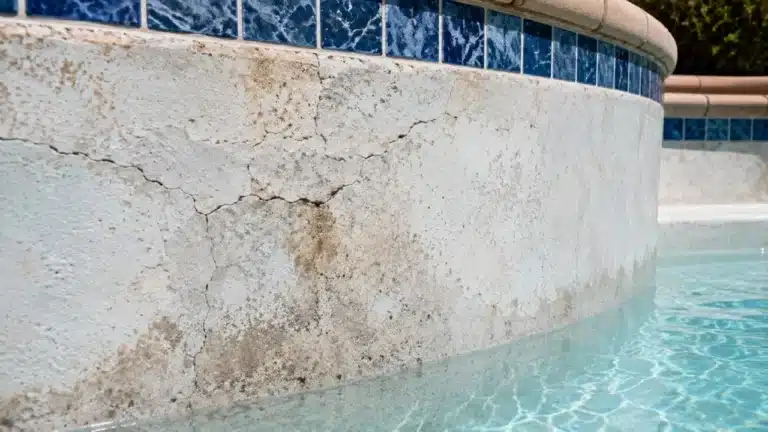
Heat waves often make existing surface problems more obvious. Staining can look worse in warm water, scale builds faster when chemistry shifts, and worn plaster feels rougher when people spend long days on the steps and benches. Signs worth noting:
- rough or abrasive areas that remain after the water is balanced and brushed;
- stains that do not brush away or keep returning;
- flaking, chipping or hollow-sounding areas;
- cracks, or a water level that drops faster than evaporation would explain.
Some of these are maintenance issues and some point to wear in the finish. Our article on why a pool surface feels rough explains the difference between scale and etched plaster, and leak or evaporation explains how to check water loss.
After the heat passes
Once temperatures return to normal, rebalance the water fully, clean the filter, and take a careful look at the surface. That is the easiest time to decide whether anything needs attention before the next hot spell. Isolated damage can often be handled with a localized surface repair; widespread wear is when resurfacing or replastering is usually evaluated.
Heat varies across San Diego County
San Diego County’s microclimates mean the same heat wave can affect two pools very differently. Coastal pools often get relief from the marine layer, while inland valleys and desert communities see much higher temperatures and faster evaporation. If your pool is inland, expect to test more often and watch the water level more closely during hot spells.
For example, during the early-August 2026 heat wave the National Weather Service issued a heat advisory for coastal areas and an extreme heat warning for inland valleys and desert communities, as reported by the San Diego Union-Tribune. Advisories like these are a useful cue to start the routine above.
For how heat affects steps, walking surfaces and water loss, see how San Diego heat affects pool surfaces and water chemistry. For humid and stormy late-summer weather, see heat, humidity and pool surface care.
Frequently Asked Questions
Why does my pool chlorine drop faster during a heat wave?
Higher water temperatures and strong sun break chlorine down faster, and more swimmers add sunscreen, oils and debris that consume it. Testing more often and adjusting sooner prevents cloudy water and algae.
Can extreme heat damage pool plaster or make it feel rough?
Heat does not damage plaster directly, but it speeds up chemistry swings. Scale can build up and make the surface feel rough, and aggressive water can etch it over time. Keeping pH, alkalinity and calcium in range protects the finish.
Should I run my pool pump longer when it is over 100 degrees?
Often, yes. Longer circulation helps keep the water sanitized and clear during extreme heat and heavy use. The right run time depends on your pool size and equipment.
What is the fastest way to prevent algae during a heat wave?
Keep chlorine in range, brush the steps and corners, run the pump long enough and clean the filter. Act before the water turns cloudy.
What are signs my pool needs resurfacing after a hot summer?
Widespread roughness that remains after the water is balanced, stains that keep returning, flaking or hollow areas, and visible cracking. A single rough patch or light scale is usually a maintenance issue rather than a reason to resurface.
Planning ahead for the next hot spell
A consistent heat-wave routine prevents most problems. If your pool’s surface still feels rough, looks stained or keeps fighting you on chemistry after the basics, Baja Pool Plaster works on existing pools across San Diego County and can evaluate the finish. You can request a free written estimate.