Water supply is a recurring concern in Southern California, and pools are a visible part of outdoor water use. San Diego County imports much of its water, and part of that supply comes from the Colorado River, so decisions about the river and periods of drought can lead water agencies to ask customers to conserve. For pool owners, the most useful response does not depend on any single policy: keep the water you already have, find leaks early, reduce evaporation and plan any draining and refilling carefully.
This guide covers where pools lose water, how to tell evaporation from a leak, what to consider before draining and refilling, and how resurfacing and repair decisions fit into a water-conscious approach to an existing pool.
Why water supply matters to pool owners
When supplies tighten, water agencies may raise rates, increase conservation messaging or adopt restrictions on outdoor water use. Rules differ between water providers and change over time, and some agencies have at times limited draining and refilling pools during drought. Before planning any work that involves draining a pool, check the current rules with your own water provider rather than relying on general articles, including this one.
Where pools lose water
- Evaporation: usually the largest source of loss, and it rises with heat, sun, wind and low humidity.
- Leaks: in plumbing lines, fittings, skimmers, lights, returns, or through cracks and failing areas in the shell and surface.
- Maintenance practices: frequent backwashing, splash-out, and draining to correct water chemistry that has been allowed to drift too far.
Evaporation versus a leak
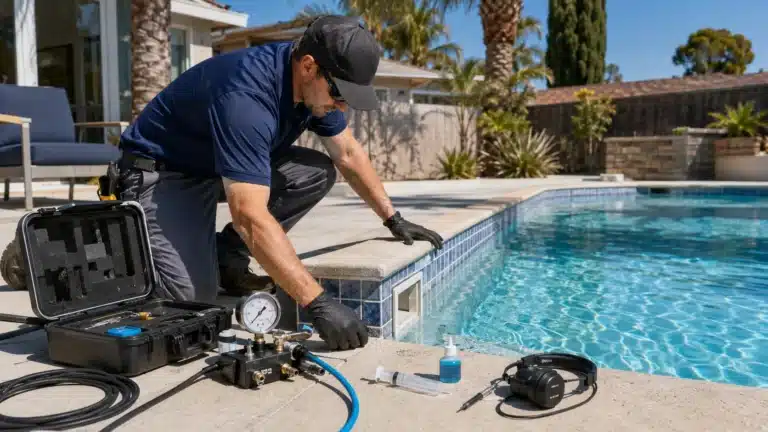
In hot, dry or windy weather a pool can lose a noticeable amount of water to evaporation alone, so a dropping level is not automatically a leak. Warning signs of a leak include loss that is faster than usual for the weather, loss that continues on cool or calm days, loss that changes when the pump runs, and wet spots, soft ground or cracks near the pool.
The bucket test compares the pool’s loss with evaporation from a bucket of pool water placed on a step. Our guide to telling a leak from evaporation explains how to run it, and common causes of pool leaks covers where leaks are usually found. If the pool is losing more than the bucket, leak detection is the next step. Fixing a leak is almost always better done sooner than later, because a leak wastes water every day and can get worse.
Reducing evaporation
- Use a properly fitted pool cover when the pool is not in use. Covers can reduce evaporation substantially.
- Keep the water level where it should be rather than overfilling, which increases splash-out.
- Where practical, windbreaks such as fencing or planting reduce wind across the water.
- Lower the temperature on heated pools and spas when they are not being used.
Draining and refilling: what to consider
Resurfacing, replastering and some repairs require draining the pool, and a refill uses a full pool’s worth of water. To make that water count:
- check your water provider’s current rules on draining and refilling before scheduling the work;
- plan the work so the pool is drained once, with repairs such as cracks and leaking fittings handled during the same drain rather than later;
- follow a proper start-up routine after new plaster, so the finish is not damaged early and does not need correcting later;
- keep water chemistry in balance, because water that drifts too far can end up needing partial draining to correct.
How resurfacing and repair decisions fit in
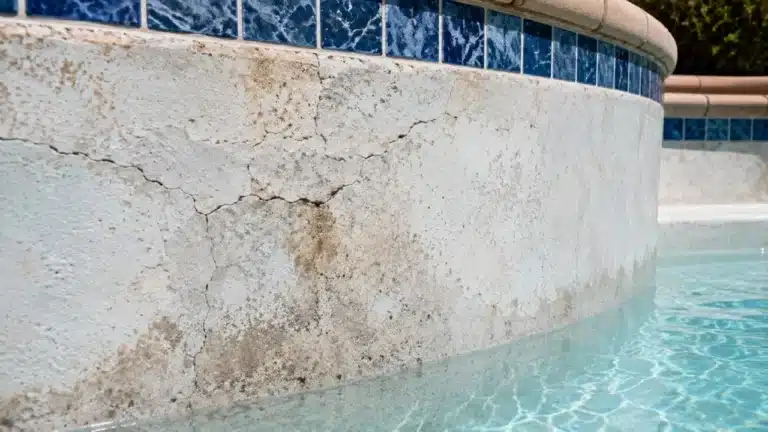
A pool finish does not stop evaporation, and resurfacing alone will not fix a plumbing leak. What a sound, well-bonded surface does is help the pool hold water reliably and keep its chemistry stable. A finish that is cracked, delaminating or badly worn can contribute to seepage and to repairs that require draining. In practice:
- if water loss is higher than evaporation, find the leak first, before deciding on surface work;
- if the finish is failing, plan resurfacing ahead so it happens once, with any needed repairs, rather than as an emergency;
- if the surface is in good condition, focus on evaporation, leak checks and chemistry; there is no water-saving reason to resurface a sound finish.
See pool surface repair for localized work and signs a pool needs resurfacing for when a full resurface is usually considered.
For HOAs and properties with more than one pool
Several pools multiply both evaporation and the impact of any leak. A written routine helps: regular level checks at each pool, covers where they are practical, prompt leak investigation, and resurfacing planned across the properties so each pool is drained only when necessary.
Background: the 2026 Colorado River decision (historical note)
As an example of how river policy can change, in August 2026 the U.S. Department of the Interior issued a Record of Decision for Colorado River operations. As reported by Times of San Diego at the time, it required the Lower Basin states of Arizona, California and Nevada to reduce their combined use by 1.25 million acre-feet per year for two years, with possible further restrictions, while the Upper Basin states of Colorado, Utah, New Mexico and Wyoming were asked to conserve voluntarily, supported by $100 million in federal funding. Nevada filed a lawsuit challenging the plan. The report did not describe any specific changes to San Diego pool rules. Because these arrangements can change, check with your water provider for the rules that currently apply to you.
Frequently Asked Questions
Are there restrictions on filling or refilling a pool in San Diego?
Rules vary by water provider and can change during drought. Some agencies have limited draining and refilling pools at times. Check the current rules with your water provider before draining a pool.
What is the fastest way to reduce pool water loss?
Fix any leaks and cover the pool when it is not in use. Run a bucket test first to find out whether the loss is evaporation or a leak.
Does resurfacing a pool save water?
Not by itself, and it does not stop evaporation. Resurfacing helps when the existing finish is cracked, delaminating or failing in a way that contributes to seepage or to repeated repairs that require draining. A sound finish does not need resurfacing for water reasons.
Should I delay pool repairs during water restrictions?
Usually not for leaks, since a leak wastes water every day. For work that requires draining, check your water provider’s current rules and plan the timing so the pool is drained only once.
What should HOAs with several pools do?
Check water levels at each pool regularly, use covers where practical, investigate unusual loss promptly, and plan resurfacing across the properties so each pool is drained only when necessary.
A water-conscious plan for an existing pool
Keeping water in the pool comes down to finding leaks early, limiting evaporation and planning any draining carefully. If your pool is losing more water than it should, or its finish is failing, Baja Pool Plaster works on existing pools across San Diego County, including leak detection, crack repair, surface repair and resurfacing. You can request a free written estimate.