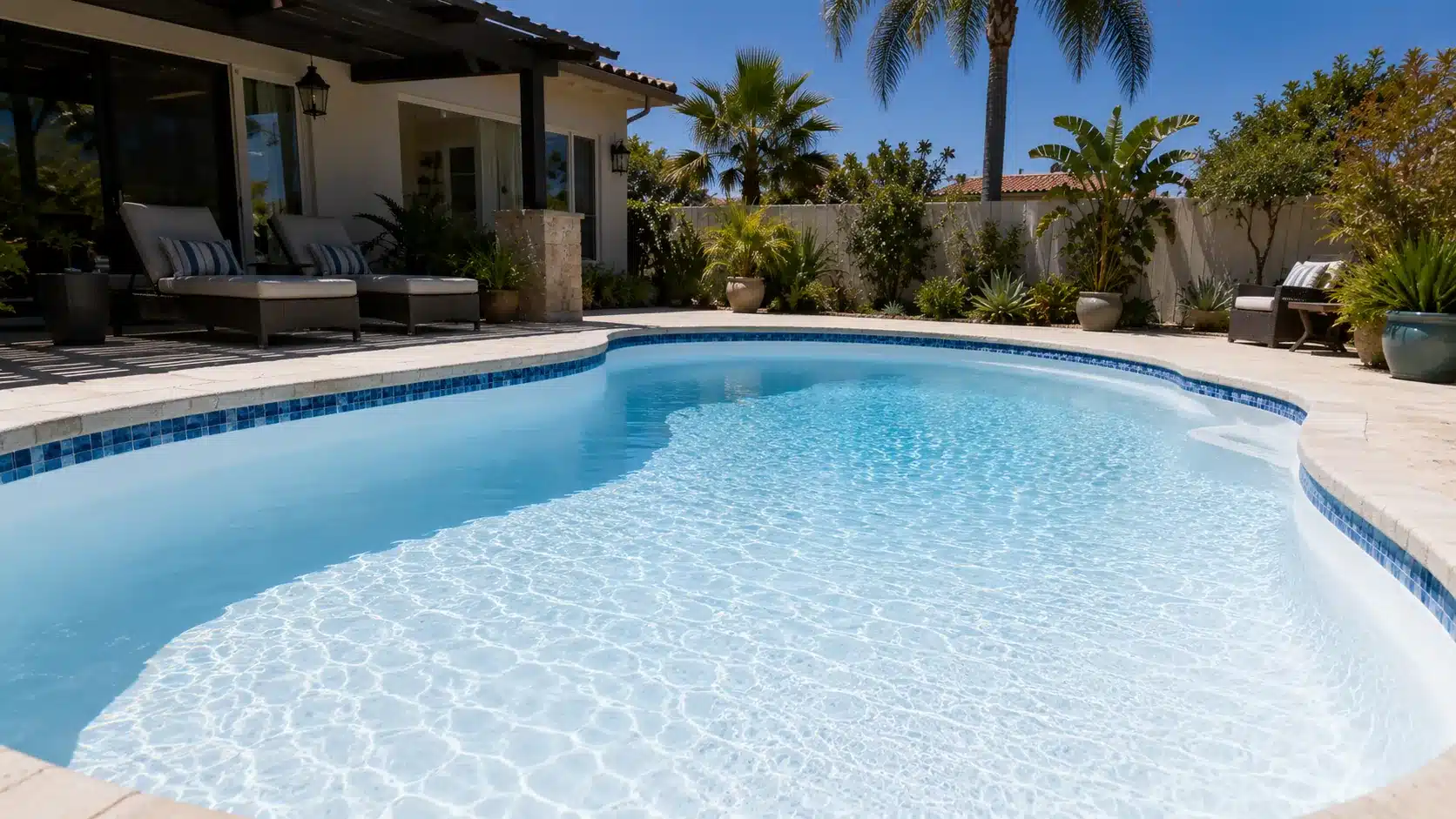
A pool at a short-term rental works harder than a pool at a family home. Guests change every few days, many of them are unfamiliar with the pool, and the water sees more swimmers, more sunscreen and more foot traffic in a week than some backyard pools see in a month. In Encinitas, where many rentals sit close to the coast and pools are used for much of the year, that extra use shows up first on the pool surface: the plaster, the steps, the waterline tile and the water chemistry that protects them.
This guide is for owners and managers of short-term rental properties with a pool in Encinitas and the rest of North County San Diego. It covers what heavy rental use does to a pool surface, how often to inspect, which problems can be handled with maintenance or a localized repair, and when it is worth having the surface evaluated for resurfacing or replastering.
Why rental pools wear differently
A pool surface ages with time, water chemistry and use. A short-term rental speeds up the third factor and makes the second harder to control:
- Higher bather load: more swimmers bring more sunscreen, body oils and debris, which increases chlorine demand and makes pH and alkalinity drift faster between service visits.
- Unfamiliar users: guests do not know which step is slippery or which bench is rough, and they rarely report small problems until a review mentions them.
- Short gaps between stays: there is little time to brush, rebalance and let the water settle before the next group arrives.
- Heavy use of steps, benches and shelves: these areas carry most of the foot traffic, so roughness, scale and small chips usually appear there first.
None of this means a rental pool will fail early. It means small surface and chemistry problems surface sooner and are noticed by more people, so a regular inspection routine matters more than it does at an owner-occupied home.
Surface problems guests notice first
Rough areas on steps and benches
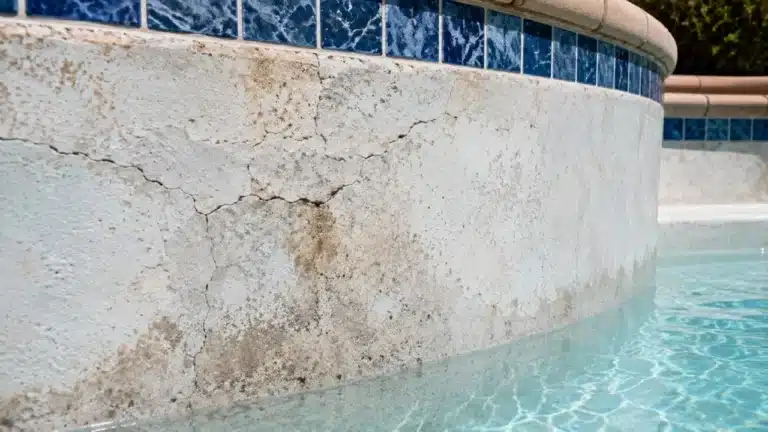
Roughness is the most common complaint about pool surfaces. It usually comes from one of two causes: calcium scale sitting on top of the plaster, or etching that has worn the plaster itself. Scale can often be treated with water-chemistry correction and targeted cleaning; etched or worn plaster cannot be restored by cleaning. Our article on why a pool surface feels rough explains how to tell the two apart.
Stains and discoloration
Stains that appear quickly on a rental pool are often organic (leaves, debris, sunscreen residue) or metal-related, and many respond to cleaning and chemistry. Stains that return or cover large areas can indicate a finish that has become porous with age. See what causes stains on the bottom of a pool for the common sources.
Cracks, chips and hollow spots
Fine surface crazing is common in older plaster and is often cosmetic. Chips at step edges, sharp spots, delamination (plaster separating from the layer beneath it) and cracks that are growing or leaking are different: they can cut feet and tend to get worse with heavy use. These are worth having looked at before the next busy stretch.
Cloudy water and algae on steps
Cloudy water and algae in corners or on steps are usually a chemistry and circulation problem rather than a surface problem, but a rough or porous finish gives algae more places to hold on and makes it harder to keep clean.
Water chemistry between guest stays
Balanced water protects plaster. Water that is aggressive (low pH, low alkalinity or low calcium) slowly dissolves the surface and leaves it rough; water that is scale-forming (high pH or high calcium, often made worse by evaporation) deposits crusty scale on the surface and tile line. For rental pools:
- Test sanitizer and pH before each new arrival, and after a heavy-use stay.
- Test total alkalinity and calcium hardness at least weekly during busy periods. Commonly used targets for plaster pools are a pH of about 7.4–7.6, total alkalinity of roughly 80–120 ppm and calcium hardness of roughly 200–400 ppm; your pool professional may adjust these for your finish and water.
- Brush the walls, steps and benches regularly, especially where guests sit and stand.
- Recheck the balance after topping off water, since fresh water changes the chemistry.
Our pool surface maintenance guide covers the routine in more detail.
A practical inspection schedule
- Between stays: a quick walk-around. Check the steps and benches by hand for sharp or rough spots, look for new chips, stains or debris, and confirm the water is clear.
- Monthly during busy months: a closer look at the waterline tile, coping, skimmer openings, return fittings and any areas that were repaired before. Note changes in water level that are larger than usual.
- Once a year, before the busiest season: a professional look at the surface and structure, so any repair or resurfacing can be scheduled during a gap in bookings instead of in an emergency.
If the pool seems to be losing more water than usual, rule out a leak before assuming evaporation. Our guide to telling a leak from evaporation explains the bucket test.
When a localized repair may be enough
Not every problem calls for a new surface. A targeted repair is often reasonable when:
- the damage is limited to a few areas, such as a chipped step edge or a small delaminated patch;
- the rest of the plaster is sound, smooth and bonded;
- roughness is caused by scale that responds to chemistry correction and cleaning.
Patches may not match the color of older plaster exactly, which matters more on a rental listing than in a private backyard. A contractor can tell you how visible a repair is likely to be. See pool surface repair for what localized work involves.
When to evaluate resurfacing or replastering
It is worth having the whole surface evaluated when problems are widespread rather than isolated, for example:
- roughness across large areas that does not improve after the water is balanced and brushed;
- several delaminated or hollow-sounding areas;
- stains that keep returning across the floor and walls;
- repeated patching of the same pool;
- a finish that is simply at the end of its life.
Resurfacing means draining the pool and several days of work, followed by a start-up period, so for a rental it is usually best planned for a slower booking window. Our article on signs a pool needs resurfacing goes through the indicators in more detail.
Safety considerations for rental pools
A rental pool is used by people who do not know it. Surface condition is part of safety: sharp plaster, chipped step edges and slippery algae are injury risks. Beyond the surface:
- keep gates, fencing and any other barriers in working order, and follow the pool safety requirements that apply to your property;
- post clear pool rules and make depth changes and steps easy to see;
- make sure lighting works if guests may swim after dark;
- check with your insurer and the city about any requirements for rental properties with a pool.
Short-term rental rules in Encinitas (historical note)
Encinitas has regulated short-term rentals for years, and its rules have changed over time. For example, in April 2026 the City Council voted 3–2 to keep its three-night minimum stay for certain vacation rentals rather than accept a California Coastal Commission modification to a two-night minimum, as reported by the San Diego Union-Tribune. Because rules can change, check the City of Encinitas for the current short-term rental requirements before making plans. The pool-care guidance in this article applies regardless of the minimum stay.
Frequently Asked Questions
How often should a short-term rental pool be inspected?
A quick check of the water and the steps between stays, a closer monthly look at tile, fittings and repaired areas during busy months, and a professional inspection once a year before the busiest season is a practical routine.
Why does a rental pool’s plaster wear faster?
Heavier use increases sanitizer demand and makes water chemistry drift faster, and aggressive or scale-forming water is what roughens and stains plaster over time. More foot traffic on steps and benches also wears those areas sooner.
Can rough spots be fixed without resurfacing the whole pool?
Often, yes. Roughness caused by scale can usually be improved with chemistry correction and cleaning, and a few damaged areas can be repaired locally. Widespread roughness from worn or etched plaster is the point where resurfacing is usually evaluated.
When is the best time to resurface a rental pool?
During a slower booking period. Resurfacing involves draining, several days of work and a start-up period, so planning it ahead avoids cancelling stays or rushing the curing and start-up process.
Does this apply only to Encinitas?
No. The same guidance applies to any heavily used pool in San Diego County. Encinitas is the focus because many of its rental properties have pools that are used for much of the year.
Planning ahead for a heavily used pool
A rental pool that is inspected regularly and kept in balance rarely produces surprises. When the surface does need attention, knowing early lets you choose between a repair and resurfacing on your schedule rather than your guests’. Baja Pool Plaster works on existing pools across San Diego County, including resurfacing, replastering, surface repair, crack repair and leak detection. If your pool needs a closer look, you can request a free written estimate.