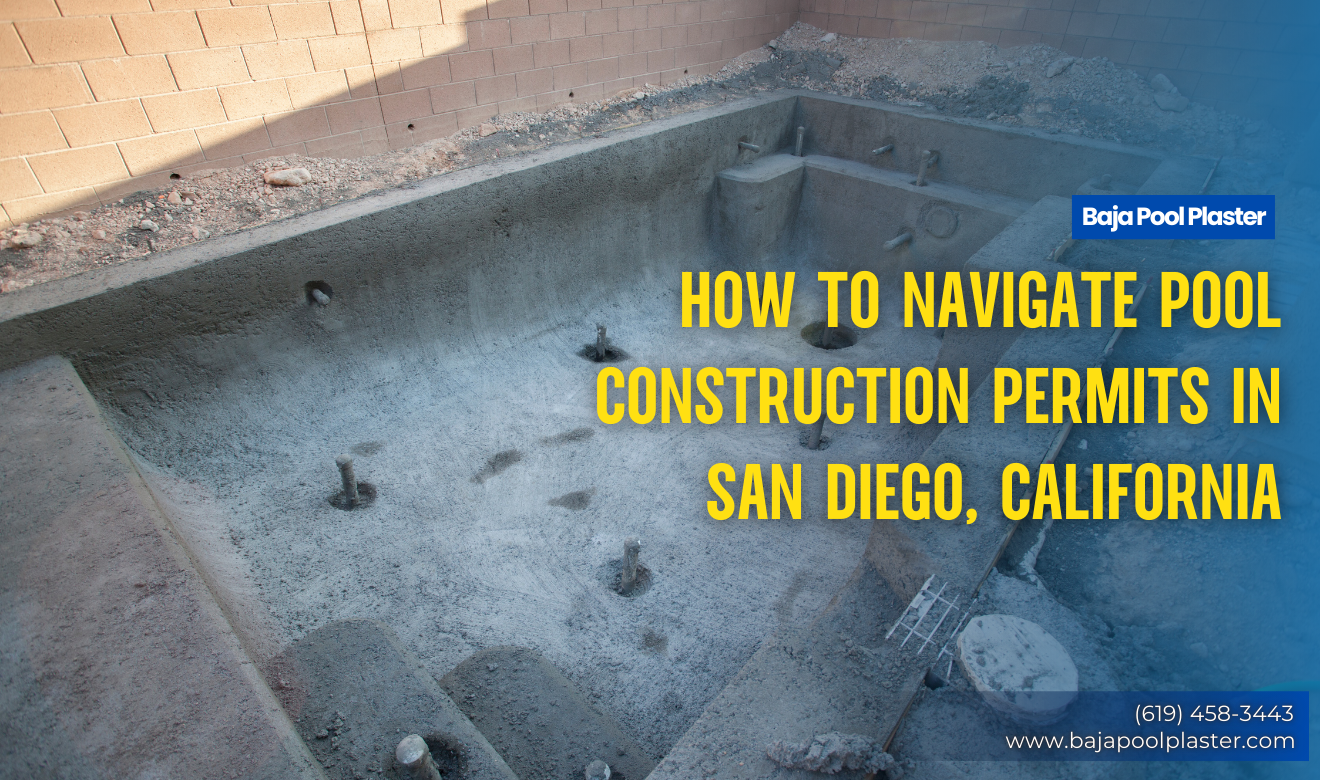
To navigate pool construction permits San Diego, start by confirming your pool type (in-ground, above-ground, or spa), then submit plans to the City or County agency that governs your address, and schedule required inspections as the work progresses. For example, if you live within the City of San Diego, you’ll typically apply through the City’s Development Services process, but if you’re in an unincorporated area like parts of El Cajon or Spring Valley, the County rules and portals may apply instead. You’ll usually need a site plan showing the pool location and distances to property lines, construction details like pool depth and equipment placement, and safety features such as a compliant pool barrier. If your project includes electrical for a pump, gas for a heater, or plumbing changes for a spa, expect separate trade details and inspections—like bonding/grounding checks for electrical and pressure tests for gas lines. Once permits are issued, common inspection points include excavation/steel, plumbing/electrical rough-in, barrier installation, and final approval before use.
Who Issues Pool Permits in San Diego (City vs. County)?
One of the biggest “gotchas” with pool construction permits San Diego is that the rules depend on exactly where your property sits on the map.
Use this quick rule of thumb
- City of San Diego address: Permits typically run through the City’s Development Services Department (DSD) and its plan review/inspection process.
- Unincorporated San Diego County address: Permits usually go through the County’s Planning & Development Services (PDS).
- Other incorporated cities: Places like La Mesa, El Cajon, Chula Vista, Poway, etc. have their own building departments.
If you’re ever unsure, check your property tax bill jurisdiction, your utility billing city, or run your address through your local agency’s “permit jurisdiction” tool. Correct jurisdiction selection can save days (or weeks) when pursuing pool construction permits San Diego.
What Plans and Documents Are Typically Required?
Most agencies want enough detail to verify safety, code compliance, and that your pool won’t create drainage, utility, or property line conflicts. For pool construction permits San Diego, expect requests like:
Core plan set (commonly required)
- Site plan (plot plan): Pool/spa location, setbacks to property lines, house footprint, easements, retaining walls, slopes, and drainage flow direction.
- Pool engineering/construction details: Shell type (shotcrete/gunite, fiberglass, vinyl), thickness/steel schedule, depth profile, steps/benches, and bonding points.
- Equipment layout: Pump, filter, heater, controller, SWG (salt system), and distances to structures/openings as applicable.
- Safety barrier plan: Fence/gate specs, self-closing/self-latching hardware, door alarms or approved alternatives where permitted.
Trade-specific items (as applicable)
- Electrical: Load details, equipment disconnects, GFCI protection, conduit runs, and bonding/grounding notes.
- Gas: Pipe sizing, total BTU load, material type, regulator details, and pressure test requirements.
- Plumbing: Suction/return layout, anti-entrapment compliance, pipe sizing, and any sewer/drain tie-ins for certain features.
Agencies may also request soils reports or engineering depending on slope conditions, expansive soils, proximity to retaining walls, or if the pool is near a bluff. These “site conditions” items are a common reason pool construction permits San Diego take longer than homeowners expect.
Common Inspections for Pool Construction Permits in San Diego
Inspections vary by jurisdiction and project scope, but most pool construction permits San Diego follow a similar inspection sequence.
Typical inspection checkpoints
- Pre-gunite / steel (rebar) inspection: After excavation and steel placement—before shotcrete/gunite.
- Bonding/grounding inspection: Verifies equipotential bonding grid, bonding to rebar, and required electrical safety measures.
- Rough plumbing inspection: Pressure tests on pool plumbing lines before burial/encasement where required.
- Gas pressure test (if heater/fire feature): Confirms gas line integrity and sizing compliance.
- Deck/flatwork or drainage (when applicable): Checks slope away from structures and drainage management.
- Barrier/fence inspection: Gate swing direction, latch height, climb-resistant zones, and door protection methods if used.
- Final inspection: Overall code compliance prior to use (and sometimes prior to filling, depending on agency and circumstances).
Scheduling inspections promptly—and not covering work too early—is one of the fastest ways to keep pool construction permits San Diego from becoming the reason your build timeline slips.
Setbacks, Easements, and Property Lines: Where Projects Get Stuck
Many permit delays happen because the site plan doesn’t fully account for real-world constraints. With pool construction permits San Diego, reviewers commonly flag:
- Setback conflicts: Pool shell, coping, or equipment too close to property lines or structures.
- Utility easements: Pools and decks proposed within easements (common along side yards or rear property lines).
- Overhead power lines: Clearance issues, especially when a crane is needed for excavation or shell placement.
- Drainage concerns: Redirecting runoff to a neighbor’s property can trigger corrections or civil requirements.
Practical tip: a current boundary survey (or at least clearly verifiable property line dimensions) can prevent costly redesigns mid-permitting—one of the simplest ways to streamline pool construction permits San Diego.
How Long Do Pool Permits Take in San Diego?
Timelines depend on jurisdiction, plan completeness, reviewer workload, and whether your project includes structural retaining, significant grading, or complex MEP (mechanical/electrical/plumbing). For a real-world sense of build pacing (beyond just permits), it helps to see how long it takes to build a swimming pool when design, approvals, and construction steps are mapped out.
Typical factors that speed up approval
- Complete plans with consistent dimensions (site plan matches construction details).
- Clear barrier compliance notes and gate hardware specs.
- Accurate equipment specs (pump/heater models, locations, and clearances).
- Early identification of gas meter capacity upgrades (if needed).
Typical factors that slow down approval
- Missing easement info or unclear property lines.
- Unaddressed drainage/grade changes.
- Electrical plan missing bonding/grounding callouts.
- Heater added late, triggering gas and electrical revisions.
Because timelines vary, the best strategy is to treat pool construction permits San Diego like a “mini-project” of its own: gather documents early, confirm jurisdiction, and build in time for corrections.
Permit Cost Drivers: Why Prices Vary So Much
People often search pool construction permits San Diego hoping to find a single flat permit fee. In reality, costs often stack based on scope and valuation.
Common cost drivers
- Pool type and size: Larger pools typically increase plan review complexity and valuation.
- Heaters and gas lines: Adds mechanical and fuel gas review plus additional inspections.
- Electrical upgrades: Subpanels, new circuits, or long conduit runs may add permitting layers.
- Retaining walls or grading: Can trigger separate permits/engineering.
- Accessory structures: Patio covers, outdoor kitchens, and shower plumbing can add requirements.
Instead of hunting for one number, ask your contractor (or designer) for a permit matrix listing expected permits and trades. This approach keeps pool construction permits San Diego predictable and reduces surprise fees.
Featured Snippet-Style Checklist: What to Verify Before You Submit
If you want to submit with fewer corrections, here’s a simple pre-submittal checklist tailored to pool construction permits San Diego:
- Pool location shown with setbacks to all property lines.
- Easements and utilities accounted for (water, sewer, gas, electric).
- Barrier type selected and drawn (fence, gate, alarms where allowed).
- Equipment pad location and service clearances shown.
- Electrical plan includes GFCI, bonding/grounding notes, and disconnects.
- Gas sizing provided (if heater/fire features).
- Drainage plan indicates slope away from structures and proper runoff routing.
Most rejected or delayed pool construction permits San Diego applications are missing one or two of the items above.
Inspection Day Reality: How to Avoid a “Fail and Reinspect”
Even with perfect plans, inspection issues can slow your project. Here are common field-level problems that trigger reinspection under pool construction permits San Diego:
Most common reinspection triggers
- Bonding not continuous (missed bond points on steel, ladders/handrails, or equipment).
- Gas test not ready (wrong pressure, missing gauge, or inaccessible piping).
- Barrier not compliant (gate hardware, latch height, swing direction, or climbable elements nearby).
- Work covered too early (trenches backfilled before rough inspection approval).
Simple best practices
- Take timestamped photos of steel, bonding, and plumbing runs before covering.
- Have product spec sheets on-site for gates, alarms, heater, and pump.
- Confirm the inspection type requested matches the work stage (steel vs. rough electrical, etc.).
These small steps can keep pool construction permits San Diego moving forward without stop-start delays.
When a “Pool Permit” Isn’t the Only Permit You Need
Many homeowners are surprised that pool construction permits San Diego may involve multiple permits or reviews. A pool project can touch structural, electrical, plumbing, gas, and sometimes grading.
Here’s a simplified view of what may be involved:
| Scope Item | Why It Triggers Review | Typical Inspection |
|---|---|---|
| Pool/Spa Shell | Structural integrity, setbacks, safety notes | Steel / pre-gunite |
| Electrical (pump, lights) | GFCI protection, bonding/grounding, disconnects | Bonding + rough/final electrical |
| Gas (heater) | Pipe sizing, BTU load, safe pressure | Gas pressure test + final |
| Barrier / Fence | Drowning prevention compliance | Barrier inspection |
Understanding these “add-on” components early makes pool construction permits San Diego far less stressful—especially if you’re adding a heater, automation, or new pool lighting.
Remodels, Repairs, and Replastering: Do You Need a Permit?
Not every project triggers pool construction permits San Diego, but many upgrades do—especially when safety or MEP systems are impacted.
Projects that often require permits
- New pool or spa construction
- Adding or relocating a heater (gas or electric)
- New pool lights or major electrical changes
- Major plumbing reroutes or equipment pad relocation
- Structural changes (e.g., changing depth, adding a spa, major bond beam work)
Projects that may or may not require permits (jurisdiction-dependent)
- Resurfacing or replastering (when not changing structure/MEP)
- Deck repairs (if not changing drainage or adding structures)
- Equipment replacement “like for like”
If your project is more of a restoration than a new build, it may still be smart to talk to a pro who understands pool construction permits San Diego and can flag when a “simple upgrade” quietly becomes a permit-required scope. If you’re already troubleshooting leaks, surface failure, or equipment issues, consider scheduling San Diego Pool Repair to identify what’s cosmetic versus what could affect compliance and inspections.
Safety and Code Basics: Why Barriers Matter So Much
Barrier compliance is one of the most consistent make-or-break items for pool construction permits San Diego. Agencies emphasize barriers because drowning prevention is a major public safety issue.
Barrier elements inspectors focus on
- Fence and gate height and gaps
- Self-closing, self-latching gate operation
- Latch placement and access from the outside
- Climb hazards near the barrier (planters, furniture zones, adjacent walls)
Because barrier rules can be technical, align your design with code-compliant hardware from the start. Changing a gate after a failed inspection is one of the most common “small” expenses that snowballs during pool construction permits San Diego.
Choosing a Contractor Who Understands Permitting (Not Just Building)
A big part of a smooth experience with pool construction permits San Diego is working with someone who treats plans, submittals, and inspections as a core part of the job—not an afterthought.
What to look for
- Clear scope definition: who pulls permits, who schedules inspections, and who meets the inspector onsite.
- Trade coordination: electrical, gas, and plumbing work sequenced to pass inspections.
- Documentation habits: as-builts, pressure test records, and equipment specs ready when needed.
- Local familiarity: knows common correction comments from your specific jurisdiction.
And if you want a general primer on what a swimming pool includes in terms of components and design types, it can help you make more informed plan decisions before you submit.
From Paperwork to Pool Day: The Smart Way to Finish Strong
Getting pool construction permits San Diego doesn’t have to feel like a maze. The fastest path is usually the simplest: confirm jurisdiction, submit complete plans, and treat inspections like milestones you prepare for—not surprises you react to. When your site plan is accurate, safety barrier details are clear, and your electrical/gas/plumbing scope is documented up front, you dramatically reduce corrections and reinspections.
Strong results come from strong process. Contractors and repair teams who routinely work under California building and safety expectations—and who coordinate steel, bonding, gas testing, and barrier compliance—tend to deliver smoother approvals and fewer delays. That experience shows up in the details: cleaner inspections, fewer change orders, and a pool you can enjoy with confidence once final sign-off is complete under your pool construction permits San Diego.
Frequently Asked Questions
Make Pool Permits the Easy Part of Your Build
Permits can feel like the slowest, most confusing piece of building a pool—especially when City vs. County rules, setbacks, easements, and trade inspections all collide at once. If you want fewer corrections, smoother inspections, and a clear plan from “submit” to “final,” Baja Pool Plaster can help you navigate the process and keep your project moving in the right direction.