
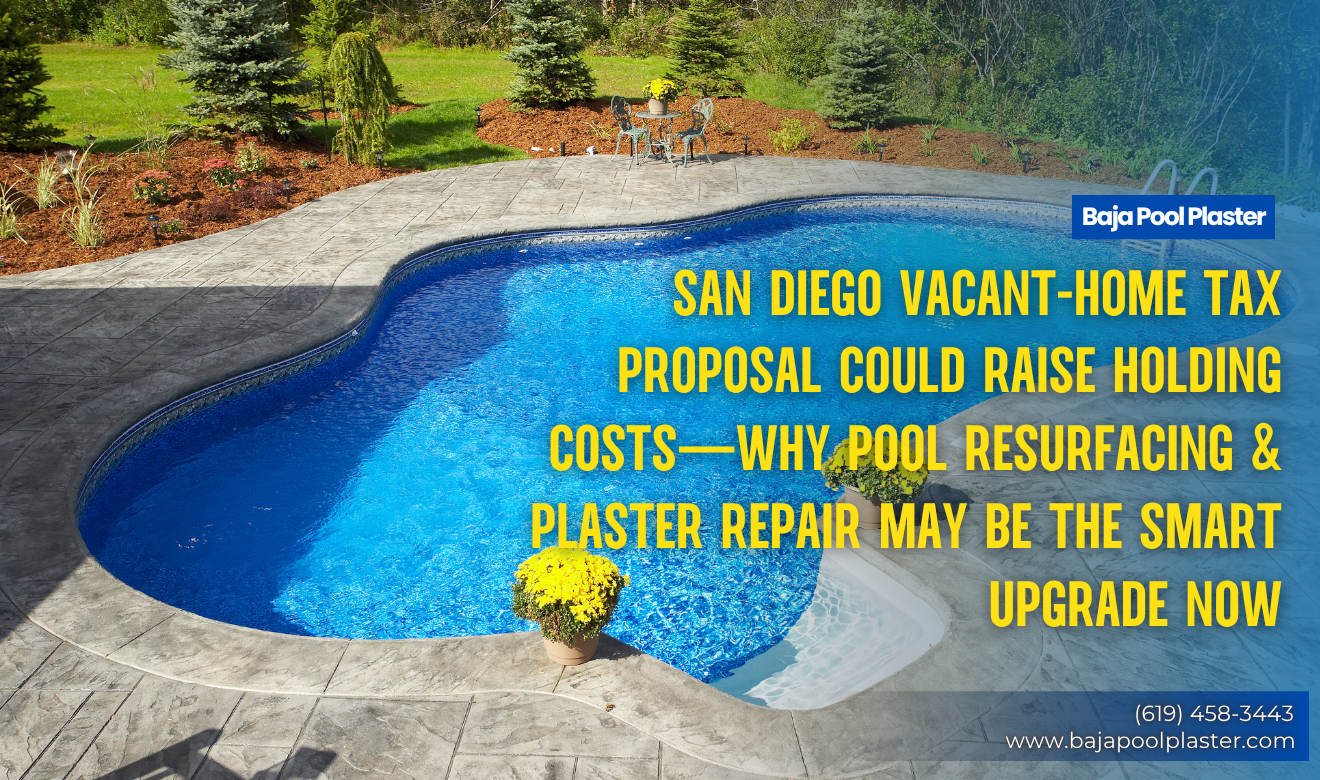
San Diego is weighing a new proposal that could change the cost of owning certain homes—especially properties that sit vacant or aren’t used as a primary residence. If passed, the measure would add an additional tax intended to push more housing supply back into active use and generate revenue for public needs. For property owners across San Diego, this kind of policy shift can quickly influence household budgets, renovation timelines, and decisions about improving a home before renting or selling.
And for many San Diego homeowners—particularly those with backyard amenities—one of the most common “value-protecting” upgrades is the swimming pool. When taxes and carrying costs rise, delaying maintenance often becomes the default move. But putting off pool resurfacing, plaster repairs, or leak-related fixes can create bigger, more expensive problems.
Why San Diego’s proposed vacant-home tax is getting attention
Who it could impact
The proposal centers on certain non-primary residences and homes that remain vacant for extended periods. That generally includes second homes, investment properties, and certain underutilized residences—depending on how the final language defines “vacant” and how exemptions are structured.
What the measure aims to do
The initiative is designed to encourage owners to place unused housing back into the market and to create a new revenue stream. Supporters argue it can help address housing pressures; critics often question enforcement, unintended consequences, and whether it will meaningfully increase available homes.
Where it applies
This is a San Diego-focused measure, meaning the financial and compliance implications would be local to the City of San Diego. That local scope matters because regional property values, rental demand, and neighborhood vacancy patterns vary widely across San Diego County.
When it could take effect
The timeline depends on the local legislative and/or voter process. If approved, implementation would likely include a rollout period with definitions, compliance procedures, and reporting requirements before assessments begin.
Why it matters right now
In San Diego, ownership costs already include property taxes, insurance, utilities, and maintenance—plus rising costs for repairs and labor. Adding a new vacancy-related tax could influence decisions like whether to renovate now, rent sooner, or sell—especially for owners holding a home that’s not their primary residence.
The overlooked ripple effect: deferred property upkeep (especially pools)
When a new tax proposal enters the conversation, property owners often react by tightening discretionary spending. In practice, that can mean postponing projects that “still work” but are trending toward failure—like aging pool plaster, cracks in a spa, or worn surfaces that can start shedding, staining, or harboring algae.
For San Diego owners of non-primary homes, vacant properties can be especially vulnerable because small pool issues go unnoticed until they’re severe. A pool that sits unattended can develop surface deterioration faster due to chemical imbalance, heat, and filtration issues. By the time someone visits, the damage may require more extensive work than a standard replaster.
A swimming pool contractor’s perspective: how to protect value during policy uncertainty
From a swimming pool contractor standpoint, the smartest play during cost uncertainty is to prevent compounding damage. Pool plaster and interior finishes are not just cosmetic—they protect the pool shell and influence water chemistry stability. When plaster is failing, the pool often becomes harder (and more expensive) to maintain, which can escalate operating costs at the same time other ownership costs rise.
In San Diego, where outdoor living is a major driver of home appeal, a pool in visibly poor shape can reduce rental readiness and buyer confidence. If the goal is to keep a property occupied (to avoid vacancy exposure, if applicable) or to prepare it for the market, the pool becomes part of the “first impression” checklist—right alongside paint, landscaping, and flooring.
How this connects to pool plaster, resurfacing, and renovation decisions in San Diego
If San Diego’s proposed tax pushes more owners to rent, list, or renovate, pool condition becomes a practical bottleneck. A worn pool finish can slow down a rental launch, complicate inspections, and create safety concerns (rough surfaces, sharp spalling, slippery algae-prone areas). For owners trying to move quickly, proactive resurfacing can be the difference between “market-ready” and “needs work.”
That’s where a specialized swimming pool contractor like Baja Pool Plaster fits naturally into the conversation: pool replastering and surface restoration are high-impact improvements that can stabilize ongoing maintenance costs, improve appearance, and help owners keep a property competitive in the San Diego market.
San Diego-specific considerations for pool owners with second homes or vacant properties
San Diego’s climate is pool-friendly, but it’s also unforgiving when pools are neglected. Warm weather can accelerate algae growth, and coastal conditions can introduce additional wear considerations depending on proximity and exposure. If a home is vacant or used intermittently, a pool can shift from “amenity” to “liability” quickly—higher chemical spend, equipment strain, leaks that go undetected, and finish deterioration.
Whether your property is in San Diego’s coastal communities, inland neighborhoods, or nearby suburbs, the theme is the same: if ownership costs rise, it becomes even more important to control avoidable repair escalations. A pool resurfacing plan is often more predictable and budgetable than emergency repairs after months of decline.
Actionable takeaways for San Diego property owners right now
- Review your property’s “occupancy readiness” checklist: If you may rent or sell soon, evaluate the pool finish early so it doesn’t delay timelines.
- Don’t ignore early plaster warning signs: staining that won’t brush out, rough spots, flaking, or persistent algae can indicate surface failure.
- Keep vacant-home pools on a service schedule: Regular chemical checks and equipment run-time reduce the chance of costly deterioration.
- Budget for high-ROI exterior improvements: In San Diego, pool condition strongly affects perceived property value and buyer/renter appeal.
- Get a contractor assessment before “quick fixes”: Patching symptoms can cost more long-term if the underlying finish is at end-of-life.
Frequently Asked Questions
Next step: protect your property’s pool value before small issues become expensive
If you own a second home, rental, or intermittently used property in San Diego, now is a smart time to assess the pool’s surface condition—especially as new policy proposals may influence how quickly owners choose to rent, sell, or renovate. Baja Pool Plaster helps San Diego-area homeowners evaluate plaster wear, plan resurfacing, and restore pools to a clean, durable finish that supports long-term property value.
Credits: This article is a commentary-based rewrite for informational purposes, based on this source.