
Executive Summary
Concrete pool crack repair service San Diego is only “permanent” when the contractor first proves the crack is the true leak path (not evaporation or plumbing), then matches the repair system to crack type and movement so the shell is restored as a watertight, chemically compatible structure. In San Diego conditions, durability depends on disciplined testing, proper surface prep, and movement-tolerant detailing where soils, temperature swings, and micro-seismic activity can reopen poorly repaired cracks.
Core Insights
- Verify Before You Chip: Pros prevent wasted repairs by using bucket tests, pump on/off isolation, dye testing, and level-stop behavior to confirm the leak source is the crack rather than skimmers, autofill, fittings, or plumbing.
- Classify the Crack to Choose the Correct System: Hairline finish cracks may only need route-and-seal, while leaking or moving structural cracks often require pressure injection (flexible vs. rigid resins) and sometimes crack stitching to resist reopening.
- Restart Controls Protect the Repair: Following cure schedules and rebalancing water chemistry after repair helps prevent patch damage, staining, and bond failure that can cause repeat leaks and ongoing shell saturation.
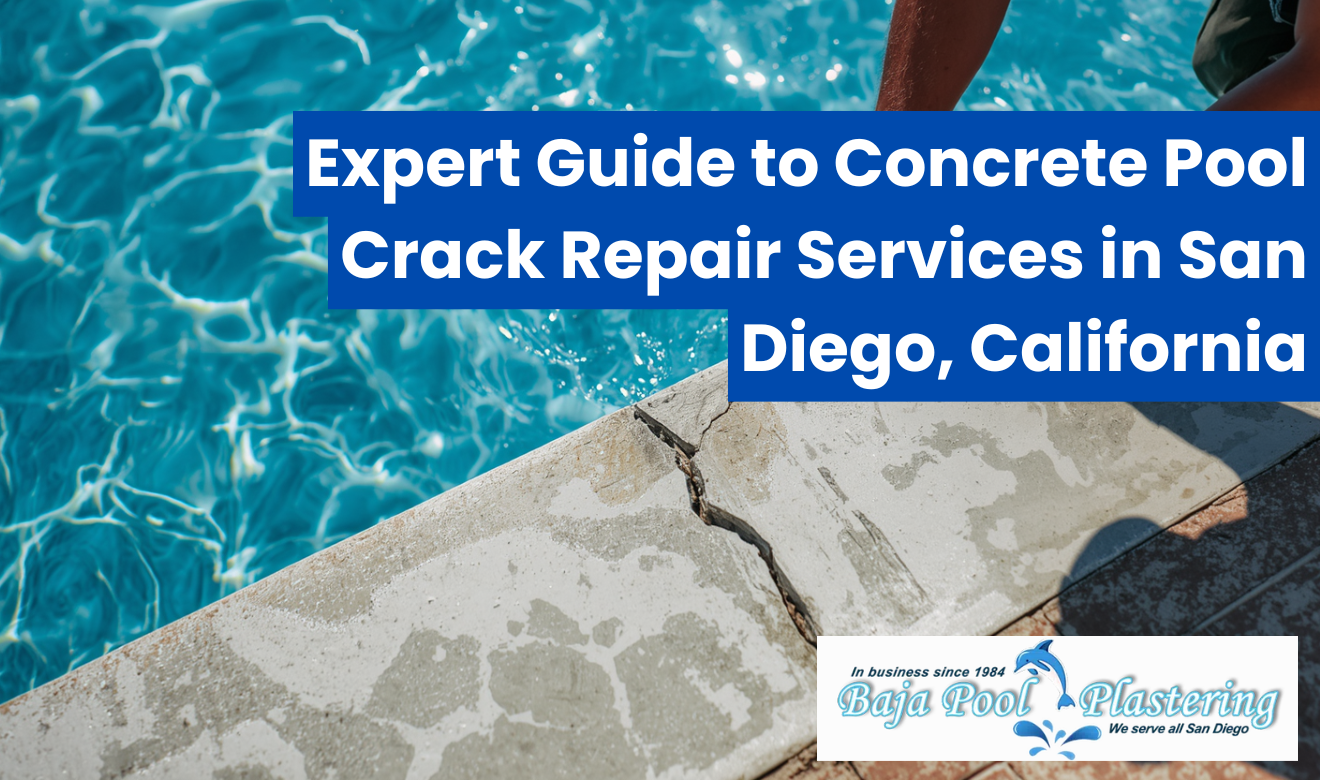
Concrete pool crack repair service San Diego is the professional process of locating, diagnosing, and permanently sealing structural or surface cracks in gunite or poured-concrete swimming pools to stop leaks and prevent further shell damage. In San Diego, common crack drivers include expansive soils in inland neighborhoods, seismic micro-movement along regional fault zones, and deck or coping shifts from temperature swings between cool marine mornings and hot afternoon sun. A proper repair starts with a controlled inspection, including dye testing for suspected leak paths, hydrostatic checks around main drains, and measuring crack width with gauges to determine if the crack is static or active. For a hairline shrinkage crack in a plaster finish, technicians often route and clean the line, then apply a compatible seal system that bonds to the concrete and resists pool chemistry. For a structural shell crack that moves or leaks, repairs may include pressure injection with flexible resins, installation of crack-stitching reinforcement, and reapplication of waterproof coating or plaster patching to match the surrounding finish. Local code and best-practice details matter, such as confirming water loss is not from skimmers, autofill lines, or return plumbing before shell work begins, and ensuring cure times and water chemistry rebalancing are handled correctly after the repair.
How Pros Confirm a Crack Is the Leak Source (Not Plumbing or Evaporation)
Accurate diagnosis prevents unnecessary chipping, patching, and repeat repairs. In San Diego, a reliable crack repair plan starts by ruling out evaporation and verifying the leak path before any shell work begins.
Before touching the pool structure, technicians typically document baseline water loss and isolate the circulation system to separate “shell leaks” from plumbing leaks.
- Evaporation check (bucket test): A controlled comparison of water loss in the pool vs. a water-filled bucket at the same elevation helps distinguish evaporation from leakage.
- Equipment isolation: Running the system vs. leaving it off can indicate whether the loss is pressure-side, suction-side, or structural.
- Dye testing: Dye is introduced near suspected cracks, fittings, and light niches; movement into the defect indicates active water migration.
- Hydrostatic evaluation: For pools with hydrostatic relief components or suspected groundwater uplift, checks around the main drain area help identify conditions that can worsen cracking or cause float.
San Diego-area best practice is to confirm loss is not from:
- Skimmer throats and skimmer bodies (common leak points at the bond beam interface)
- Autofill lines and associated valves
- Return fittings, spa spillways, and light conduits
- Air leaks or priming issues that mask a suction-side leak
Crack Types in Gunite and Poured-Concrete Pools (And Why They Matter)
Not all cracks behave the same, and repair materials must match crack movement and water exposure. Classifying the crack as cosmetic, shrinkage-related, or structural determines whether a surface seal is sufficient or injection/reinforcement is required.
Common crack categories seen in Southern California pool shells include:
- Hairline shrinkage cracks: Often limited to plaster or the near-surface cement matrix; may not leak but can stain and widen over time.
- Structural shell cracks: Typically reflect movement in the underlying gunite/shotcrete shell and can propagate through the section; these are higher risk for leaking.
- Bond beam and tile-line cracks: Frequently linked to coping/deck movement, expansion/contraction, or settlement at the pool perimeter.
- Step, bench, and feature junction cracks: Stress concentrates at geometry changes; leak potential increases if rebar coverage is inadequate or movement continues.
San Diego-specific drivers include expansive soils in inland areas and micro-movement associated with regional seismicity. Even when a crack is “small,” the wrong repair approach (rigid patch on a moving crack) can fail quickly.
Inspection Standards and Documentation a Reputable Contractor Should Provide
Professional crack repair is evidence-driven: measure, document, test, and then repair. Written findings and photo documentation reduce dispute risk and help validate the scope of work.
A thorough inspection package commonly includes:
- Crack mapping: Location, length, and orientation (e.g., along the beam, across a wall panel, radiating from a fitting).
- Width measurement: Use of crack gauges or calipers to record width at multiple points.
- Movement indicators: Visual indicators such as offset edges, repeating tile-line separation, or recurrent plaster delamination.
- Moisture/efflorescence notes: Mineral deposits can indicate chronic seepage paths.
- Water chemistry snapshot: Documenting chemistry helps explain plaster etching, scaling, and material compatibility concerns.
If the pool is losing water, documentation should also note whether testing indicates a static leak (loss stops at a level) or a dynamic leak (loss rate changes with pump operation).
Repair Methods That Actually Last (Routing, Injection, Stitching, and Waterproofing)
Long-term crack sealing is achieved by combining mechanical preparation with compatible repair materials. The correct method depends on whether the crack is leaking, whether it moves, and what finish system must be restored.
Professionals typically select from the following repair pathways:
1) Route-and-Seal Repairs for Non-Structural or Finish-Layer Cracks
This method is designed for surface cracks where the shell is stable and movement is minimal. It relies on clean profiles and bondable sealants rather than surface smears.
Typical steps:
- Controlled routing: The crack is opened to a consistent geometry so the repair material can key in.
- Debris removal: Dust and weak material are removed; surface must be sound.
- Material selection: Use a seal system compatible with constant water immersion and pool chemistry (chlorine exposure, pH swings).
- Finish restoration: Plaster patching or coating blending to match surrounding texture and color as closely as practical.
2) Pressure Injection for Leaking Structural Cracks
Injection addresses cracks that transmit water through the shell by filling the crack plane. The goal is to restore watertightness while accommodating conditions like micro-movement when appropriate materials are used.
Common professional controls include:
- Port spacing and surface sealing: Ports are installed along the crack; the surface is sealed so injected material travels through the crack instead of escaping.
- Material choice based on behavior: Flexible resins are typically chosen where movement is expected; rigid structural epoxies are reserved for cracks verified to be static and where structural bonding is the objective.
- Injection pressure management: Pressure is controlled to avoid blowouts, delamination, or forcing material into unintended voids.
3) Crack Stitching / Reinforcement at High-Stress Zones
Stitching is used when the shell needs added tensile continuity across a crack. It is a structural strategy, not a cosmetic one, and is most appropriate where movement has been stabilized or where reinforcement is needed to resist reopening.
Typical approach:
- Cut perpendicular “stitch” slots across the crack at specified intervals
- Install steel “staples” or engineered reinforcement hardware
- Embed with appropriate repair mortar
- Restore waterproofing and finish layers
4) Waterproof Coatings and Plaster Restoration (When the Finish Is the Failure Point)
If the watertight layer is compromised beyond a single crack line, spot repairs may not hold. When widespread crazing, delamination, or chemical damage is present, a broader plaster or coating scope is often more durable.
In these cases, it’s common to combine crack repairs with finish rehabilitation, such as plaster patching, re-coating, or a full interior refinish depending on overall condition and age.
HTML Reference Table: Crack Repair Decision Factors for San Diego Pools
This table summarizes key decision points that determine repair scope and material selection. It’s designed to help homeowners understand what a contractor should be measuring and why it matters locally.
| Feature / Metric | Specifications | Local Guidelines |
|---|---|---|
| Crack classification | Finish-layer (plaster) vs. shell (gunite/shotcrete) vs. bond beam/tile-line; leaking vs. non-leaking | San Diego pools often show perimeter stress from deck/coping movement and inland soil expansion; classify before selecting rigid vs. flexible systems |
| Crack width and movement | Measured at multiple points with crack gauges; note offset, widening, and repeat separation | Where movement is suspected, use repair approaches designed for active cracks; document measurements for future comparison |
| Leak verification method | Bucket test, dye testing, system on/off isolation, level stop observation | Confirm loss is not from skimmers, autofill, or return lines before shell repair; avoid unnecessary demolition |
| Repair technique selection | Route-and-seal, pressure injection (flexible or rigid resin), stitching reinforcement, finish restoration | Coastal temperature swings and seismic micro-movement increase the value of movement-tolerant detailing in many neighborhoods |
| Post-repair curing and restart | Follow product cure schedules; controlled refill; rebalance water chemistry after repairs | Improper restart can damage new plaster/patches; verify circulation, sanitizer levels, and pH before normal use |
Step-by-Step: What a Typical Repair Visit Looks Like
A standardized workflow reduces callbacks and ensures repairs bond properly. The core phases are verification, preparation, sealing/reinforcement, and finish restoration with controlled restart.
While every pool is different, a professional crack repair sequence commonly includes:
- Site evaluation: Confirm access, identify crack locations, and note deck/coping conditions that may be driving stress.
- Leak confirmation: Dye testing and operational isolation, documented with photos.
- Surface preparation: Chipping/routing to sound substrate; remove loose plaster and contaminants.
- Structural repair (if required): Injection and/or reinforcement installation where the shell is compromised.
- Waterproofing continuity: Ensure the repaired section is watertight before cosmetic blending.
- Finish patching: Plaster patch, coating touch-up, or tile-line restoration as needed.
- Controlled refill and chemistry: Refill timing and water balance adjustments to protect new materials.
Red Flags: When “Quick Patch” Repairs Fail in San Diego Conditions
Most premature failures come from skipping preparation or using the wrong material for an active crack. If the repair does not address movement and bond conditions, the same line typically reappears.
Watch for these high-risk practices:
- Smearing sealant over an unprepared crack: Without routing/cleaning, bond strength is unreliable in submerged conditions.
- Rigid material on a moving crack: Movement reopens the line, often adjacent to the patch.
- No leak verification: Repairing a visible crack while the true leak is in plumbing wastes time and money.
- Ignoring perimeter movement: If coping/deck is shifting, beam and tile-line cracking can recur until the driver is corrected.
When Crack Repair Is Part of a Bigger Pool Repair Scope
Crack sealing is sometimes only one component of restoring a watertight, safe swimming pool. If multiple systems are failing—finish, tile, skimmers, or hydraulics—bundling scope can improve long-term results.
If you’re seeing recurring leaks, hollow-sounding plaster, failing tile bands, or multiple crack zones, it may be more effective to plan a coordinated pool repair scope rather than isolated spot patches.
In many cases, crack repairs align with broader project planning, especially when homeowners are also evaluating timelines and sequencing for major work. A helpful reference for planning expectations is how long it does it take to build a swimming pool, since repair scheduling often intersects with permitting, material lead times, and subcontractor availability.
Water Chemistry and Restart Controls After Crack Repairs
Post-repair water management protects new materials and helps prevent staining or debonding. The restart process must follow the repair product’s cure schedule and avoid aggressive chemistry swings.
Key restart considerations:
- Cure time compliance: Follow the specific repair system instructions for immersion and startup; this is not interchangeable across products.
- Gentle water balance: Avoid extreme pH or sanitizer spikes immediately after refilling; aggressive conditions can etch or discolor patches.
- Filtration and circulation: Confirm stable circulation to prevent localized chemical concentration near the repair area.
Because swimming pools are chemically treated water vessels with multiple penetrations (skimmers, returns, drains), maintaining watertight integrity is essential to prevent ongoing shell saturation and soil movement effects around the structure. For general context on pool structures and components, see swimming pool.
Choosing a San Diego Contractor: What to Ask Before Approving Work
The best contractors explain the “why” behind the repair system and show verification steps. Clear scope, testing, and material compatibility are the markers of a professional repair.
Before approving crack repair, request direct answers to:
- How was the leak source confirmed? (Dye test results, system isolation notes, level stop behavior)
- Is the crack considered active or static? (Measurements and indicators of movement)
- Which repair method will be used and why? (Route-and-seal vs. injection vs. stitching)
- How will the finish be restored? (Plaster patching approach, blending expectations, tile-line continuity)
- What are the cure and restart requirements? (Immersion timing, refill timing, chemistry steps)
Watertight Results That Hold Up in San Diego
Permanent crack repair is achieved through verified diagnosis, correct crack classification, and disciplined preparation and material selection. In San Diego, durability depends on accounting for soil movement, perimeter shift, and regional micro-seismic conditions while restoring the shell’s watertight barrier.
When the contractor confirms the leak path, uses an appropriate sealing or injection system, and restores the finish with correct curing and chemistry restart, the repair is not just cosmetic—it is a structural preservation step that helps prevent ongoing shell saturation, rebar corrosion risk, and recurring deck and tile-line damage.
Frequently Asked Questions
Stop the Leak at the Source—Before a “Small Crack” Becomes a Big Repair
A crack in a concrete pool isn’t just a cosmetic issue—it’s a direct path for water loss that can quietly undermine the shell, saturate surrounding soils, and trigger more movement, more cracking, and more damage over time. And in San Diego, where soil expansion, temperature swings, and seismic micro-movement are real factors, “quick patch” fixes often fail because they don’t address what’s actually happening under the surface.
Here’s the problem with DIY crack repair (or hiring the cheapest bidder): if the leak isn’t verified first, you can waste time and money repairing the wrong spot while the pool continues losing water from plumbing, skimmers, or fittings. If the crack is active and you use a rigid material, it reopens. If prep is skipped—no routing, no proper cleaning, no compatible immersion-grade system—the repair may look fine for a week… then starts leaking again once the pump cycles, chemistry shifts, or the shell moves.
That’s how minor cracks turn into stained plaster, hollow spots, repeat delamination, rebar corrosion risk, and escalating structural repairs—plus higher water bills and the headache of constant refills and chemical rebalancing. The right approach is methodical: confirm the leak path, classify the crack, choose the correct repair system (route-and-seal, injection, stitching, or finish restoration), then restart the pool with proper cure timing and balanced chemistry so the fix actually holds.